
Hirzel Dreyfuss & Dempsey, PLLC
NEWS AND INFORMATION
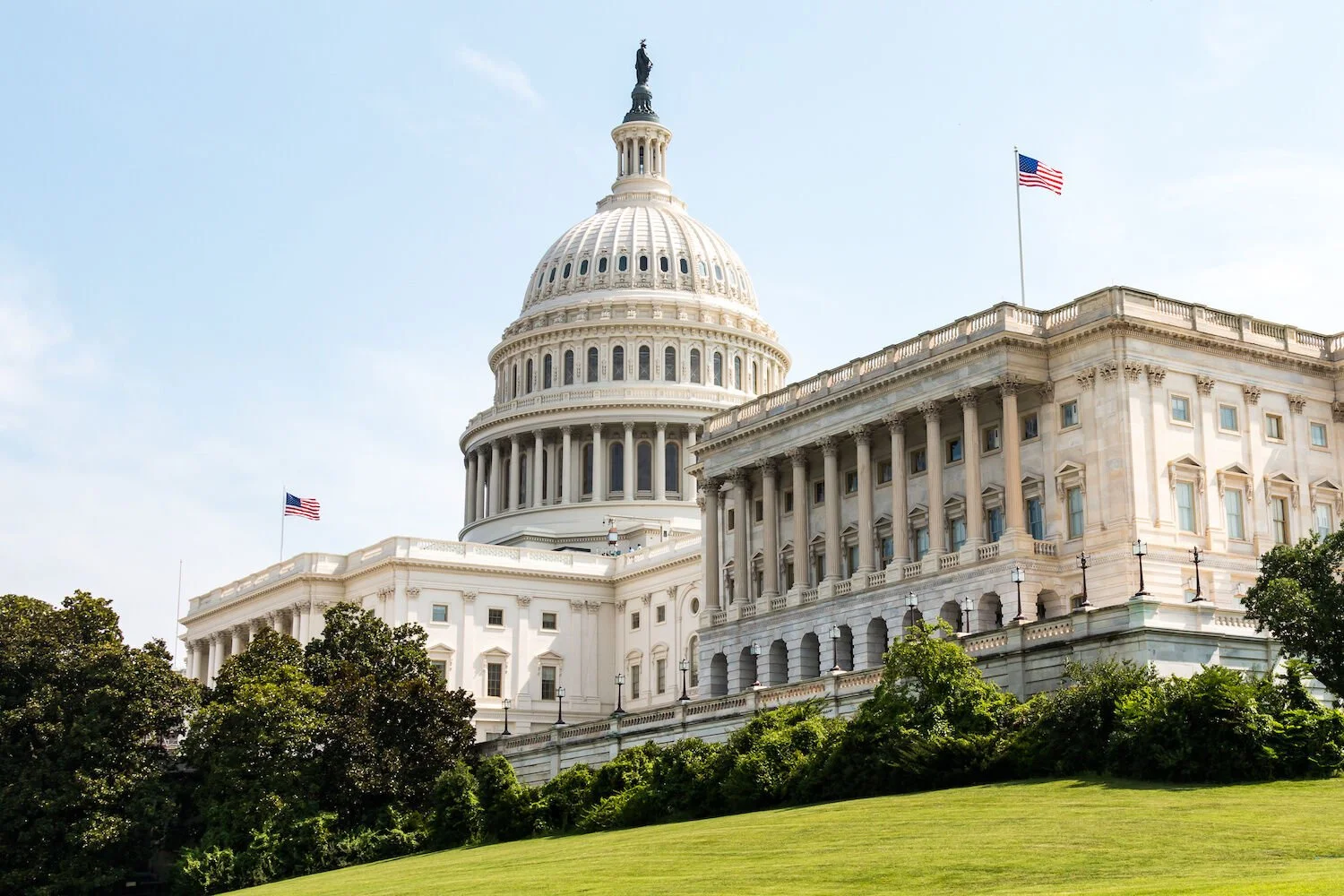
The American Franchise Act Clears Committee, and the Vote Tells You More Than the Bill Does
The short answer
A bill that would fix the federal joint employer standard for franchising cleared the House Committee on Education and Workforce on July 23, 2026, by a vote of 18 to 15. It now goes to the House floor. Franchisors should not change anything yet, because a bill out of committee is not law, and because the vote itself suggests the durable fix the industry wants may not arrive on this pass.
Why it comes up
The joint employer question is the single largest unresolved liability exposure in franchising. It asks when a franchisor becomes legally responsible for the employment decisions of an independent franchisee, and therefore exposed to that franchisee's wage and hour claims, discrimination claims and union obligations. According to Franchise Times, the standard has changed four times in thirteen years, moving with each change in presidential administration. The 2023 rule was struck down in federal court, and the National Labor Relations Board reaffirmed the 2020 standard in February 2024.
That instability is the actual problem. A franchisor cannot build a brand standards program around a test that changes every few years.
What the bill does
The American Franchise Act, H.R. 5267, would codify a control-based test. As reported, a franchisor would be a joint employer only if it "possesses and exercises substantial, direct and immediate control" over essential terms of employment, which the bill identifies as wages, benefits, hours, hiring, discipline, supervision and direction.
Two amendments offered by ranking member Bobby Scott failed, each by 15 to 18. One would have preserved the Board's ability to consider indirect control. The other would have given franchisees a right of action against franchisors. Representatives James Moylan and Virginia Foxx spoke in support of the bill. Representative Scott said it would "radically rewrite" the law and "severely curtail workers' ability to enforce their rights." The International Franchise Association, the American Association of Franchisees and Dealers, and the Coalition of Franchisee Associations support the bill.
Our take: read the vote, not the co-sponsor list
The bill was introduced in September 2025 by Representative Kevin Hern with six Republican and seven Democratic sponsors, and it now carries 142 co-sponsors. That is a genuinely bipartisan face. But the committee vote was straight party line, and both minority amendments failed on the same party line split.
That gap matters, and it is the part of this story worth a franchisor's attention. A statute enacted on a party line vote is a statute that a future Congress can repeal on a party line vote. The industry's complaint is not that the current standard is wrong. The complaint is that the standard keeps moving. A narrowly partisan enactment addresses the first problem and leaves the second one intact.
What it means practically
Nothing about a franchisor's operating posture should change on the strength of a committee vote. The operative standard today remains the Board's 2020 standard, and the practical protections remain the ones a franchisor builds itself:
● Reserve authority over brand standards, which protect the trademark and the customer experience. Recipes, approved vendors, hours of operation and system specifications are ordinarily defensible.
● Leave hiring, scheduling, supervision, discipline and compensation with the franchisee, in the franchise agreement and, more importantly, in actual practice. Courts look at what a franchisor does, not only at what the agreement says it may do.
● Audit the gap between the two. The exposure in most systems is not in the agreement. It is in the field consultant who tells a franchisee to fire someone.
When to call a lawyer
Before a system-wide rollout of any program that touches franchisee personnel practices, and immediately upon service of any charge or complaint naming both the franchisor and a franchisee as joint employers. The pleading stage is where the joint employer question is usually won or lost.
Sources
Disclaimer
This post discusses publicly reported legal developments for general informational purposes. It is not legal advice, it does not create an attorney client relationship, and it does not reflect the firm's position in any pending matter. Outcomes depend on the specific facts and the governing law of the relevant jurisdiction.
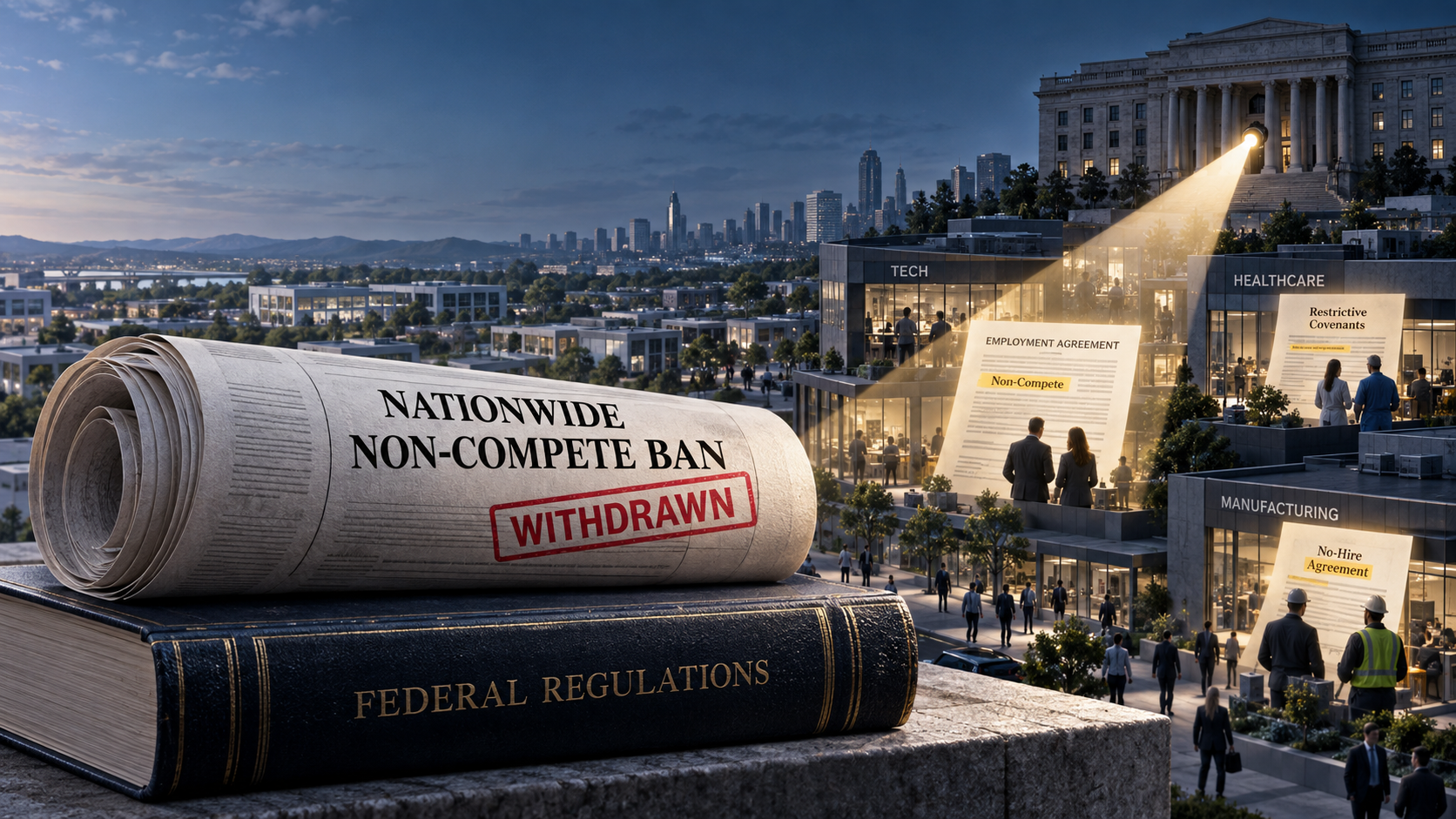
The Federal Non-Compete Ban Is Dead. The Agency That Wrote It Is Still Coming After Non-Competes.
The short answer
The Federal Trade Commission abandoned its defense of the 2024 rule that would have banned nearly all non-competes nationwide, and formally removed the rule from the Code of Federal Regulations effective February 12, 2026. It then began enforcing against non-competes case by case, including consent orders reaching more than eighteen thousand employees at a single company. The existential threat to restrictive covenant programs is gone. A narrower and better-aimed threat replaced it.
What happened, in order
September 4, 2025. The Commission issued a request for information on employer non-compete agreements, with comments due November 3.
September 5, 2025. The Commission voted three to one to dismiss its appeals and accede to vacatur of the rule. The vacatur rested on a holding that the Commission had exceeded its statutory authority.
September 10, 2025. The Chairman issued warning letters to several large healthcare employers and staffing firms, urging review of non-competes covering nurses and physicians.
November 2025. A final consent order against a pet cremation company required it to stop enforcing non-competes covering roughly eighteen hundred employees.
February 12, 2026. The Federal Register document removing the rule from the Code of Federal Regulations published and took effect.
February and June 2026. Consent orders against a building services company over no-hire agreements, and against a pest control company, the latter ending non-compete enforcement against more than eighteen thousand employees.
Our take: the exposure moved from everyone to a specific kind of employer
The instinct after a rule is vacated is to conclude the subject is closed. That instinct is wrong here, and the difference between the rule and what replaced it is the whole point.
The rule was categorical. It would have voided nearly every non-compete for nearly every worker. Its defeat means a Florida employer can build a restrictive covenant program without hedging against a federal ban, including under Florida's own statutory framework and the newer garden leave provisions.
The enforcement is targeted. Look at what the Commission actually charged: blanket covenants applied to rank and file service workers across an entire national workforce, and no-hire agreements between companies. Those are the fact patterns, and they are common in exactly the industries South Florida is full of, including healthcare staffing, building services, pest control and hospitality.
Two points that clients consistently get wrong.
A covenant can be enforceable under Florida law and still be a federal problem. Florida's statute asks whether there is a legitimate business interest and whether the restriction is reasonable in time and area. The Commission's theory is a competition theory under its own statute. Passing the first test does not answer the second.
No-hire and no-poach agreements between companies are within the scope. Many employers do not think of an agreement with a vendor or a competitor not to hire each other's people as a non-compete at all. The consent orders treat that conduct as within reach.
The practical direction is narrow tailoring and role differentiation. A covenant that binds an executive with access to strategy and customer relationships is defensible. The same covenant applied to every hourly employee in a national workforce is the thing the Commission has been buying consent orders about.
We would be candid that this enforcement posture depends on the composition of the Commission and could change. That is an argument for tailoring covenants to what you actually need to protect, which is good practice regardless of who is enforcing.
When to call a lawyer
Before rolling out a covenant across a workforce, before entering any agreement with another company about hiring, and on receipt of any inquiry from the Commission.
Why this is not a do-it-yourself problem
A restrictive covenant program now has to satisfy two different bodies of law with different tests, and passing one does not answer the other. Tailoring covenants by role, drafting them to a legitimate business interest, and keeping employer-to-employer hiring agreements out of the enforcement theory are drafting judgments that require knowing both frameworks. The employers named in the consent orders were not outliers; they were using standard forms across standard workforces.
Talk to us
HDD Law Firm drafts and litigates non-compete and other restrictive covenant agreements, and represents both employers and executives in those disputes. If you are rolling out covenants across a workforce, or you are an executive bound by one, discuss your matter with our attorneys.
Sources
● FTC, Commission files to accede to vacatur of the Non-Compete Clause Rule (September 5, 2025)
● Federal Register, removal of the Non-Compete Rule from the CFR (February 12, 2026)
● FTC non-compete enforcement page
● FTC, final order prohibiting non-compete enforcement, Gateway Services (November 2025)
Disclaimer
This post discusses publicly reported legal developments for general informational purposes. It is not legal advice, it does not create an attorney client relationship, and it does not reflect the firm's position in any pending matter. Outcomes depend on the specific facts and the governing law of the relevant jurisdiction.

Your Arbitration Agreement May Not Cover Your Drivers, Even If They Never Leave Florida
The short answer
On May 28, 2026, a unanimous Supreme Court held that a worker who moves goods only within one state can still fall within the Federal Arbitration Act's transportation worker exemption, and therefore cannot be compelled to arbitrate under that statute. For any Florida employer whose workers move goods on a final or intermediate leg of an interstate journey, this is the most consequential arbitration decision in years.
What the Court held
In Flowers Foods, Inc. v. Brock, No. 24-935, Justice Gorsuch wrote for a unanimous Court that a worker who transports goods on an intrastate leg of an interstate journey can qualify for the exemption without crossing state lines or interacting with vehicles that do. What matters is whether the worker plays a direct and necessary role in moving goods across state lines, not whether the worker personally crosses a border.
Our take: check the goods, not the job title
The exemption has always been read to cover interstate transportation workers. What employers assumed, reasonably, was that a driver who never left the state was not one. That assumption is now wrong.
The workers this reaches are more numerous than the phrase "transportation worker" suggests: route drivers and distributors, last-mile delivery, port and airport drayage, warehouse-to-store transfer, and bakery and beverage distributors. In South Florida, where goods arrive by ship and air and are then moved locally, that is a large category.
The consequence is not merely that one arbitration agreement fails. If the exemption applies, the Federal Arbitration Act does not supply the enforcement mechanism at all, which means the agreement and any class action waiver in it may be unenforceable under federal law, and a collective action the employer thought was foreclosed is live.
The mitigation is available and most agreements do not have it. The Federal Arbitration Act is not the only arbitration statute. The Florida Arbitration Code is an independent basis for enforcement, and the exemption is a feature of the federal statute rather than a general prohibition on arbitrating these disputes. An agreement that expressly invokes Florida law as an alternative basis, with a severability clause, is in a materially better position than one that recites only the federal act. Many form agreements recite only the federal act.
We should be candid that this is not a complete answer. Whether state arbitration law can be used to enforce an agreement the federal statute exempts is itself contested, and the argument has not been definitively resolved. But an agreement that preserves the argument is better than one that does not.
What it means practically
Employers should identify which categories of workers plausibly move goods in interstate commerce, review the arbitration agreements covering them, and add an express state-law fallback with severability. This is a drafting fix, and it is cheap compared to defending a collective action that the agreement was supposed to prevent.
For an executive or a worker, the exemption is narrower than it sounds. It turns on the goods and the role, not on the label in the employment agreement.
When to call a lawyer
Before your next arbitration agreement is rolled out, and immediately on being served with a collective action by workers you assumed were bound to arbitrate.
Sources
● Flowers Foods, Inc. v. Brock, No. 24-935 (U.S. May 28, 2026), Supreme Court slip opinion
Disclaimer
This post discusses publicly reported legal developments for general informational purposes. It is not legal advice, it does not create an attorney client relationship, and it does not reflect the firm's position in any pending matter. Outcomes depend on the specific facts and the governing law of the relevant jurisdiction.