

Hirzel Dreyfuss & Dempsey, PLLC
NEWS AND INFORMATION

A $250,000 Deposit, a $2.5 Million Escrow, and Why a Sale Order Could Not Settle the Difference
A buyer who walks away from a court-approved sale of restaurants does not automatically forfeit its deposit, and the seller does not automatically keep it. On September 11, 2026, in the Chapter 11 case of one of Popeyes' largest domestic franchisees, Judge Robert A. Mark declined to resolve a $2.5 million escrow dispute on a motion in the main bankruptcy case. He denied the buyer's motion to enforce the sale order and compel turnover, and directed that the fight proceed as a separate adversary proceeding.
THE SHORT ANSWER
A buyer who walks away from a court-approved sale of restaurants does not automatically forfeit its deposit, and the seller does not automatically keep it. On September 11, 2026, in the Chapter 11 case of one of Popeyes' largest domestic franchisees, Judge Robert A. Mark declined to resolve a $2.5 million escrow dispute on a motion in the main bankruptcy case. He denied the buyer's motion to enforce the sale order and compel turnover, and directed that the fight proceed as a separate adversary proceeding.
The underlying disagreement is one every buyer and seller of a distressed franchise portfolio should read closely. The asset purchase agreement defined the deposit as $250,000. The escrow account holds $2.5 million, the entire purchase price. Whether the seller may keep all of it turns on whether an unwritten agreement, reached while the parties negotiated a two-week closing extension, enlarged the contract's defined term.
That is a Florida contract question. A section 363 sale order did not answer it, and the court would not treat it as though it had.
WHAT HAPPENED
Sailormen, Inc., a Miami-based operator of Popeyes Louisiana Kitchen restaurants, filed Chapter 11 in the Southern District of Florida on January 15, 2026. Case No. 26-10451-RAM. We covered the filing and the auction that followed in an earlier post on two Florida restaurant franchisee bankruptcies.
The June auction produced five buyers for 97 of the debtor's 136 restaurants, and the court entered a separate sale order for each buyer on June 23, 2026. The Orlando package, 23 restaurants at $2,500,000, went to RFI Ventures, LLC under the sale order at ECF No. 718.
What happened next is drawn from the parties' own filings.
The APA was executed the same day as the sale order. Section 2.4(b) defined the "Deposit" as $250,000, payable on execution into a non-interest-bearing escrow. Section 7.2 provided that on termination for the purchaser's breach, failure to close, or failure of a condition within the purchaser's control, "the Deposit shall be retained by Seller as liquidated damages and not as a penalty." Section 2.1(iii) sold the assets "AS IS, WHERE IS, and WITH ALL FAULTS." Section 8.5 made the agreement subject to Florida law.
The original closing date was June 30, 2026. As it approached, the buyer sought more time. The seller agreed to extend, and the parties executed a First Amendment on June 30 that moved the closing date to July 12, 2026 and deleted the defined term "Outside Date." By then the escrow held the full $2,500,000 purchase price.
The buyer did not close on July 12. It delivered a letter purporting to terminate under Section 7.1(c), citing an inoperable HVAC system at a Colonial Drive store, an equipment repossession matter, and alleged equipment and water-intrusion conditions at certain stores.
The estate did not return the money. It sold the same 23 Orlando restaurants again, filing an expedited private sale motion on July 17, 2026 (ECF No. 796) and obtaining an order approving that sale on July 22, 2026 (ECF No. 804). Trade press reported the replacement buyer as SBH Foods PLK, which already held five Savannah restaurants from the June auction, at roughly $2.7 million.
On August 10, 2026, the buyer moved to enforce the sale order and compel turnover of the $2,500,000 (ECF No. 858). On September 9, the debtor filed an adversary complaint against RFI Ventures, LLC and RFIV Orlando Foods, LLC (ECF No. 925, Adv. Pro. No. 26-01315-RAM). Summonses issued September 10, with answers due October 13, 2026.
THE TWO ARGUMENTS
Both sides agree on the documents and the dates. They disagree about what the word "Deposit" means. Neither position has been adjudicated, and what follows is each party's contention, not a finding.
The estate's position, as alleged in its complaint, is that the buyer "manufactured post-hoc pretexts to walk away from the deal." It alleges that the seller had no obligation to grant an extension, that it conditioned the extension on the buyer placing the entire purchase price into escrow as a deposit at risk, that the buyer agreed and wired the funds, and that the buyer's own wire confirmation described the money as "DEPOSIT." It alleges the parties orally amended the agreement and that the First Amendment ratified that amendment, leaving Section 7.2's liquidated damages clause operative as to the enlarged deposit.
On the termination itself, the estate alleges the buyer failed to follow Section 7.1(c)'s mandatory notice and cure procedure, which permits termination only if an alleged default "is not cured on or before the fifth (5th) business day after the date written notice is given." It alleges the buyer terminated on the closing date itself without affording any cure period, that the "as is" and anti-reliance provisions allocated physical conditions to the buyer, and that the equipment repossession had been authorized by a publicly docketed order entered before the buyer accepted the extension.
The buyer's position, as stated in its motion, is that the case "reduces to a single question of contract text, and the answer is not close." It argues that Section 2.4(b) defines the Deposit as $250,000 and nothing more, and that Section 7.2 permits the seller to retain exactly that. It argues the estate's theory rests on "an alleged oral understanding that appears in no writing, in no amendment, on no docket, and in no order of this Court."
Its strongest point is structural, and it uses the court's own sale order. Paragraph 12 of the sale order permits the purchase agreement to "be modified, amended, or supplemented by the parties thereto in a writing signed by the parties." Section 8.6 of the APA says the agreement "may be amended only by a writing signed by the Parties." The only signed amendment, the buyer argues, did two narrow things and expressly ratified everything else. On that reading, the sale order itself forbids giving effect to the unwritten arrangement the estate relies on.
WHAT THE COURT ACTUALLY DECIDED
Very little, and that is the point.
The September 11 order is captioned "Order Denying Motion of RFI Ventures, LLC and RFIV Orlando Foods, LLC to Enforce Sale Order and Compel Turnover of $2,500,000 in Escrowed Funds and Directing Commencement of Adversary Proceeding."
It denied the buyer's motion. It did not hold that the estate may keep the money. It did not rule on whether an oral modification occurred, whether the termination was proper, or whether the escrow is property of the estate. It decided the vehicle, not the merits.
That distinction matters more than it may appear. The buyer framed its request as enforcement of an order the court had already entered, which is the kind of relief a bankruptcy court can grant by motion. The court treated the dispute instead as what it substantively is: a contested claim to property, and a request for a declaration of rights, which Bankruptcy Rule 7001 channels into an adversary proceeding with a complaint, an answer, discovery, and the ordinary apparatus of litigation.
For anyone holding escrowed funds after a failed closing, the practical translation is that a sale order is not a self-executing forfeiture mechanism. Getting to an answer takes months, not a hearing.
WHAT THIS MEANS IF YOU ARE BUYING OR SELLING A DISTRESSED FRANCHISE PORTFOLIO
The lessons here are drafting lessons, and they are cheap to apply in advance and expensive to litigate afterward.
Amend in a signed writing, every time. Whatever the eventual outcome, the estate is in this fight because the enlargement of the deposit was not reduced to a signed amendment saying so. A wire memo reading "DEPOSIT" is evidence, but it is not a contract term. When a sale order itself requires signed writings for amendments, an oral side arrangement is not merely weaker proof, it runs against the order governing the sale.
Say what the escrowed money is. There is a real difference between a deposit at risk, a prepayment of the purchase price held for convenience, and liquidated damages. If a seller demands the full price in escrow as the price of an extension, the amendment should state in terms that the entire sum constitutes the Deposit for purposes of the liquidated damages clause. One sentence would have removed the question.
Liquidated damages clauses are read against a defined term. Section 7.2 did not say "the escrowed funds." It said "the Deposit." Defined terms are where these disputes live. Check that every remedy provision points at the amount you actually intend to put at risk.
Follow the notice and cure provision even when you are sure you are right. The estate's first argument is not about HVAC units or water intrusion. It is that the buyer terminated without giving the five business days the contract required. A party with a good substantive complaint can lose it by skipping a procedural step that takes a week.
Diligence the docket before you accept an extension. The estate alleges the equipment repossession the buyer later cited had already been authorized by a publicly docketed order entered days earlier. In a bankruptcy sale, the docket is running while you negotiate, and what it shows on the day you sign is chargeable to you.
"As is, where is" means what it says. In a distressed sale, physical condition is ordinarily the buyer's risk. If specific conditions matter, they belong in a closing condition or a specific representation, not in a later termination letter.
Price the possibility of not closing. The Orlando package was small relative to its unit count. Walking away still put the entire purchase price in dispute, funded litigation on both sides, and left the buyer with neither the restaurants nor the money while the case proceeds.
WHAT IS STILL OPEN
Answers were due October 13, 2026. As of this writing there has been no ruling on any of the four counts, which are breach of contract, declaratory judgment, turnover of estate property under 11 U.S.C. section 542, and breach of the implied covenant of good faith and fair dealing under Florida law. No court has found that the buyer breached, that the termination was pretextual, or that the escrow belongs to the estate. Nor has any court found the opposite.
We will follow the adversary proceeding. The contract questions in it are the ordinary questions in any failed closing, which is precisely why the answer will be worth reading.
SOURCES
● Adversary Complaint, Sailormen, Inc. v. RFI Ventures, LLC, Adv. Pro. No. 26-01315-RAM (Bankr. S.D. Fla. Sept. 9, 2026), filed at ECF No. 925 in Case No. 26-10451-RAM
● Order Denying Motion to Enforce Sale Order and Compel Turnover and Directing Commencement of Adversary Proceeding, ECF No. 929 (Sept. 11, 2026)
● Order Authorizing and Approving the Sale, RFI Ventures, ECF No. 718 (June 23, 2026)
● Expedited Motion to Sell the Orlando Region, ECF No. 796 (July 17, 2026), and Order Approving Sale of the Orlando Region, ECF No. 804 (July 22, 2026)
● Sailormen, Inc. case docket, Stretto (court-appointed claims and noticing agent)
● Nation's Restaurant News, Bankrupt Popeyes franchisee is selling most of its restaurants
● 11 U.S.C. sections 363, 541, 542; Fed. R. Bankr. P. 7001
Disclaimer
This post discusses publicly reported legal developments for general informational purposes. It is not legal advice, it does not create an attorney client relationship, and it does not reflect the firm's position in any pending matter. Outcomes depend on the specific facts and the governing law of the relevant jurisdiction.
A Franchisee Says the Franchisor's Mandatory AI Cost It $100 Million. The Claim Is About Contract, Not Technology.
The short answer
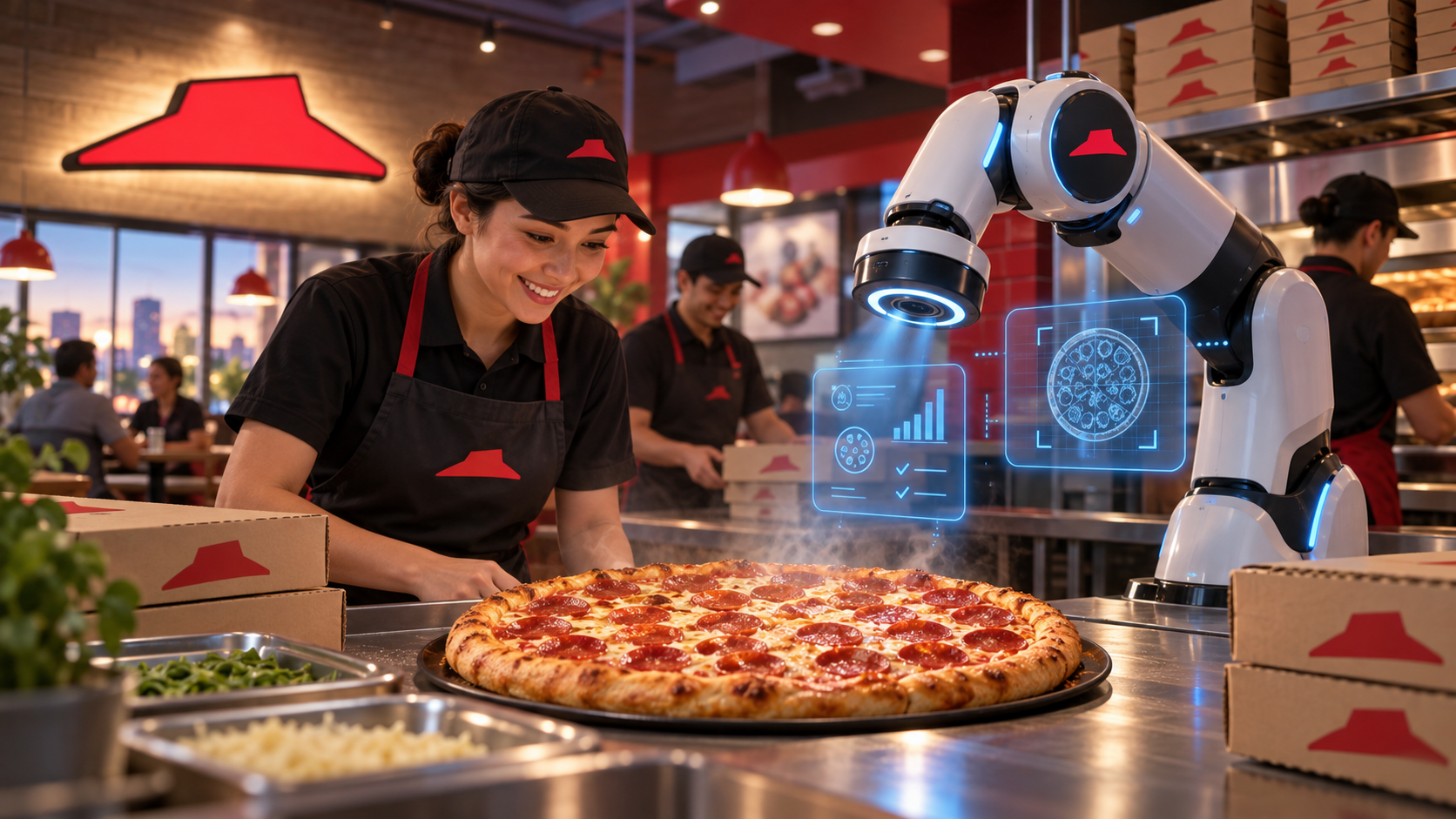
A Pizza Hut franchisee operating approximately 111 restaurants filed suit on May 6, 2026, in the Texas Business Court, alleging that a delivery management platform the franchisor required it to adopt destroyed its delivery performance and more than $100 million in business value. The legal theory is ordinary breach of the franchise agreement. The fact pattern is not, and it is going to recur.
Why it comes up
Franchise agreements routinely give the franchisor authority to specify required systems and technology. That authority was uncontroversial when it meant a point of sale terminal. It is considerably less so when it means an algorithmic system that reorders how the franchisee's business actually runs, and when the franchisee bears the entire economic consequence of a decision it did not make.
What is alleged
Chaac Pizza Northeast operates roughly 111 Pizza Hut restaurants across New York, New Jersey, Maryland, Washington D.C. and Pennsylvania. As reported by Business Insider, the complaint alleges that before the rollout more than ninety percent of its deliveries arrived within thirty minutes, with double digit sales growth and guest satisfaction above system averages.
The franchisee alleges that the Dragontail platform gave DoorDash drivers real time visibility into kitchen workflows and order timing, including when pizzas would come out of the oven. Drivers responded, according to the complaint, by waiting "up to fifteen (15) minutes" to batch additional orders rather than departing with a completed one. The complaint is also reported to allege that drivers could see tip amounts and whether an order was cash, making them selective about which deliveries to accept. In the New York City market, year over year sales growth is alleged to have moved from positive 10.19 percent to negative 9.78 percent.
The pleaded theory, as reported, is that the franchisor breached the franchise agreement by mandating continued use of the software while failing to exercise "reasonable business judgment" or to modify the system to accommodate the franchisee's reliance on third party delivery drivers. A Pizza Hut spokesperson said the company was reviewing the claims and would respond "through the appropriate legal channels."
Our take: this is a mandated systems case, and the AI is incidental
Strip out the word artificial intelligence and what remains is a claim that has existed in franchise law for decades. A franchisor exercised a contractual right to require a system. The system did not work for this franchisee's operating model. The franchisee absorbed the loss. The question is whether the franchisor's exercise of that reserved discretion was subject to any standard at all.
That question, not the technology, is where the case will be decided. Most franchise agreements grant technology mandates in broad, unqualified language. Franchisees will argue that the implied covenant of good faith and fair dealing constrains how that discretion is exercised. Franchisors will argue that an express, unqualified grant of discretion cannot be narrowed by an implied covenant. Courts have gone both ways on that proposition, and the answer is heavily dependent on the governing law the agreement selects.
The genuinely novel element is the causal chain. The system did not fail. It worked as designed, and the harm came from how a third party, the delivery driver, responded to the information the system disclosed to him. Proving that chain requires system wide data, and a franchisee alleging it will need comparative performance evidence across the system that only the franchisor possesses. Expect the real fight to be about discovery.
We should be candid about the weaknesses. Correlation between the rollout and the sales decline is not causation, and 2024 through 2026 was a difficult period for the brand generally. Business Insider reported that Yum! Brands has been exploring strategic options for Pizza Hut after consecutive quarters of declining same store sales, and announced plans to close 250 U.S. locations in the first half of the year. The franchisor will point at that record, and it is a serious defense.
What it means practically
For franchisees, before a mandated technology rollout: document baseline performance, put objections in writing at the time and not in hindsight, and preserve the operating data. A performance claim two years later is only as good as the contemporaneous record.
For franchisors: an unqualified mandate right is not the same as an unqualified mandate. Pilot the system, document that you evaluated operating models that differ from the norm, and respond in writing when a franchisee reports degradation. The reported allegation that the franchisor "refused requests for support" and "ignored worsening delivery metrics" is the allegation that turns a contract dispute into a damages case.
When to call a lawyer
Before you sign an amendment adopting a new required system, and at the first documented sign that a mandated system is degrading your operations. Not after a year of losses.
Sources
● Business Insider, Pizza Hut faces lawsuit from franchisee over AI system (May 2026)
● PMQ Pizza Magazine, Disgruntled franchisee slaps Pizza Hut with $100 million lawsuit (May 21, 2026)
● L'Express Franchise, Pizza Hut franchisee sues for $100 million (May 28, 2026)
Related coverage: this dispute sits inside a broader pattern of franchise-system control litigation, including how franchisors’ earnings claims are regulated and how territorial protections are tested in court.
Disclaimer
This post discusses publicly reported legal developments for general informational purposes. It is not legal advice, it does not create an attorney client relationship, and it does not reflect the firm's position in any pending matter. Outcomes depend on the specific facts and the governing law of the relevant jurisdiction.

Your Territory Was Drafted for One Brand. What Happens When the Franchisor Opens Two?
The short answer
One of the largest operators in a national restaurant system sued its franchisor in March 2026, alleging that the franchisor authorized co-branded restaurants combining two of its brands inside the operator's protected development territories. It is the clearest test yet of a question every legacy franchise agreement left unanswered: whether a hybrid unit is the brand your territory protects, or a different brand entirely.
Why it comes up
Territorial protection is the franchisee's core bargain. The development agreement says the franchisor will not open, or authorize another franchisee to open, a unit of the brand within a defined area. That language was drafted when a restaurant was one restaurant.
Franchisors under pressure to grow have turned to dual branding, putting two concepts under one roof. From the franchisor's side that is a new format. From the franchisee's side it is a competing location with the protected brand's sign on it.
What is alleged
The operator entities, affiliated with a large multi-brand restaurant company, filed suit on March 19, 2026, in the United States District Court for the District of Kansas, and amended the complaint on April 17. The defendants are the franchisor and its parent.
Plaintiffs allege the franchisor "secretly plotted over the last two years" to authorize dual-branded units inside their exclusive Dallas and Houston development territories, pointing to a location that opened in February and additional locations planned in three counties. They seek a declaration that the development agreements remain valid, an injunction against further openings and against termination, and damages.
The franchisor's reported position is that the development agreements were already terminated for failure to open and for improper closures, and it has separately objected to the operator's acquisition of another restaurant chain as a breach of a competitive activity provision.
Our take: the counter-theory is the tell
The encroachment question is genuinely open, and the answer will turn on the specific words of the specific agreement rather than on any general principle. If the protected right is defined by reference to a named brand, a unit bearing that brand's name is within it regardless of what else is under the roof. If the protection is defined by reference to a standard unit format or a defined restaurant type, the franchisor has a real argument that a hybrid is neither.
What is more instructive for a franchisee reading this is the shape of the franchisor's response. The reported defense is not primarily that dual branding is permitted. It is that the development agreements were terminated for the franchisee's own breaches, and that the franchisee independently breached a competitive activity restriction by acquiring another chain.
That is the standard pattern when a large operator pushes back on a franchisor, and franchisees should plan for it. A system that wants to defeat an encroachment claim will look for every default in the file: unmet development schedules, closures taken without consent, transfers, competing investments, late reports. Most large operators have some of these, because most development schedules are aspirational and most operators own other things.
Two practical consequences.
Before asserting an encroachment claim, audit your own compliance. The franchisor will. A development schedule that was quietly missed three years ago becomes the centerpiece of the franchisor's answer.
Read the competitive activity clause before you buy anything. A multi-unit operator acquiring a second concept may be creating the defense to its own future claim.
For franchisors, the drafting lesson is prospective and simple: define the protected right in terms broad enough to cover formats that do not exist yet, or expect to litigate whether they are covered.
When to call a lawyer
Before a franchisor opens anything inside your territory, and before you acquire an interest in a competing concept.
Why this is not a do-it-yourself problem
Encroachment claims are won and lost on the specific words of a specific territorial provision, read against a system's actual development history. That analysis requires reading the development agreement, the franchise agreements, the amendments and the correspondence together, and it requires anticipating the defaults the franchisor will assert in response. A franchisee who raises the claim without that preparation hands the franchisor the opening move. A franchisor drafting a new form needs the same analysis run forward, against formats that do not exist yet.
Talk to us
This firm represents franchisees and franchisors in territorial, encroachment, termination and development agreement disputes across the country. If a franchisor is opening inside your protected area, or you are evaluating a new format against your existing agreements, contact us to request a free consultation.
Sources
● Restaurant Dive, Applebee's dual-branding exclusivity lawsuit
● Restaurant Business, Applebee's sued by franchisee over co-branded restaurants
Related coverage: this dispute sits inside a broader pattern of franchise-system control litigation, including how mandated technology systems shift risk to franchisees and how franchisors’ earnings claims are regulated.
Disclaimer
This post discusses publicly reported legal developments for general informational purposes. It is not legal advice, it does not create an attorney client relationship, and it does not reflect the firm's position in any pending matter. Outcomes depend on the specific facts and the governing law of the relevant jurisdiction.