
Hirzel Dreyfuss & Dempsey, PLLC
NEWS AND INFORMATION
Your Territory Was Drafted for One Brand. What Happens When the Franchisor Opens Two?
The short answer
One of the largest operators in a national restaurant system sued its franchisor in March 2026, alleging that the franchisor authorized co-branded restaurants combining two of its brands inside the operator's protected development territories. It is the clearest test yet of a question every legacy franchise agreement left unanswered: whether a hybrid unit is the brand your territory protects, or a different brand entirely.
Why it comes up
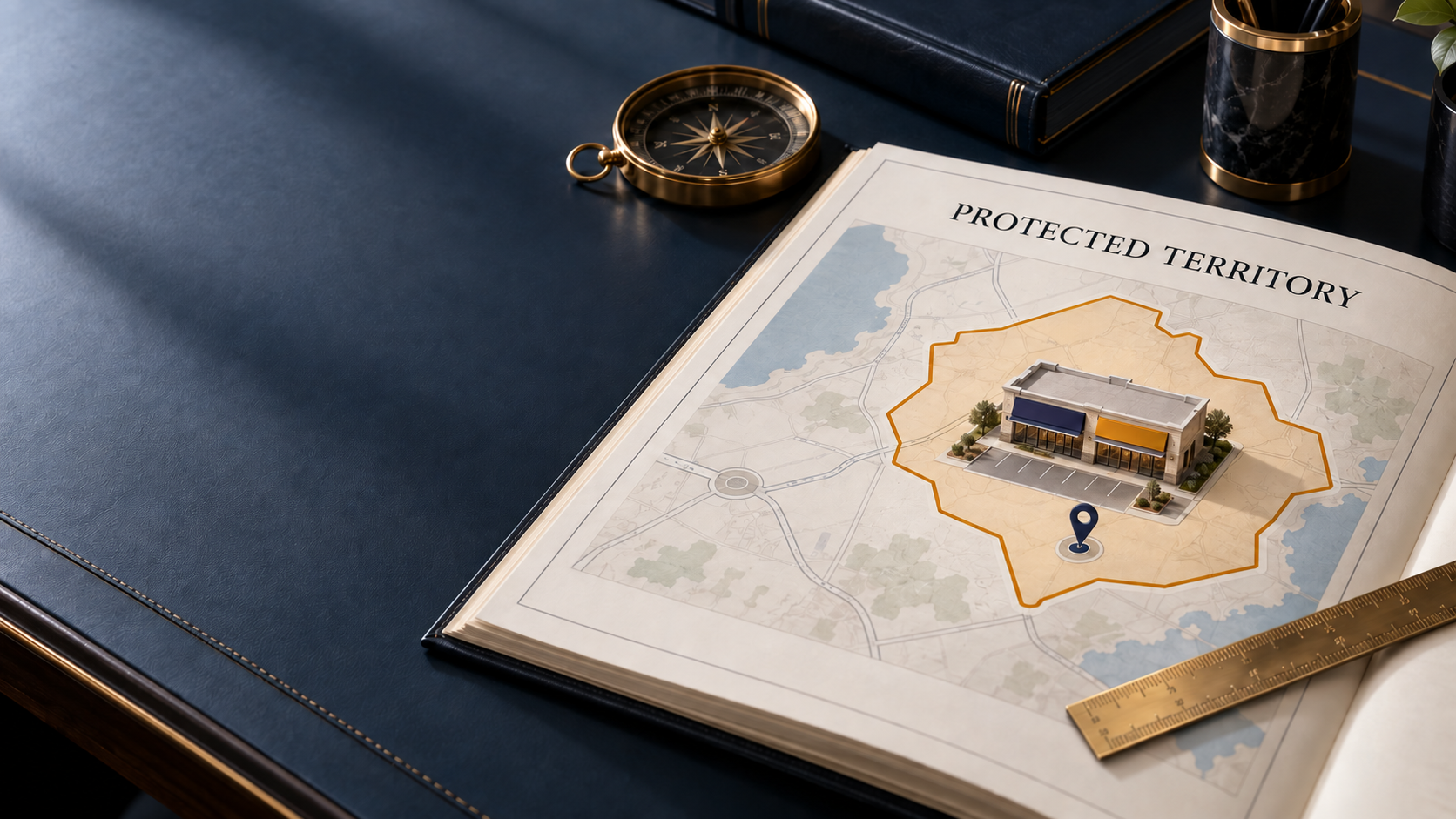
Territorial protection is the franchisee's core bargain. The development agreement says the franchisor will not open, or authorize another franchisee to open, a unit of the brand within a defined area. That language was drafted when a restaurant was one restaurant.
Franchisors under pressure to grow have turned to dual branding, putting two concepts under one roof. From the franchisor's side that is a new format. From the franchisee's side it is a competing location with the protected brand's sign on it.
What is alleged
The operator entities, affiliated with a large multi-brand restaurant company, filed suit on March 19, 2026, in the United States District Court for the District of Kansas, and amended the complaint on April 17. The defendants are the franchisor and its parent.
Plaintiffs allege the franchisor "secretly plotted over the last two years" to authorize dual-branded units inside their exclusive Dallas and Houston development territories, pointing to a location that opened in February and additional locations planned in three counties. They seek a declaration that the development agreements remain valid, an injunction against further openings and against termination, and damages.
The franchisor's reported position is that the development agreements were already terminated for failure to open and for improper closures, and it has separately objected to the operator's acquisition of another restaurant chain as a breach of a competitive activity provision.
Our take: the counter-theory is the tell
The encroachment question is genuinely open, and the answer will turn on the specific words of the specific agreement rather than on any general principle. If the protected right is defined by reference to a named brand, a unit bearing that brand's name is within it regardless of what else is under the roof. If the protection is defined by reference to a standard unit format or a defined restaurant type, the franchisor has a real argument that a hybrid is neither.
What is more instructive for a franchisee reading this is the shape of the franchisor's response. The reported defense is not primarily that dual branding is permitted. It is that the development agreements were terminated for the franchisee's own breaches, and that the franchisee independently breached a competitive activity restriction by acquiring another chain.
That is the standard pattern when a large operator pushes back on a franchisor, and franchisees should plan for it. A system that wants to defeat an encroachment claim will look for every default in the file: unmet development schedules, closures taken without consent, transfers, competing investments, late reports. Most large operators have some of these, because most development schedules are aspirational and most operators own other things.
Two practical consequences.
Before asserting an encroachment claim, audit your own compliance. The franchisor will. A development schedule that was quietly missed three years ago becomes the centerpiece of the franchisor's answer.
Read the competitive activity clause before you buy anything. A multi-unit operator acquiring a second concept may be creating the defense to its own future claim.
For franchisors, the drafting lesson is prospective and simple: define the protected right in terms broad enough to cover formats that do not exist yet, or expect to litigate whether they are covered.
When to call a lawyer
Before a franchisor opens anything inside your territory, and before you acquire an interest in a competing concept.
Why this is not a do-it-yourself problem
Encroachment claims are won and lost on the specific words of a specific territorial provision, read against a system's actual development history. That analysis requires reading the development agreement, the franchise agreements, the amendments and the correspondence together, and it requires anticipating the defaults the franchisor will assert in response. A franchisee who raises the claim without that preparation hands the franchisor the opening move. A franchisor drafting a new form needs the same analysis run forward, against formats that do not exist yet.
Talk to us
This firm represents franchisees and franchisors in territorial, encroachment, termination and development agreement disputes across the country. If a franchisor is opening inside your protected area, or you are evaluating a new format against your existing agreements, contact us to request a free consultation.
Sources
● Restaurant Dive, Applebee's dual-branding exclusivity lawsuit
● Restaurant Business, Applebee's sued by franchisee over co-branded restaurants
Related coverage: this dispute sits inside a broader pattern of franchise-system control litigation, including how mandated technology systems shift risk to franchisees and how franchisors’ earnings claims are regulated.
Disclaimer
This post discusses publicly reported legal developments for general informational purposes. It is not legal advice, it does not create an attorney client relationship, and it does not reflect the firm's position in any pending matter. Outcomes depend on the specific facts and the governing law of the relevant jurisdiction.