

Hirzel Dreyfuss & Dempsey, PLLC
NEWS AND INFORMATION

The Florida Statute That Reaches Creditors the Federal Debt Collection Act Does Not
The short answer
A class action filed in the Northern District of Florida in May 2026 alleges that a credit card bank kept collecting from a consumer after being told he was represented by counsel. The interesting legal question is not whether that is prohibited. It is which statute prohibits it. Under Eleventh Circuit law, a bank collecting debts it owns is generally not a "debt collector" and is generally outside the federal Fair Debt Collection Practices Act. Florida's statute has no such limit. It reaches any person collecting a consumer debt, and that difference is the entire case.
Why it matters to Florida businesses
Any business that extends credit to consumers and then collects on it, in its own name, is subject to the Florida Consumer Collection Practices Act. Many of those businesses have compliance programs built around the federal statute, which does not apply to them, and no program at all for the state statute, which does.
That is an avoidable exposure, and it is the reason this post exists.
What was filed
Pitts v. Merrick Bank, No. 5:26-cv-00138, was filed in the United States District Court for the Northern District of Florida on May 27, 2026, before District Judge M. Casey Rodgers and Magistrate Judge Michael J. Frank.
According to reporting on the filing, the plaintiff notified the original creditor in May 2025 that he was represented by an attorney and that all future communications should go to counsel; that the notice of representation was disclosed during the sale of the debt; that the bank nonetheless retained a collection agency to contact him directly; and that a collection letter dated December 27, 2025 failed to disclose that the debt was disputed. The reporting describes claims under both the federal act and the Florida act, brought on behalf of a putative class, seeking declaratory and injunctive relief, statutory and actual damages, and fees.
These are allegations in a complaint. Nothing has been adjudicated.
What the two statutes actually say
The federal provision. 15 U.S.C. 1692c(a)(2) provides that, without the consumer's prior consent given directly to the debt collector or a court's express permission, a debt collector may not communicate with a consumer in connection with the collection of any debt if the debt collector knows the consumer is represented by an attorney with respect to such debt and has knowledge of, or can readily ascertain, such attorney's name and address, unless the attorney fails to respond within a reasonable period of time to a communication from the debt collector or unless the attorney consents to direct communication.
The Florida provision. Fla. Stat. 559.72(18) provides that, in collecting consumer debts, a person may not communicate with a debtor if the person knows that the debtor is represented by an attorney with respect to such debt and has knowledge of, or can readily ascertain, such attorney's name and address, unless the debtor's attorney fails to respond within 30 days to a communication from the person, unless the debtor's attorney consents to a direct communication with the debtor, or unless the debtor initiates the communication.
Read the two openings again. The federal provision governs a debt collector. The Florida provision governs a person.
Our take: the coverage gap is the whole story
Who is a "debt collector" federally. Under 15 U.S.C. 1692a(6), the term means a person whose principal purpose is the collection of debts, or who regularly collects debts owed or due another. It excludes, among others, officers and employees of a creditor collecting in the creditor's name, and persons collecting debts they originated.
The Eleventh Circuit addressed the purchased-debt scenario squarely in Davidson v. Capital One Bank (USA), N.A., 797 F.3d 1309 (11th Cir. 2015). Capital One had purchased defaulted credit card accounts from another bank. The court held that a bank does not qualify as a debt collector where it does not regularly collect debts owed or due another and where debt collection is not the principal purpose of its business, even where the debt was in default when the bank acquired it. The inquiry, the court said, is not whether the bank collects on debts originally owed to another and now owed to it, but whether it collects on debts owed to another at the time of collection.
The practical consequence for a case like the one filed in May is significant. If the bank owns the accounts it is collecting, the federal claim against the bank is on difficult ground. The retained collection agency is a different matter entirely, since an agency collecting a debt owed to someone else is squarely within the definition.
Florida closes the gap. Section 559.72 opens with "In collecting consumer debts, a person may not." There is no definitional gate, and no exclusion for creditors collecting their own debts. Section 559.77(1) authorizes a civil action against "a person violating the provisions of s. 559.72," and 559.77(2) makes "any person" who fails to comply liable.
The Eleventh Circuit applied the statute to a first-party creditor in Medley v. DISH Network, LLC, 958 F.3d 1063 (11th Cir. 2020), where DISH was collecting its own account. And a federal court in Florida allowed an FCCPA claim against an original credit card issuer on facts close to those alleged here in Kelliher v. Target National Bank, 826 F. Supp. 2d 1324 (M.D. Fla. 2011), where the consumer had notified the bank of representation and the bank both continued sending statements and retained a third-party agency. The court credited the theory that the creditor used the agency as the medium through which to send collection communications, noting that the statute defines "communicate" to include conveying information about a debt indirectly through any medium.
Two more differences worth knowing. Florida fixes the attorney non-response window at 30 days, where the federal statute says only "a reasonable period of time." And Florida adds a safe harbor the federal statute lacks: the prohibition does not apply where the debtor initiates the communication.
The defense side is not empty. Medley is also the leading authority on what a plaintiff must prove. The Eleventh Circuit held that even where the direct contact and the notice of representation are established, the statute requires actual knowledge, not constructive knowledge, and that the knowledge must be specific to the debt being collected. The court remanded for the district court to consider whether DISH actually knew the consumer was represented as to the debt at issue, and whether the bona fide error defense applied.
That defense, at Fla. Stat. 559.77(3), provides that a person may not be held liable if the person shows by a preponderance of the evidence that the violation was not intentional and resulted from a bona fide error. The Florida text differs from its federal counterpart in a way that has been litigated, and a business relying on it should not assume the federal case law transfers.
What it means practically
For a business collecting its own consumer accounts in Florida: build the notice-of-representation process around Florida's statute, not the federal one. That means a defined intake path for attorney representation notices, a flag that travels with the account, and, critically, a mechanism that carries the flag to any agency or purchaser the account is placed with or sold to. The theory in Kelliher is that a creditor can communicate indirectly through an agency. An account file that omits the representation flag is where that theory is born.
Understand the remedies. Fla. Stat. 559.77(2) provides actual damages plus additional statutory damages not exceeding $1,000, together with court costs and reasonable attorney's fees. In a class action, statutory damages run up to $1,000 per named plaintiff plus an aggregate award for the remaining class members capped at the lesser of $500,000 or one percent of the defendant's net worth. Punitive damages and injunctive relief are available. The limitations period is two years from the violation. And the statute contains a reverse fee provision: a plaintiff whose suit fails to raise a justiciable issue of law or fact is liable for the defendant's costs and fees.
Note that registration exemption is not substantive exemption. Original creditors are among the categories not required to register as consumer collection agencies under Fla. Stat. 559.553. That exemption is from the registration requirement only. It does not exempt anyone from Section 559.72.
When to call a lawyer
Before a collection program starts, when the process is a design question. And immediately on receiving a claim, because the two-year limitations period and the bona fide error defense both turn on records that need to be preserved at once.
Why this is not a do-it-yourself problem
The trap here is that the well-known statute is the wrong one. A business that reads the federal act, correctly concludes it is not a debt collector, and stops, has just built a compliance program around a statute that does not apply to it while ignoring the one that does. The Florida act reaches further, carries fees and class exposure, and has a knowledge element that turns entirely on internal recordkeeping that nobody designs until after the first claim. The defense, when it comes, is a factual one about what the company actually knew and what its procedures actually were, which means the case is largely won or lost by the document retention and account-flagging decisions made years before anyone sued.
Talk to us
HDD Law Firm represents businesses in commercial disputes and litigation in the Florida state courts, the Southern, Middle and Northern Districts of Florida, and the Eleventh Circuit. If your business extends and collects consumer credit in Florida, contact us to discuss your matter.
Sources
● Pitts v. Merrick Bank, No. 5:26-cv-00138 (N.D. Fla., filed May 27, 2026), docket (CourtListener)
● 15 U.S.C. 1692c, Communication in connection with debt collection
● 15 U.S.C. 1692a, Definitions
● Fla. Stat. 559.72, Prohibited practices generally
● Fla. Stat. 559.77, Civil remedies
● Fla. Stat. 559.553, Registration of consumer collection agencies required
● Davidson v. Capital One Bank (USA), N.A., 797 F.3d 1309 (11th Cir. 2015) (CourtListener)
● Medley v. DISH Network, LLC, 958 F.3d 1063 (11th Cir. 2020) (CourtListener)
● Kelliher v. Target National Bank, 826 F. Supp. 2d 1324 (M.D. Fla. 2011) (CourtListener)
● 12 C.F.R. 1006.6, Communications in connection with debt collection (eCFR)
Disclaimer
This post discusses publicly reported legal developments for general informational purposes. It is not legal advice, it does not create an attorney client relationship, and it does not reflect the firm’s position in any pending matter. Outcomes depend on the specific facts and the governing law of the relevant jurisdiction.

Your Arbitration Agreement May Not Cover Your Drivers, Even If They Never Leave Florida
The short answer
On May 28, 2026, a unanimous Supreme Court held that a worker who moves goods only within one state can still fall within the Federal Arbitration Act's transportation worker exemption, and therefore cannot be compelled to arbitrate under that statute. For any Florida employer whose workers move goods on a final or intermediate leg of an interstate journey, this is the most consequential arbitration decision in years.
What the Court held
In Flowers Foods, Inc. v. Brock, No. 24-935, Justice Gorsuch wrote for a unanimous Court that a worker who transports goods on an intrastate leg of an interstate journey can qualify for the exemption without crossing state lines or interacting with vehicles that do. What matters is whether the worker plays a direct and necessary role in moving goods across state lines, not whether the worker personally crosses a border.
Our take: check the goods, not the job title
The exemption has always been read to cover interstate transportation workers. What employers assumed, reasonably, was that a driver who never left the state was not one. That assumption is now wrong.
The workers this reaches are more numerous than the phrase "transportation worker" suggests: route drivers and distributors, last-mile delivery, port and airport drayage, warehouse-to-store transfer, and bakery and beverage distributors. In South Florida, where goods arrive by ship and air and are then moved locally, that is a large category.
The consequence is not merely that one arbitration agreement fails. If the exemption applies, the Federal Arbitration Act does not supply the enforcement mechanism at all, which means the agreement and any class action waiver in it may be unenforceable under federal law, and a collective action the employer thought was foreclosed is live.
The mitigation is available and most agreements do not have it. The Federal Arbitration Act is not the only arbitration statute. The Florida Arbitration Code is an independent basis for enforcement, and the exemption is a feature of the federal statute rather than a general prohibition on arbitrating these disputes. An agreement that expressly invokes Florida law as an alternative basis, with a severability clause, is in a materially better position than one that recites only the federal act. Many form agreements recite only the federal act.
We should be candid that this is not a complete answer. Whether state arbitration law can be used to enforce an agreement the federal statute exempts is itself contested, and the argument has not been definitively resolved. But an agreement that preserves the argument is better than one that does not.
What it means practically
Employers should identify which categories of workers plausibly move goods in interstate commerce, review the arbitration agreements covering them, and add an express state-law fallback with severability. This is a drafting fix, and it is cheap compared to defending a collective action that the agreement was supposed to prevent.
For an executive or a worker, the exemption is narrower than it sounds. It turns on the goods and the role, not on the label in the employment agreement.
When to call a lawyer
Before your next arbitration agreement is rolled out, and immediately on being served with a collective action by workers you assumed were bound to arbitrate.
Sources
● Flowers Foods, Inc. v. Brock, No. 24-935 (U.S. May 28, 2026), Supreme Court slip opinion
Disclaimer
This post discusses publicly reported legal developments for general informational purposes. It is not legal advice, it does not create an attorney client relationship, and it does not reflect the firm's position in any pending matter. Outcomes depend on the specific facts and the governing law of the relevant jurisdiction.

A Franchisee Says the Franchisor's Mandatory AI Cost It $100 Million. The Claim Is About Contract, Not Technology.
The short answer
A Pizza Hut franchisee operating approximately 111 restaurants filed suit on May 6, 2026, in the Texas Business Court, alleging that a delivery management platform the franchisor required it to adopt destroyed its delivery performance and more than $100 million in business value. The legal theory is ordinary breach of the franchise agreement. The fact pattern is not, and it is going to recur.
Why it comes up
Franchise agreements routinely give the franchisor authority to specify required systems and technology. That authority was uncontroversial when it meant a point of sale terminal. It is considerably less so when it means an algorithmic system that reorders how the franchisee's business actually runs, and when the franchisee bears the entire economic consequence of a decision it did not make.
What is alleged
Chaac Pizza Northeast operates roughly 111 Pizza Hut restaurants across New York, New Jersey, Maryland, Washington D.C. and Pennsylvania. As reported by Business Insider, the complaint alleges that before the rollout more than ninety percent of its deliveries arrived within thirty minutes, with double digit sales growth and guest satisfaction above system averages.
The franchisee alleges that the Dragontail platform gave DoorDash drivers real time visibility into kitchen workflows and order timing, including when pizzas would come out of the oven. Drivers responded, according to the complaint, by waiting "up to fifteen (15) minutes" to batch additional orders rather than departing with a completed one. The complaint is also reported to allege that drivers could see tip amounts and whether an order was cash, making them selective about which deliveries to accept. In the New York City market, year over year sales growth is alleged to have moved from positive 10.19 percent to negative 9.78 percent.
The pleaded theory, as reported, is that the franchisor breached the franchise agreement by mandating continued use of the software while failing to exercise "reasonable business judgment" or to modify the system to accommodate the franchisee's reliance on third party delivery drivers. A Pizza Hut spokesperson said the company was reviewing the claims and would respond "through the appropriate legal channels."
Our take: this is a mandated systems case, and the AI is incidental
Strip out the word artificial intelligence and what remains is a claim that has existed in franchise law for decades. A franchisor exercised a contractual right to require a system. The system did not work for this franchisee's operating model. The franchisee absorbed the loss. The question is whether the franchisor's exercise of that reserved discretion was subject to any standard at all.
That question, not the technology, is where the case will be decided. Most franchise agreements grant technology mandates in broad, unqualified language. Franchisees will argue that the implied covenant of good faith and fair dealing constrains how that discretion is exercised. Franchisors will argue that an express, unqualified grant of discretion cannot be narrowed by an implied covenant. Courts have gone both ways on that proposition, and the answer is heavily dependent on the governing law the agreement selects.
The genuinely novel element is the causal chain. The system did not fail. It worked as designed, and the harm came from how a third party, the delivery driver, responded to the information the system disclosed to him. Proving that chain requires system wide data, and a franchisee alleging it will need comparative performance evidence across the system that only the franchisor possesses. Expect the real fight to be about discovery.
We should be candid about the weaknesses. Correlation between the rollout and the sales decline is not causation, and 2024 through 2026 was a difficult period for the brand generally. Business Insider reported that Yum! Brands has been exploring strategic options for Pizza Hut after consecutive quarters of declining same store sales, and announced plans to close 250 U.S. locations in the first half of the year. The franchisor will point at that record, and it is a serious defense.
What it means practically
For franchisees, before a mandated technology rollout: document baseline performance, put objections in writing at the time and not in hindsight, and preserve the operating data. A performance claim two years later is only as good as the contemporaneous record.
For franchisors: an unqualified mandate right is not the same as an unqualified mandate. Pilot the system, document that you evaluated operating models that differ from the norm, and respond in writing when a franchisee reports degradation. The reported allegation that the franchisor "refused requests for support" and "ignored worsening delivery metrics" is the allegation that turns a contract dispute into a damages case.
When to call a lawyer
Before you sign an amendment adopting a new required system, and at the first documented sign that a mandated system is degrading your operations. Not after a year of losses.
Sources
● Business Insider, Pizza Hut faces lawsuit from franchisee over AI system (May 2026)
● PMQ Pizza Magazine, Disgruntled franchisee slaps Pizza Hut with $100 million lawsuit (May 21, 2026)
● L'Express Franchise, Pizza Hut franchisee sues for $100 million (May 28, 2026)
Related coverage: this dispute sits inside a broader pattern of franchise-system control litigation, including how franchisors’ earnings claims are regulated and how territorial protections are tested in court.
Disclaimer
This post discusses publicly reported legal developments for general informational purposes. It is not legal advice, it does not create an attorney client relationship, and it does not reflect the firm's position in any pending matter. Outcomes depend on the specific facts and the governing law of the relevant jurisdiction.

When a Franchisor's Earnings Claims Cross the Line
The short answer
A franchisor may tell you what its units earn in exactly one place: Item 19 of the Franchise Disclosure Document. Making the disclosure is optional, and many franchisors make none. If a salesperson, a broker, a webinar, or a spreadsheet gave you numbers that are not in Item 19, that is a violation of federal law, and it is a violation whether or not the numbers were accurate.
Why it comes up
Nobody buys a franchise without forming a view of what it will earn. If Item 19 is blank, that view came from somewhere. It came from a conversation, a pro forma emailed during diligence, a figure mentioned at discovery day, or a bank loan projection someone helped prepare.
Franchisors know this, which is why their FDDs say no one is authorized to make such representations. Whether that disclaimer protects them is the whole question.
What the rule requires
Under 16 C.F.R. 436.9(c), it is an unfair or deceptive act to disseminate any financial performance representation unless the franchisor has a reasonable basis and written substantiation for it at the time it is made, and the representation is included in Item 19. Three independent conditions. Subject to the two narrow exceptions noted below, a representation can be perfectly accurate and still unlawful because it is not in Item 19.
Section 436.9(a) separately prohibits making any claim or representation, orally, visually, or in writing, that contradicts information required to be disclosed. Note "orally" and "visually." That reaches sales conversations, slide decks, and webinars.
Section 436.9(d) requires the franchisor to make written substantiation available to prospects on reasonable request, and to the FTC.
If a franchisor does make an Item 19 disclosure, it must state whether the figures are historical performance or a forecast; for historical data, disclose the date range, the number of outlets included, the total number of outlets, the number and percentage that actually attained or surpassed the stated results, and the material characteristics of the measured outlets that may differ from the outlet being offered to you. That last requirement is what exposes cherry-picking. A franchisor may lawfully report only its top quartile, but it must tell you that is what it did, how many units are in the group, and how many hit the number.
If it makes none, Item 19 must contain prescribed language stating that the franchisor does not make representations about future financial performance or past performance of its outlets, does not authorize its employees or representatives to make such representations orally or in writing, and that if you receive any other financial performance information or projections of your future income, you should report it to the franchisor's management, the FTC, and the appropriate state regulator.
Read that last sentence again. The FDD itself tells you what to do if someone gives you numbers outside Item 19.
The prohibitions run to the "franchise seller," not only the franchisor, and the FTC's guidance treats a broker under contract with the franchisor and compensated on sales as within that definition. A broker's oral projection is squarely covered.
How to read an Item 19 number, against Items 20 and 21
An Item 19 figure in isolation is close to meaningless, because the disclosure reports revenue far more often than profit, and because the outlets behind it may look nothing like yours. Three questions make it readable.
Ask what the number measures. Average unit volume is gross sales. It says nothing about food cost, labor, rent, royalty, advertising contribution, debt service, or what the owner takes home. A system can report a strong average unit volume and still have unprofitable units.
Ask which outlets are in it. The Rule requires disclosure of the subset. Read it. A figure drawn from mature company-operated locations in dense markets tells a prospective owner-operator of a new suburban unit very little.
Ask how many hit the number. The Rule requires the percentage that attained or surpassed the stated result. If forty percent of the reported group hit an average, the average is being carried by the top of the distribution.
Then read Item 20. It gives outlet counts by state for three years, including terminations, non-renewals, reacquisitions and closures. A system reporting healthy averages while churning units is telling you two different things, and the turnover table is the more reliable one. Item 20 also carries the contact list for franchisees who left the system in the last fiscal year. Those are the people with no incentive to sell you anything.
And read Item 21. Audited financial statements. The FTC poses the diagnostic question directly: does the franchisor make more of its income from royalties paid by successful existing franchisees, or from selling franchises to new prospects?
What an unlawful earnings claim looks like
The FTC's own enforcement complaints supply the taxonomy. In its case against a burger franchisor, the agency pleaded a stand-alone count for dissemination of financial performance representations not included in the FDD, alleging that the defendants made verbal representations about the financial performance of existing locations and prospective franchisees' likely performance, including estimates for weekly or monthly sales figures and break-even points, and that they not only failed to include those in Item 19 but contradicted them by stating in the FDD that no such representations had been made.
That pattern, oral numbers plus a "no representations" Item 19, is the classic fact pattern. The others look like this: spreadsheets, pro formas, or loan projection templates handed over outside the FDD; "you'll make X in year one" or "most of our owners clear six figures"; and claims on the franchisor's website, on franchise broker portals, in webinars, on discovery day slides, or on social media.
In FTC v. Minuteman Press, 53 F. Supp. 2d 248 (E.D.N.Y. 1998), a franchisor's sales force told prospects specific expected monthly gross sales and profit figures while the offering circular disclaimed earnings claims. The court found gross sales claims made without contemporaneous substantiating documentation, and reasoned from the common-sense net impression prospects received rather than from the written disclaimer.
Our take: you cannot sue under the Franchise Rule, and that changes everything
There is no private right of action to enforce the FTC Franchise Rule. Courts have said so consistently, and the FTC said so itself in the Federal Register when it adopted the amended rule. A franchisee cannot walk into court with a Rule violation as a cause of action.
What the Rule supplies is the standard. The claim travels through other vehicles.
State franchise investment statutes, in the registration states, create private remedies for untrue statements of material fact and material omissions in connection with the offer or sale of a franchise.
State deceptive trade practices statutes. In Florida, FDUTPA is the vehicle, and courts have litigated 16 C.F.R. 436.9 through it. Florida's own section 817.416 separately makes it unlawful to intentionally misrepresent the prospects or chances for success of a franchise, with a remedy of all moneys invested plus costs and, at the court's discretion, fees. For a Florida franchisee, that statute is frequently the strongest claim available, and our post on franchisee rights in Florida covers it.
Common-law fraud and negligent misrepresentation, where the fight is usually about reliance.
The disclaimer, integration clause, and questionnaire are the battleground. The franchisor's standard package is an Item 19 disclaiming representations, an integration clause, an express non-reliance representation, and a pre-closing compliance questionnaire in which the buyer certifies that nobody said anything about sales, costs, income, or profits. The purpose is to convert a later fraud claim into an unreasonable-reliance loser.
Courts split on whether it works, and the split runs along state lines more than along facts. In Hetrick v. Ideal Image Development Corp., 758 F. Supp. 2d 1220 (M.D. Fla. 2010), franchisees had signed a compliance questionnaire certifying that no agent made revenue statements, and the disclosure document said the franchisor did not authorize salespersons to furnish information concerning actual or potential sales, costs, income, or profits. A jury nonetheless found the franchisees were not precluded from relying on the statements despite their certifications, and the court granted summary judgment against the franchisor's affirmative defense premised on the questionnaire.
In Teng Moua v. Jani-King of Minnesota, Inc., 810 F. Supp. 2d 882 (D. Minn. 2011), the court reached the opposite result, holding it unreasonable as a matter of law to rely on a representation completely contradicted by the terms of a written agreement, and giving effect to an acknowledgment form on which a plaintiff had written "none" in answer to whether any representations about sales, income, or profit levels had been made.
Some states have removed the question from the courts. California voids as contrary to public policy any provision disclaiming representations made to a prospective franchisee or disclaiming reliance on them. Washington and New York require addendum language providing that no questionnaire or acknowledgment signed at the commencement of the relationship waives claims under state franchise law, including fraud in the inducement, or disclaims reliance on statements by the franchisor.
Florida has no such statute, which is why the Florida answer depends on a fact-bound reliance analysis rather than on a legislative rule. Hetrick is a Florida decision and it is a good outcome for franchisees, but it is a district court decision resolving a specific record, not a rule.
One note on federal law's limit here. Section 436.9(h) prohibits requiring a prospect to waive reliance on any representation made in the disclosure document. By its terms that protects reliance on the FDD. It does not, on its face, reach a questionnaire aimed at oral statements made outside the FDD. That textual gap is exactly what the California, Washington, and New York provisions close, and exactly what Florida leaves open.
What it means practically
Write it down before you sign. Every specific number, who gave it, when, and in what form. Keep the emails and the attachments. A contemporaneous record is the difference between a claim and a recollection.
Ask for the substantiation. If a franchisor makes an Item 19 claim, section 436.9(d) requires it to make written substantiation available on reasonable request. Making that request, in writing, is free and highly informative.
If you were given numbers that are not in Item 19, say so in writing before you sign the compliance questionnaire, rather than certifying that nothing was said. That single step preserves more than any argument made afterward.
And note what the FDD itself tells you to do: report earnings information received outside Item 19 to the franchisor's management, the FTC, and the state regulator. The same prescribed legend carries one carve-out worth knowing: if you are purchasing an existing outlet, the franchisor may give you the actual records of that outlet. Section 436.5(s)(4) and (5) set out that exception and a second one for a written supplemental representation about a particular location or variation. The FTC's 2024 policy statement makes clear that contract terms prohibiting franchisees from reporting potential law violations to the government are unfair, unenforceable, and illegal.
When to call a lawyer
Before you sign the compliance questionnaire, if numbers were given to you that are not in Item 19. Afterward, promptly, because limitations periods run from events that are easy to misdate.
Why this is not a do-it-yourself problem
The violation is easy to identify and hard to convert into a recovery. There is no federal claim, so the case has to be built under a state statute or a common-law theory, each with different elements, different damages measures, and, in Florida, different fee exposure, one of which runs both ways. Layered on top is a signed questionnaire certifying that the very conversation you are describing never happened, and whether that certification defeats you is a state-specific question that courts have answered both ways on similar facts. The single most valuable thing anyone can do about an improper earnings claim happens before signing, which is why this is a post about diligence rather than about litigation.
Talk to us
HDD Law Firm represents franchisees and franchisors in disputes involving disclosure, misrepresentation, and the sale of franchises, in the Florida state courts, the Southern, Middle and Northern Districts of Florida, and the Eleventh Circuit. If you were given earnings figures that do not appear in Item 19, contact us to discuss your matter.
Sources
● 16 C.F.R. 436.9, Additional prohibitions (eCFR)
● 16 C.F.R. 436.5, Contents of the disclosure document, including Item 19 (eCFR)
● FTC, Franchise Rule Compliance Guide
● FTC, Amended Franchise Rule FAQs
● FTC, Issue Spotlight: Risks to Small Business Success in Franchising (2024)
● FTC, Policy Statement on Franchisors' Use of Contract Provisions (July 2024)
● United States v. Burgerim Group USA, Inc., Complaint (C.D. Cal. 2022)
● FTC v. Minuteman Press, 53 F. Supp. 2d 248 (E.D.N.Y. 1998) (CourtListener)
● Hetrick v. Ideal Image Development Corp., 758 F. Supp. 2d 1220 (M.D. Fla. 2010) (CourtListener)
● Teng Moua v. Jani-King of Minnesota, Inc., 810 F. Supp. 2d 882 (D. Minn. 2011) (CourtListener)
● A Love of Food I, LLC v. Maoz Vegetarian USA, Inc., 70 F. Supp. 3d 376 (D.D.C. 2014) (CourtListener)
● Fla. Stat. 817.416, Franchises and distributorships; misrepresentations
● California DFPI, What's New in 2023 for Franchisors (AB 676)
● FTC, A Consumer’s Guide to Buying a Franchise
Disclaimer
This post discusses publicly reported legal developments for general informational purposes. It is not legal advice, it does not create an attorney client relationship, and it does not reflect the firm’s position in any pending matter. Outcomes depend on the specific facts and the governing law of the relevant jurisdiction.
Related coverage: earnings-claims disputes sit inside a broader pattern of franchise-system control litigation, including how mandated technology systems shift risk to franchisees and how territorial protections are tested in court.

Your Territory Was Drafted for One Brand. What Happens When the Franchisor Opens Two?
The short answer
One of the largest operators in a national restaurant system sued its franchisor in March 2026, alleging that the franchisor authorized co-branded restaurants combining two of its brands inside the operator's protected development territories. It is the clearest test yet of a question every legacy franchise agreement left unanswered: whether a hybrid unit is the brand your territory protects, or a different brand entirely.
Why it comes up
Territorial protection is the franchisee's core bargain. The development agreement says the franchisor will not open, or authorize another franchisee to open, a unit of the brand within a defined area. That language was drafted when a restaurant was one restaurant.
Franchisors under pressure to grow have turned to dual branding, putting two concepts under one roof. From the franchisor's side that is a new format. From the franchisee's side it is a competing location with the protected brand's sign on it.
What is alleged
The operator entities, affiliated with a large multi-brand restaurant company, filed suit on March 19, 2026, in the United States District Court for the District of Kansas, and amended the complaint on April 17. The defendants are the franchisor and its parent.
Plaintiffs allege the franchisor "secretly plotted over the last two years" to authorize dual-branded units inside their exclusive Dallas and Houston development territories, pointing to a location that opened in February and additional locations planned in three counties. They seek a declaration that the development agreements remain valid, an injunction against further openings and against termination, and damages.
The franchisor's reported position is that the development agreements were already terminated for failure to open and for improper closures, and it has separately objected to the operator's acquisition of another restaurant chain as a breach of a competitive activity provision.
Our take: the counter-theory is the tell
The encroachment question is genuinely open, and the answer will turn on the specific words of the specific agreement rather than on any general principle. If the protected right is defined by reference to a named brand, a unit bearing that brand's name is within it regardless of what else is under the roof. If the protection is defined by reference to a standard unit format or a defined restaurant type, the franchisor has a real argument that a hybrid is neither.
What is more instructive for a franchisee reading this is the shape of the franchisor's response. The reported defense is not primarily that dual branding is permitted. It is that the development agreements were terminated for the franchisee's own breaches, and that the franchisee independently breached a competitive activity restriction by acquiring another chain.
That is the standard pattern when a large operator pushes back on a franchisor, and franchisees should plan for it. A system that wants to defeat an encroachment claim will look for every default in the file: unmet development schedules, closures taken without consent, transfers, competing investments, late reports. Most large operators have some of these, because most development schedules are aspirational and most operators own other things.
Two practical consequences.
Before asserting an encroachment claim, audit your own compliance. The franchisor will. A development schedule that was quietly missed three years ago becomes the centerpiece of the franchisor's answer.
Read the competitive activity clause before you buy anything. A multi-unit operator acquiring a second concept may be creating the defense to its own future claim.
For franchisors, the drafting lesson is prospective and simple: define the protected right in terms broad enough to cover formats that do not exist yet, or expect to litigate whether they are covered.
When to call a lawyer
Before a franchisor opens anything inside your territory, and before you acquire an interest in a competing concept.
Why this is not a do-it-yourself problem
Encroachment claims are won and lost on the specific words of a specific territorial provision, read against a system's actual development history. That analysis requires reading the development agreement, the franchise agreements, the amendments and the correspondence together, and it requires anticipating the defaults the franchisor will assert in response. A franchisee who raises the claim without that preparation hands the franchisor the opening move. A franchisor drafting a new form needs the same analysis run forward, against formats that do not exist yet.
Talk to us
This firm represents franchisees and franchisors in territorial, encroachment, termination and development agreement disputes across the country. If a franchisor is opening inside your protected area, or you are evaluating a new format against your existing agreements, contact us to request a free consultation.
Sources
● Restaurant Dive, Applebee's dual-branding exclusivity lawsuit
● Restaurant Business, Applebee's sued by franchisee over co-branded restaurants
Related coverage: this dispute sits inside a broader pattern of franchise-system control litigation, including how mandated technology systems shift risk to franchisees and how franchisors’ earnings claims are regulated.
Disclaimer
This post discusses publicly reported legal developments for general informational purposes. It is not legal advice, it does not create an attorney client relationship, and it does not reflect the firm's position in any pending matter. Outcomes depend on the specific facts and the governing law of the relevant jurisdiction.
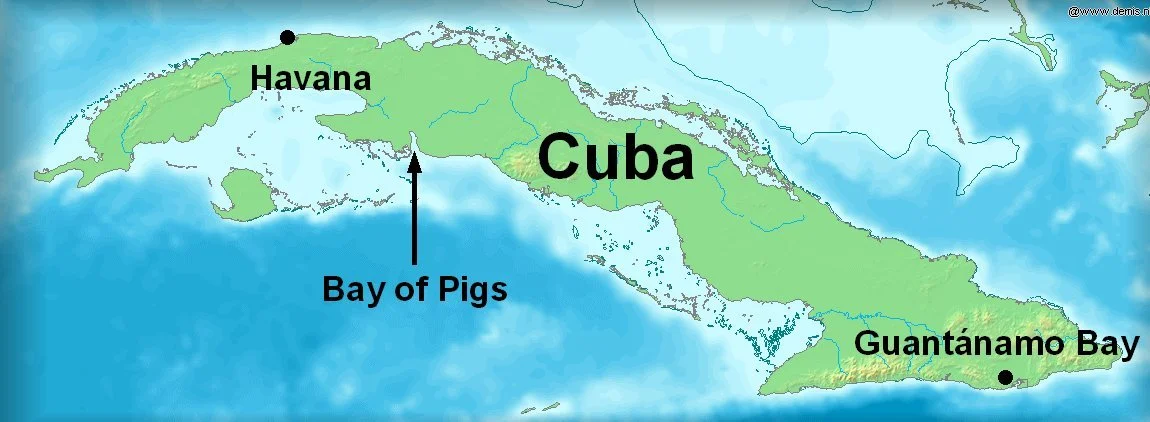
Sixty-Five Years On, Brigade 2506 Opens a New Museum in Little Havana
What happened
On the sixty fifth anniversary of the Bay of Pigs invasion, the Museo de la Brigada 2506 de Bahía de Cochinos opened in Miami's Little Havana at 1821 SW 9th Street. The new two story, 11,000 square foot building was constructed on the site that had housed the Brigade's headquarters since 1988, and was funded with a combination of state, county and city funds together with private support. Mother Jones reported a cost of more than $8 million after five years of planning.
The history the museum records
Approximately 1,500 Cuban exiles, backed by the Central Intelligence Agency, landed at the Bay of Pigs on April 17, 1961. The Miami Herald reports that 102 brigade members were killed. Roughly 1,200 were captured after running out of ammunition and spent about twenty months in captivity before their release was negotiated, with the Kennedy administration supplying $53 million worth of baby food and medicine. Approximately 200 veterans are living today, all of them over eighty.
The exhibits are organized chronologically: pre-1959 Cuba, the training in Central America, the landings, the battles, the capture, the trial, the imprisonment and the release. One exhibit records La Rastra de la Muerte, the trailer truck in which nine captured men died of asphyxiation. A wall carries enlarged portraits of the men killed in the invasion, lit at night. Another carries the photograph of the Brigade's flag being presented to President Kennedy at the Orange Bowl on December 29, 1962, reproduced at a scale that lets a visitor stand within the scene.
The Brigade's historian, Professor Victor Triay, compiled the interviews underlying the displays. Carmen Valdivia is the curator, Carlos Luis the museum president, and Dr. Yuleisy Mena the executive director. Eduardo Zayas-Bazán, who was among the first to land and who assumed the presidency of the Brigade 2506 Veterans Association that weekend, is on the museum board.
Why we are noting it
This firm has long maintained a section on Cuban legal and civic history, and this is the most significant addition to the physical record of that history in decades. The museum's stated purpose is educational. As its executive director put it, it is "a space built with the future in mind."
That purpose has a legal dimension our practice touches directly. The property confiscations that began in 1959 and 1960 are not only history. They are the subject of active litigation in the federal courts of this district, under a 1996 statute that the Supreme Court construed twice this year. The families in those cases and the men in this museum left the same island in the same years for the same reasons.
Sources
● Associated Press, Bay of Pigs veterans mark 65 years with a Miami museum reopening (April 15, 2026)
● Local 10, Bay of Pigs veterans open Miami museum marking failed 1961 invasion (April 18, 2026)
● Miami Herald editorial board, Miami honors Bay of Pigs veterans (April 13, 2023)
Disclaimer
This post discusses publicly reported legal developments for general informational purposes. It is not legal advice, it does not create an attorney client relationship, and it does not reflect the firm's position in any pending matter. Outcomes depend on the specific facts and the governing law of the relevant jurisdiction.

Your Demand Letter Can Be a Jurisdictional Contact
The short answer
On April 17, 2026, the Eleventh Circuit reversed a Miami federal court and held that allegedly tortious cease and desist letters directed into Florida established personal jurisdiction over the senders, and that the corporate shield doctrine did not protect the individual on whose behalf they were sent. A demand campaign purposefully directed at people or business relationships in a state can expose the sender to suit there when the resulting claim arises out of those letters. That is not a rule that every routine cease and desist letter creates jurisdiction wherever it lands. If you receive one from out of state, the letter may nonetheless be enough to bring the sender to you.
Why it comes up
The demand letter is the cheapest tool in intellectual property enforcement. A trademark owner sends one, the recipient stops, and nothing is filed. The strategy assumes the letter is a communication rather than an act with legal consequences of its own.
It is not. A recipient who does not intend to stop has an alternative to waiting: file a declaratory judgment action and litigate on home ground. Whether that works depends on whether the sender is subject to personal jurisdiction in the recipient's forum, and the letter itself is frequently the only contact.
What the court held
The case arose in the Southern District of Florida and involved the entity that manages rights associated with Frida Kahlo. The district court dismissed for lack of personal jurisdiction. The Eleventh Circuit reversed on two grounds.
The corporate shield doctrine did not apply. That doctrine ordinarily protects an individual from being haled into a forum for acts taken solely in a corporate capacity. The court held it did not shelter the individual defendant here because the letters indicated she was acting in her individual capacity.
Minimum contacts were satisfied under the effects test. An intentional tort aimed at the forum, causing injury in the forum, supplies the contacts the Constitution requires.
Our take: this cuts both ways and both ways are useful
For a Florida business on the receiving end of an out of state demand letter, this decision is a genuine strategic asset. The conventional advice has been to respond, negotiate, and hope. The alternative is to file first, in Florida, for a declaratory judgment of non-infringement, and require the accuser to litigate here. That reverses the leverage entirely: the party that thought it was applying costless pressure is now a defendant in a distant forum, paying local counsel and traveling for hearings.
For a Florida business that sends demand letters, the same decision is a warning, and the practical response is drafting discipline rather than silence.
Send in a corporate capacity and make that unmistakable. The corporate shield failed here because the letters read as personal. Sign on behalf of the entity, in a stated corporate role, on entity letterhead.
Do not assume counsel's signature changes the analysis. In this case the letters were sent by the company's general manager acting as the individual defendant's agent, and that is precisely why the corporate shield did not protect her. Jurisdiction turns on whose conduct was purposefully directed at the forum, not on who signed the letter.
Assume the letter will be an exhibit. Overstatement, threats untethered to any legal theory, and accusations of bad faith all read differently when attached to a declaratory judgment complaint than when read by a frightened recipient.
We should be candid about the limits. This is a fact-bound holding, and courts have long treated demand letters as an awkward jurisdictional basis precisely because the alternative discourages parties from trying to resolve disputes without litigation. A different record, particularly one where the sender acted only through a corporation and the letter was measured, may well come out the other way. This decision does not establish that every demand letter creates jurisdiction. It establishes that some do, which is enough to change how both sides should behave.
What it means practically
Before sending: confirm the entity is the sender, the signer is acting in a corporate role, and the letter states a legal theory rather than a threat.
Before responding: ask whether you would rather litigate in your own forum than the sender's, and whether the letter itself supports jurisdiction there. That question has a two-week answer, not a two-month one, because the sender may file first.
When to call a lawyer
Before you send a demand letter, and within days of receiving one from out of state.
Why this is not a do-it-yourself problem
A demand letter looks like correspondence and functions like a pleading. It fixes the accuser's theory, it can waive or preserve arguments, and as this decision confirms, it can decide where the fight happens. The version a business owner drafts alone tends to overstate the claim, which is useful evidence for the other side, and to omit the corporate framing that keeps the signer out of a distant courtroom. On the receiving end, the choice between responding, ignoring and filing first has a short window and permanent consequences, and it turns on an assessment of the sender's likely forum options that is not intuitive.
Talk to us
HDD Law Firm litigates trademark, trade secret and other intellectual property disputes in the Florida state courts, the Southern, Middle and Northern Districts of Florida, and the Eleventh Circuit. If you have sent or received a demand letter and want to understand your options before the other side files, contact us about your dispute.
Related coverage: the same enforcement calculus applies to bidding on a competitor’s trademark in keyword advertising, where liability turns on what the ad itself says rather than on the bid.
Sources
● Frida Kahlo Corp. v. Pinedo, No. 24-10293 (11th Cir. Apr. 17, 2026), via Justia
● The same opinion via CourtListener
Disclaimer
This post discusses publicly reported legal developments for general informational purposes. It is not legal advice, it does not create an attorney client relationship, and it does not reflect the firm's position in any pending matter. Outcomes depend on the specific facts and the governing law of the relevant jurisdiction.

You Received a Notice of Default. Here Is What Happens Next.
The short answer
A notice of default starts a clock, defines the dispute, and represents the last point at which the outcome is fully within your control. What you do in the first few days matters far more than what you do in the following few months. The most common response, a letter explaining why the franchisor is wrong, is the one response that accomplishes nothing.
Why it comes up
The notice arrives in the middle of an ordinary week. It cites contract sections, states a deadline, and reads like the opening move in a negotiation. It is not. In most systems it is a procedural prerequisite the franchisor is completing in order to terminate, and the deadline in it is real.
What the notice should contain, and why that matters to you
Where a state statute applies, the recurring requirement is that the notice state all of the reasons. Minnesota requires written notice setting forth all the reasons at least 90 days in advance. New Jersey requires the same at least 60 days in advance. Wisconsin requires that the notice state all the reasons, gives 60 days to rectify, and provides that if the deficiency is rectified within 60 days, the notice is void.
Two consequences follow, and both favor the franchisee.
A franchisor that omits a ground from the notice may be barred from relying on it later. The notice defines the battlefield.
And curing everything actually listed can void the notice outright. That is what Wisconsin says by statute, and most contractual cure provisions are structured the same way.
A well-drafted notice will identify the specific contract sections breached, the specific facts constituting each breach, the cure period and the exact cure deadline, precisely what cure requires, and the consequence of failing to cure. If yours does not, that is worth noting, though courts have been relatively forgiving of technical defects in notices and franchisors have been permitted to correct deficient ones.
Where the default is classified as non-curable, the document you received is a termination notice, not a default notice, and the analysis in our post on franchise defaults and terminations applies immediately.
Our take: five things to do in the first week
Read the notice against the contract, not against the facts. The first question is not whether the franchisor is right. It is what the cited sections say, whether the alleged breach is classified as curable or non-curable in Item 17, and what the cure period is. Everything else follows from those three answers.
Calendar the deadline the day the notice arrives, and check the notice provision. Whether a mailed notice is effective on deposit or on receipt can move the cure deadline by days. The notice article of the agreement controls, not intuition. So does the list of who must be copied.
Cure to the letter, in writing, with proof. Partial or informal cure loses. In one reported case, evidence that a franchisee had handed menus to some guests was held insufficient, without more, to establish cure. Document what was done and when, and send the documentation through the contractual notice channel.
Do not withhold anything while you dispute the default. This is the single most expensive instinct in franchise law, and the case law is unambiguous. In S & R Corp. v. Jiffy Lube International, Inc., 968 F.2d 371 (3d Cir. 1992), the court held that a franchisor's right to terminate exists independently of any claims the franchisee might have against the franchisor, and that a terminated franchisee's remedy for wrongful termination is an action for money damages, not continued unauthorized use of the marks. Withholding royalties to protest franchisor conduct is the fact pattern that loses.
Preserve your claims separately. If you believe the franchisor is in breach, or that the default was manufactured, that is a claim. It is not a defense to the cure obligation, and it needs to be developed on its own track rather than used as a reason not to cure.
One further point on sequencing. If the franchisor offers to reinstate or forbear in exchange for a signed agreement, read our post on broad releases before signing. Settlement of a default notice is one of the most common moments at which a general release is presented, and, notably, it is also the context in which such releases are most likely to be legitimate and enforceable, because it is a genuine post-dispute settlement rather than the price of a routine consent. That cuts both ways: the release is more defensible, and it is also more likely to actually extinguish what it says it extinguishes.
What it means practically
The cure period is the only phase of this process in which you hold the outcome. After it lapses, you are litigating from a materially worse position, against a party seeking an injunction, with the doctrines described in our post on franchise defaults and terminations running against you.
Assume the clock is shorter than you think. Cure periods are frequently measured in days.
If you have cured on prior occasions, understand that repeated defaults are commonly a non-curable ground on their own. A pattern of last-minute cures shortens the runway rather than establishing a tolerance.
When to call a lawyer
Within days of receiving the notice. Not after the cure period expires, when the available options have narrowed to two and both are expensive.
Why this is not a do-it-yourself problem
The notice arrives with a deadline that is usually too short to research the answer, and the correct response frequently runs against instinct. The instinct is to explain. The correct move is usually to cure completely and provably while separately preserving any claim you have, which requires knowing that curing does not waive the claim, that disputing does not extend the deadline, and that withholding payment converts a defensible position into an indefensible one. It also requires reading the notice provision, the cure provision, and the Item 17 classification together and quickly. A lawyer's value here is almost entirely a function of speed, and the window closes on a fixed date whether or not anyone has called one.
Talk to us
HDD Law Firm represents franchisees and franchisors in default and termination disputes in the Florida state courts, the Southern, Middle and Northern Districts of Florida, and the Eleventh Circuit. If you have received a notice of default, contact us promptly to discuss your matter, because the cure period runs regardless.
Related coverage: a franchisee facing termination sometimes has to choose between closing through an orderly wind-down and filing for Chapter 11, and the decisions that separate the two paths are not obvious.
Sources
● 16 C.F.R. 436.5, Contents of the disclosure document, including the Item 17 table (eCFR)
● Wis. Stat. ch. 135, Wisconsin Fair Dealership Law
● S & R Corp. v. Jiffy Lube International, Inc., 968 F.2d 371 (3d Cir. 1992) (CourtListener)
● Steak n Shake Enterprises, Inc. v. Globex Co., 110 F. Supp. 3d 1057 (D. Colo. 2015) (CourtListener)
● Burger King Corp. v. Mason, 710 F.2d 1480 (11th Cir. 1983) (CourtListener)
● American Bar Association, Franchise Agreement Provisions That Can Make or Break a Court Case
Disclaimer
This post discusses publicly reported legal developments for general informational purposes. It is not legal advice, it does not create an attorney client relationship, and it does not reflect the firm’s position in any pending matter. Outcomes depend on the specific facts and the governing law of the relevant jurisdiction.

Franchise Defaults and Terminations: How the Process Actually Works
The short answer
Franchise agreements sort defaults into two categories: those you get a chance to fix and those you do not. The FDD is required to tell you which is which, before you sign, in Item 17. Most operational and monetary breaches are curable on a short clock. A specific list of breaches is not curable at all, and for those the first notice you receive is a termination notice rather than a default notice.
Why it comes up
Franchisees tend to think of default as a spectrum, where a problem gets worse gradually and there is always time to negotiate. The contract does not work that way. It works as a switch, and which side of the switch you are on was decided when you signed.
What the agreement typically provides
The FTC Franchise Rule requires the Item 17 table to include separate rows for "cause defined, curable defaults" and "cause defined, non-curable defaults," along with rows for termination by the franchisee, termination by the franchisor without cause, and termination by the franchisor with cause. That structure is the whole topic in miniature, and it is disclosed to every prospective franchisee before signing.
Curable defaults are typically the ordinary operational and monetary breaches: unpaid royalties, advertising fund contributions, or other sums; failure to meet operating manual or brand standards; failure to submit reports; failure to maintain insurance; failure to complete required remodeling or training; understaffing.
Non-curable defaults converge on a recognizable list across both agreements and the state statutes that regulate this area. California's statute, which is a useful reference point even for a Florida franchisee because agreements borrow its categories, permits termination with no cure opportunity for bankruptcy or insolvency; abandonment of the business; mutual written agreement; material misrepresentation or fraud; failure to comply with applicable law after notice; repeated violations even if individually cured; government seizure or foreclosure; conviction of a felony or a crime relevant to the business; unpaid fees after a short notice; and conduct creating imminent danger to public health or safety. Minnesota's statute adds the phrase many agreements borrow: conduct that materially impairs the goodwill associated with the franchisor's marks.
Three of those deserve comment.
Repeated defaults. The classic three-strikes clause. A franchisee who cures each individual default but defaults repeatedly, often two or three times in twelve months, forfeits the right to cure at all. A pattern of last-minute cures is therefore not a sustainable strategy; it is a countdown.
Underreporting sales. Failing to pay is a curable money default. Understating gross sales is deceit, and it is treated as material misrepresentation, which is not curable. Franchisors generally hold audit rights, with audit fees disclosed in Item 6. This is the single most dangerous line a struggling franchisee can cross.
Unauthorized transfer. Routinely listed as non-curable, on the theory that the franchisor's consent right is the point of the provision.
Cure periods are short. Common structures tier them: a short window for money, a longer one for operational cure, and very short windows, sometimes measured in hours, for health, safety, or sanitation. In one reported case, a franchisor's default notice gave a two-day cure deadline and the resulting termination was enforced.
Our take: whether a statute helps you depends entirely on where you are
A minority of states impose good cause requirements and statutory cure periods on franchise termination and nonrenewal. Industry materials count roughly twenty states plus Puerto Rico and the Virgin Islands, though the exact roster varies by source and several of the listed statutes are industry-specific or reach only nonrenewal. Where they apply, they share four features: good cause defined as substantial noncompliance with the agreement; a pre-termination notice period, commonly 60 or 90 days; a cure period, commonly 30 to 60 days, sometimes running concurrently; and a list of enumerated grounds that bypass notice and cure entirely.
Two of those features are worth a franchisee's attention.
The notice must ordinarily state all the reasons. Minnesota and New Jersey both say so expressly. A franchisor that omits a ground from the notice may be barred from relying on it later.
And in Wisconsin, if the deficiency is rectified within 60 days, the statute provides that the notice is void. Most contractual cure provisions work the same way. Curing everything actually listed can defeat the notice outright.
In Florida there is no such statute for franchises generally. The contract is the whole of the protection. That is covered in our post on franchisee rights in Florida, and it is the reason a Florida franchisee should read Item 17 before signing with more care than a franchisee in New Jersey needs to.
California adds one unusual provision worth knowing about because nothing like it exists in Florida: on a lawful termination or nonrenewal, the franchisor must purchase from the franchisee, at price paid less depreciation, all inventory, supplies, equipment, fixtures, and furnishings purchased under the agreement.
What happens on termination
The standard post-termination package: cease operating; cease all use of the marks, systems, and confidential information; pay all outstanding sums; return manuals and proprietary materials; assign telephone numbers, domain names, social media accounts, and business listings to the franchisor; and in many systems, submit to the franchisor's option to purchase the assets or take assignment of the lease.
De-identification is the physical half: remove signage, menu boards, uniforms, packaging, and distinctive trade dress, repaint, and alter protected building features, usually on a short deadline, with the franchisor holding a self-help right to enter and de-identify at the franchisee's expense.
Post-term covenants then apply, on terms that vary enormously by state.
On money, there are two lines of authority. Where a validly drafted liquidated damages clause measures lost future fees, courts have enforced it, as in Radisson Hotels International, Inc. v. Majestic Towers, Inc., 488 F. Supp. 2d 953 (C.D. Cal. 2007). Where there is no such clause and the franchisor elected to terminate for nonpayment, there is authority that future royalties are not proximately caused by the breach and are not recoverable as ordinary contract damages. The practical point is that whether a franchisor recovers future royalties usually turns on the drafting, not on general damages principles.
And because franchise agreements are typically signed by an entity and separately guaranteed by the individual owners, often including spouses, the consequences of termination reach personal assets.
When to call a lawyer
The day a default notice arrives, and before that if you can see one coming.
Why this is not a do-it-yourself problem
The three decisions a franchisee has to make on receiving a default notice all have to be made at once, on a clock measured in days, and all three are counterintuitive. Whether the alleged default is curable at all, which determines whether you are negotiating or complying. Whether curing everything listed voids the notice, which requires reading the notice against the contract sections it cites rather than against the facts. And whether to withhold anything while disputing the default, which is the single most common and most expensive mistake. A franchisee working this out alone typically spends the cure period drafting a letter explaining why the franchisor is wrong, which is the one response that accomplishes nothing and forfeits everything.
Talk to us
HDD Law Firm represents franchisees and franchisors in default, termination, and post-termination disputes in Florida and the federal courts of this state. If you are facing a default or termination, contact us to discuss your matter promptly.
Sources
● 16 C.F.R. 436.5, Contents of the disclosure document, including the Item 17 table (eCFR)
● FTC, Franchise Rule Compliance Guide
● California AB 525 (2015), amending Bus. & Prof. Code 20020, 20021, 20022
● Wis. Stat. ch. 135, Wisconsin Fair Dealership Law
● Steak n Shake Enterprises, Inc. v. Globex Co., 110 F. Supp. 3d 1057 (D. Colo. 2015) (CourtListener)
● International Franchise Association, Basics Track: Franchise Relationship Laws
● NASAA, Post-Term Non-Compete Provisions in Franchise Agreements Should Be Reasonable
Disclaimer
This post discusses publicly reported legal developments for general informational purposes. It is not legal advice, it does not create an attorney client relationship, and it does not reflect the firm’s position in any pending matter. Outcomes depend on the specific facts and the governing law of the relevant jurisdiction.

Franchisee Rights in Florida: What the Law Gives You and What It Does Not
The short answer
Florida gives franchisees a real, and unusually blunt, remedy for misrepresentations made when the franchise was sold. It gives them almost nothing governing the relationship afterward. There is no Florida statute requiring good cause to terminate a franchise, no statutory cure period, no anti-waiver provision protecting statutory claims from release, and no restriction on out-of-state choice of law or forum clauses. For most Florida franchisees, the franchise agreement is the whole of the protection after closing.
Why it comes up
Franchisees frequently assume that because franchising is heavily regulated, a body of law stands between them and the franchisor. Some of that assumption comes from reading about California, New Jersey, Minnesota, or Wisconsin, which have substantial franchise relationship statutes. Florida is a different regime, and the difference is worth understanding before signing rather than after receiving a termination notice.
What Florida law actually provides
Section 817.416, Florida Statutes, is the main franchisee remedy, and it is about the sale. Enacted in 1971 and never amended, it sits in the criminal fraud chapter. It makes it unlawful, when selling or establishing a franchise or distributorship, for any person intentionally to misrepresent the prospects or chances for success; intentionally to misrepresent, by failure to disclose or otherwise, the known required total investment; or intentionally to misrepresent or fail to disclose efforts to sell more franchises than the market can reasonably be expected to sustain.
Four features matter.
The remedy is restitutionary. Subsection (3) provides that a person who shows a violation "may receive a judgment for all moneys invested in such franchise or distributorship." That is a floor and, under the statute itself, arguably a ceiling. A franchisee seeking lost profits generally needs a parallel common-law fraud count.
Fees are discretionary, costs are mandatory. The court "may" award reasonable attorney's fees and "shall" award reasonable costs. That asymmetry is frequently misstated.
The fee provision runs one way, in favor of the party bringing the action. Contrast FDUTPA, below, which is two-way.
Each prohibition requires intent. This is not a negligence or strict-liability statute.
The statute also carries a criminal provision, making a knowing or intentional scheme a second-degree misdemeanor, and it authorizes the Department of Legal Affairs to sue for injunctive relief. Note that there is no express private injunctive remedy.
There is also a definitional gate. Section 817.416(1)(b) defines franchise or distributorship using four conjunctive elements, the last being that the operation of the franchisee's business is "substantially reliant on franchisors for the basic supply of goods." For a service-only franchise system, that element is a real defense and a recurring fight.
The Sale of Business Opportunities Act regulates the sale, and franchisors are usually exempt from it. Chapter 559, Part VIII requires pre-sale written disclosure, a bond in some circumstances, a written contract, and provides rescission within one year plus damages and fees. Violations are a third-degree felony, which is a sharp contrast with section 817.416's misdemeanor for overlapping conduct.
Section 559.802 exempts the sale of a franchise if two conditions are met: the arrangement meets the FTC's definition of a franchise, and, before offering or selling into Florida, the franchisor files a notice with the Department of Agriculture and Consumer Services stating substantial compliance with the FTC rule and pays a fee not exceeding $100, renewable annually.
That exemption is not self-executing, and the point deserves emphasis. A franchisor that sells into Florida without making the filing is not, on the face of the statute, exempt, which would expose it to Part VIII's disclosure, bond, contract-form, rescission, damages, fee, and felony provisions. Whether a given franchisor has filed is a question with a checkable answer.
Note also what Florida is not. Florida is a notice-filing state, not a franchise registration state. The Department collects a one-page notice. It does not examine or approve any FDD.
FDUTPA is the general-purpose tool. Chapter 501, Part II declares unlawful unfair methods of competition, unconscionable acts, and unfair or deceptive acts in trade or commerce, and directs courts to give great weight to FTC interpretations of Section 5 of the FTC Act as of July 1, 2017. The definition of "consumer" expressly includes businesses and commercial entities, so business-to-business franchise claims are within it.
Its advantages for a franchisee are meaningful: no individualized reliance element, coverage of unfairness as well as deception, a fee provision, and a four-year limitations period. Its limits are equally real. Under Rollins, Inc. v. Butland, 951 So. 2d 860 (Fla. 2d DCA 2006), actual damages are measured by the difference in market value as delivered versus as promised, and consequential damages are not recoverable as FDUTPA actual damages. For a franchisee, that excludes exactly what hurts most, the operating losses and lost profits. And the fee provision under section 501.2105 is two-way and prevailing-party, which means a weak franchise case carries real fee exposure to the franchisee.
FDUTPA also matters for a structural reason. There is no private right of action to enforce the FTC Franchise Rule. Courts have said so repeatedly, and the FTC said so itself in the Federal Register when it adopted the amended rule. FDUTPA is the vehicle through which the Rule's substantive standards reach a private franchise dispute in Florida.
Our take: the gap is the relationship, and it is a large gap
Florida has no general franchise relationship statute. Nothing in Florida law resembles the New Jersey Franchise Practices Act or the Wisconsin Fair Dealership Law. Chapter 559, Part VIII regulates only the sale. Section 817.416 regulates only misrepresentations when selling or establishing. Neither reaches termination, nonrenewal, transfer, encroachment, or the ongoing relationship at all.
The consequences for a Florida franchisee are concrete.
No statutory good cause requirement for termination. Whatever the agreement permits, the franchisor may do.
No statutory cure period. The cure period is whatever the contract says, and contract cure periods are short.
No anti-waiver statute. In Washington, Minnesota, New York, Maryland, and California, statutory franchise claims cannot be released as a condition of a routine transaction. In Florida there is no equivalent, which is why our post on broad releases matters more here than it would in those states.
No restriction on out-of-state choice of law and forum clauses. A Florida franchisee whose agreement calls for arbitration in the franchisor's home state under that state's law will generally get exactly that.
Florida does have industry-specific protections, and they are genuinely strong where they apply. Motor vehicle dealers are protected by sections 320.60 through 320.70, requiring 90 days' notice, placing the burden on the manufacturer to prove the action is fair, requiring at least 180 days to cure sales or service performance failures, and, under section 320.697, providing treble damages plus costs and fees. Beer distributors are protected by section 563.022, requiring good cause, a corrective action plan, and 90 days' notice. Agricultural equipment and outdoor power equipment dealers have their own acts in chapter 686.
Two negative findings are worth stating affirmatively, because they are commonly assumed the other way. Gasoline and petroleum franchises in Florida are governed on termination by the federal Petroleum Marketing Practices Act, not by state law; chapter 526 addresses fuel quality and pricing, not franchise termination. And the alcoholic beverage protection covers beer distributors only. There is no counterpart for wine or spirits.
Non-competes. Section 542.335 governs post-term franchise covenants and it is not a franchisee-friendly statute. It expressly contemplates franchise relationships, and it presumes reasonable any restraint of one year or less against a former franchisee, while presuming unreasonable any restraint longer than three years. If a covenant is overbroad, the court "shall modify" it and grant the relief reasonably necessary, so Florida narrows overbroad covenants rather than striking them. The statute directs courts not to consider individualized economic hardship to the person against whom enforcement is sought, which removes the "this will destroy my livelihood" argument as a matter of law. And violation of an enforceable restrictive covenant creates a presumption of irreparable injury.
The 2025 CHOICE Act, sections 542.41 through 542.45, does not change this. It is an employment statute keyed to a "covered employee," meaning an employee or individual contractor above a wage threshold, and a franchisee entity is neither. Its own savings clause provides that any restrictive covenant not meeting its definitions is governed by section 542.335. It did not amend section 542.335.
What it means practically
For a Florida franchisee, the leverage is almost entirely at the front end. Pre-sale misrepresentation claims are where Florida law is strongest. Relationship claims are where it is weakest.
That inverts the usual instinct. The time to spend money on a lawyer is when the FDD arrives, not when the termination notice does.
Document the sale. Section 817.416 requires intentional misrepresentation, which means the record of what was said, by whom, and when, is the case.
Check whether the franchisor made the section 559.802 filing.
When to call a lawyer
Before signing. And, if a dispute has already arisen, promptly, because the four-year limitations periods run from events that may be years old.
Why this is not a do-it-yourself problem
Florida franchise law is a patchwork of a 1971 criminal statute, a business-opportunity act that mostly exempts franchisors, a general consumer-protection statute with a damages limitation that removes the franchisee's biggest losses, and no relationship law at all. Which claim fits which facts is not obvious, the remedies differ sharply, one carries two-way fee exposure and one does not, and the strongest claim is frequently the one with the shortest practical window. Getting that mix right is the difference between recovering everything invested and recovering nothing while paying the other side's fees. It is also, in a state with no anti-waiver statute, a decision that can be foreclosed entirely by a release signed months earlier at a routine renewal.
Talk to us
HDD Law Firm litigates franchise disputes for franchisees and franchisors in the Florida state courts, the Southern, Middle and Northern Districts of Florida, and the Eleventh Circuit. If you are evaluating a Florida franchise or facing a dispute with a franchisor, contact us to discuss your matter.
Sources
● Fla. Stat. 817.416, Franchises and distributorships; misrepresentations
● Fla. Stat. 559.802, Franchises; exemption
● Fla. Stat. 559.809, Prohibited acts
● Fla. Stat. 559.813, Remedies; enforcement
● Fla. Stat. 501.204, Unlawful acts and practices (FDUTPA)
● Fla. Stat. 501.2105, Attorney's fees
● Fla. Stat. 501.211, Other individual remedies
● Fla. Stat. 542.335, Valid restraints of trade or commerce
● Fla. Stat. 542.41, Florida CHOICE Act
● Fla. Stat. 320.697, Civil damages
● Fla. Stat. 563.022, Relations between beer distributors and manufacturers
● FDACS, Sellers of Business Franchises
● Rollins, Inc. v. Butland, 951 So. 2d 860 (Fla. 2d DCA 2006) (CourtListener)
● Carriuolo v. General Motors Co., 823 F.3d 977 (11th Cir. 2016) (CourtListener)
Disclaimer
This post discusses publicly reported legal developments for general informational purposes. It is not legal advice, it does not create an attorney client relationship, and it does not reflect the firm’s position in any pending matter. Outcomes depend on the specific facts and the governing law of the relevant jurisdiction.