

Hirzel Dreyfuss & Dempsey, PLLC
NEWS AND INFORMATION
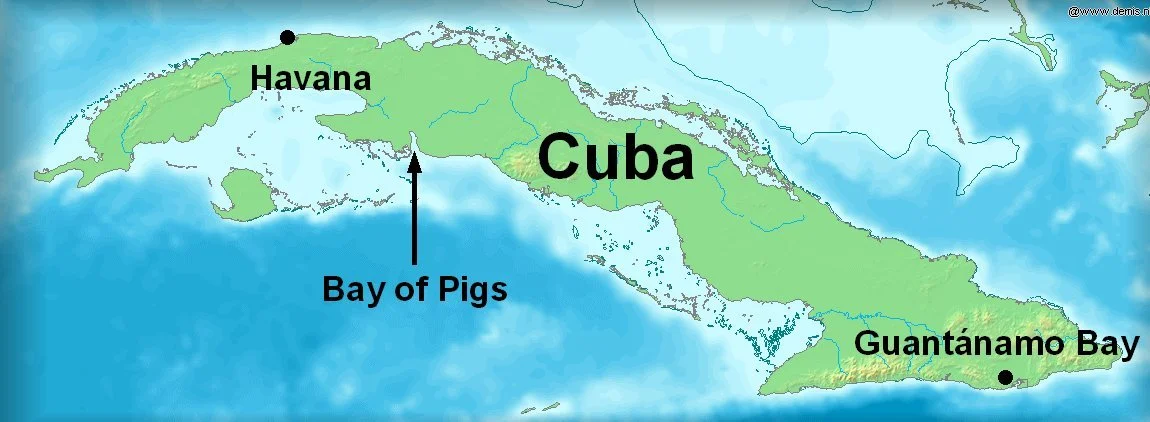
Sixty-Five Years On, Brigade 2506 Opens a New Museum in Little Havana
What happened
On the sixty fifth anniversary of the Bay of Pigs invasion, the Museo de la Brigada 2506 de Bahía de Cochinos opened in Miami's Little Havana at 1821 SW 9th Street. The new two story, 11,000 square foot building was constructed on the site that had housed the Brigade's headquarters since 1988, and was funded with a combination of state, county and city funds together with private support. Mother Jones reported a cost of more than $8 million after five years of planning.
The history the museum records
Approximately 1,500 Cuban exiles, backed by the Central Intelligence Agency, landed at the Bay of Pigs on April 17, 1961. The Miami Herald reports that 102 brigade members were killed. Roughly 1,200 were captured after running out of ammunition and spent about twenty months in captivity before their release was negotiated, with the Kennedy administration supplying $53 million worth of baby food and medicine. Approximately 200 veterans are living today, all of them over eighty.
The exhibits are organized chronologically: pre-1959 Cuba, the training in Central America, the landings, the battles, the capture, the trial, the imprisonment and the release. One exhibit records La Rastra de la Muerte, the trailer truck in which nine captured men died of asphyxiation. A wall carries enlarged portraits of the men killed in the invasion, lit at night. Another carries the photograph of the Brigade's flag being presented to President Kennedy at the Orange Bowl on December 29, 1962, reproduced at a scale that lets a visitor stand within the scene.
The Brigade's historian, Professor Victor Triay, compiled the interviews underlying the displays. Carmen Valdivia is the curator, Carlos Luis the museum president, and Dr. Yuleisy Mena the executive director. Eduardo Zayas-Bazán, who was among the first to land and who assumed the presidency of the Brigade 2506 Veterans Association that weekend, is on the museum board.
Why we are noting it
This firm has long maintained a section on Cuban legal and civic history, and this is the most significant addition to the physical record of that history in decades. The museum's stated purpose is educational. As its executive director put it, it is "a space built with the future in mind."
That purpose has a legal dimension our practice touches directly. The property confiscations that began in 1959 and 1960 are not only history. They are the subject of active litigation in the federal courts of this district, under a 1996 statute that the Supreme Court construed twice this year. The families in those cases and the men in this museum left the same island in the same years for the same reasons.
Sources
● Associated Press, Bay of Pigs veterans mark 65 years with a Miami museum reopening (April 15, 2026)
● Local 10, Bay of Pigs veterans open Miami museum marking failed 1961 invasion (April 18, 2026)
● Miami Herald editorial board, Miami honors Bay of Pigs veterans (April 13, 2023)
Disclaimer
This post discusses publicly reported legal developments for general informational purposes. It is not legal advice, it does not create an attorney client relationship, and it does not reflect the firm's position in any pending matter. Outcomes depend on the specific facts and the governing law of the relevant jurisdiction.

Your Demand Letter Can Be a Jurisdictional Contact
The short answer
On April 17, 2026, the Eleventh Circuit reversed a Miami federal court and held that allegedly tortious cease and desist letters directed into Florida established personal jurisdiction over the senders, and that the corporate shield doctrine did not protect the individual on whose behalf they were sent. A demand campaign purposefully directed at people or business relationships in a state can expose the sender to suit there when the resulting claim arises out of those letters. That is not a rule that every routine cease and desist letter creates jurisdiction wherever it lands. If you receive one from out of state, the letter may nonetheless be enough to bring the sender to you.
Why it comes up
The demand letter is the cheapest tool in intellectual property enforcement. A trademark owner sends one, the recipient stops, and nothing is filed. The strategy assumes the letter is a communication rather than an act with legal consequences of its own.
It is not. A recipient who does not intend to stop has an alternative to waiting: file a declaratory judgment action and litigate on home ground. Whether that works depends on whether the sender is subject to personal jurisdiction in the recipient's forum, and the letter itself is frequently the only contact.
What the court held
The case arose in the Southern District of Florida and involved the entity that manages rights associated with Frida Kahlo. The district court dismissed for lack of personal jurisdiction. The Eleventh Circuit reversed on two grounds.
The corporate shield doctrine did not apply. That doctrine ordinarily protects an individual from being haled into a forum for acts taken solely in a corporate capacity. The court held it did not shelter the individual defendant here because the letters indicated she was acting in her individual capacity.
Minimum contacts were satisfied under the effects test. An intentional tort aimed at the forum, causing injury in the forum, supplies the contacts the Constitution requires.
Our take: this cuts both ways and both ways are useful
For a Florida business on the receiving end of an out of state demand letter, this decision is a genuine strategic asset. The conventional advice has been to respond, negotiate, and hope. The alternative is to file first, in Florida, for a declaratory judgment of non-infringement, and require the accuser to litigate here. That reverses the leverage entirely: the party that thought it was applying costless pressure is now a defendant in a distant forum, paying local counsel and traveling for hearings.
For a Florida business that sends demand letters, the same decision is a warning, and the practical response is drafting discipline rather than silence.
Send in a corporate capacity and make that unmistakable. The corporate shield failed here because the letters read as personal. Sign on behalf of the entity, in a stated corporate role, on entity letterhead.
Do not assume counsel's signature changes the analysis. In this case the letters were sent by the company's general manager acting as the individual defendant's agent, and that is precisely why the corporate shield did not protect her. Jurisdiction turns on whose conduct was purposefully directed at the forum, not on who signed the letter.
Assume the letter will be an exhibit. Overstatement, threats untethered to any legal theory, and accusations of bad faith all read differently when attached to a declaratory judgment complaint than when read by a frightened recipient.
We should be candid about the limits. This is a fact-bound holding, and courts have long treated demand letters as an awkward jurisdictional basis precisely because the alternative discourages parties from trying to resolve disputes without litigation. A different record, particularly one where the sender acted only through a corporation and the letter was measured, may well come out the other way. This decision does not establish that every demand letter creates jurisdiction. It establishes that some do, which is enough to change how both sides should behave.
What it means practically
Before sending: confirm the entity is the sender, the signer is acting in a corporate role, and the letter states a legal theory rather than a threat.
Before responding: ask whether you would rather litigate in your own forum than the sender's, and whether the letter itself supports jurisdiction there. That question has a two-week answer, not a two-month one, because the sender may file first.
When to call a lawyer
Before you send a demand letter, and within days of receiving one from out of state.
Why this is not a do-it-yourself problem
A demand letter looks like correspondence and functions like a pleading. It fixes the accuser's theory, it can waive or preserve arguments, and as this decision confirms, it can decide where the fight happens. The version a business owner drafts alone tends to overstate the claim, which is useful evidence for the other side, and to omit the corporate framing that keeps the signer out of a distant courtroom. On the receiving end, the choice between responding, ignoring and filing first has a short window and permanent consequences, and it turns on an assessment of the sender's likely forum options that is not intuitive.
Talk to us
HDD Law Firm litigates trademark, trade secret and other intellectual property disputes in the Florida state courts, the Southern, Middle and Northern Districts of Florida, and the Eleventh Circuit. If you have sent or received a demand letter and want to understand your options before the other side files, contact us about your dispute.
Related coverage: the same enforcement calculus applies to bidding on a competitor’s trademark in keyword advertising, where liability turns on what the ad itself says rather than on the bid.
Sources
● Frida Kahlo Corp. v. Pinedo, No. 24-10293 (11th Cir. Apr. 17, 2026), via Justia
● The same opinion via CourtListener
Disclaimer
This post discusses publicly reported legal developments for general informational purposes. It is not legal advice, it does not create an attorney client relationship, and it does not reflect the firm's position in any pending matter. Outcomes depend on the specific facts and the governing law of the relevant jurisdiction.

You Received a Notice of Default. Here Is What Happens Next.
The short answer
A notice of default starts a clock, defines the dispute, and represents the last point at which the outcome is fully within your control. What you do in the first few days matters far more than what you do in the following few months. The most common response, a letter explaining why the franchisor is wrong, is the one response that accomplishes nothing.
Why it comes up
The notice arrives in the middle of an ordinary week. It cites contract sections, states a deadline, and reads like the opening move in a negotiation. It is not. In most systems it is a procedural prerequisite the franchisor is completing in order to terminate, and the deadline in it is real.
What the notice should contain, and why that matters to you
Where a state statute applies, the recurring requirement is that the notice state all of the reasons. Minnesota requires written notice setting forth all the reasons at least 90 days in advance. New Jersey requires the same at least 60 days in advance. Wisconsin requires that the notice state all the reasons, gives 60 days to rectify, and provides that if the deficiency is rectified within 60 days, the notice is void.
Two consequences follow, and both favor the franchisee.
A franchisor that omits a ground from the notice may be barred from relying on it later. The notice defines the battlefield.
And curing everything actually listed can void the notice outright. That is what Wisconsin says by statute, and most contractual cure provisions are structured the same way.
A well-drafted notice will identify the specific contract sections breached, the specific facts constituting each breach, the cure period and the exact cure deadline, precisely what cure requires, and the consequence of failing to cure. If yours does not, that is worth noting, though courts have been relatively forgiving of technical defects in notices and franchisors have been permitted to correct deficient ones.
Where the default is classified as non-curable, the document you received is a termination notice, not a default notice, and the analysis in our post on franchise defaults and terminations applies immediately.
Our take: five things to do in the first week
Read the notice against the contract, not against the facts. The first question is not whether the franchisor is right. It is what the cited sections say, whether the alleged breach is classified as curable or non-curable in Item 17, and what the cure period is. Everything else follows from those three answers.
Calendar the deadline the day the notice arrives, and check the notice provision. Whether a mailed notice is effective on deposit or on receipt can move the cure deadline by days. The notice article of the agreement controls, not intuition. So does the list of who must be copied.
Cure to the letter, in writing, with proof. Partial or informal cure loses. In one reported case, evidence that a franchisee had handed menus to some guests was held insufficient, without more, to establish cure. Document what was done and when, and send the documentation through the contractual notice channel.
Do not withhold anything while you dispute the default. This is the single most expensive instinct in franchise law, and the case law is unambiguous. In S & R Corp. v. Jiffy Lube International, Inc., 968 F.2d 371 (3d Cir. 1992), the court held that a franchisor's right to terminate exists independently of any claims the franchisee might have against the franchisor, and that a terminated franchisee's remedy for wrongful termination is an action for money damages, not continued unauthorized use of the marks. Withholding royalties to protest franchisor conduct is the fact pattern that loses.
Preserve your claims separately. If you believe the franchisor is in breach, or that the default was manufactured, that is a claim. It is not a defense to the cure obligation, and it needs to be developed on its own track rather than used as a reason not to cure.
One further point on sequencing. If the franchisor offers to reinstate or forbear in exchange for a signed agreement, read our post on broad releases before signing. Settlement of a default notice is one of the most common moments at which a general release is presented, and, notably, it is also the context in which such releases are most likely to be legitimate and enforceable, because it is a genuine post-dispute settlement rather than the price of a routine consent. That cuts both ways: the release is more defensible, and it is also more likely to actually extinguish what it says it extinguishes.
What it means practically
The cure period is the only phase of this process in which you hold the outcome. After it lapses, you are litigating from a materially worse position, against a party seeking an injunction, with the doctrines described in our post on franchise defaults and terminations running against you.
Assume the clock is shorter than you think. Cure periods are frequently measured in days.
If you have cured on prior occasions, understand that repeated defaults are commonly a non-curable ground on their own. A pattern of last-minute cures shortens the runway rather than establishing a tolerance.
When to call a lawyer
Within days of receiving the notice. Not after the cure period expires, when the available options have narrowed to two and both are expensive.
Why this is not a do-it-yourself problem
The notice arrives with a deadline that is usually too short to research the answer, and the correct response frequently runs against instinct. The instinct is to explain. The correct move is usually to cure completely and provably while separately preserving any claim you have, which requires knowing that curing does not waive the claim, that disputing does not extend the deadline, and that withholding payment converts a defensible position into an indefensible one. It also requires reading the notice provision, the cure provision, and the Item 17 classification together and quickly. A lawyer's value here is almost entirely a function of speed, and the window closes on a fixed date whether or not anyone has called one.
Talk to us
HDD Law Firm represents franchisees and franchisors in default and termination disputes in the Florida state courts, the Southern, Middle and Northern Districts of Florida, and the Eleventh Circuit. If you have received a notice of default, contact us promptly to discuss your matter, because the cure period runs regardless.
Related coverage: a franchisee facing termination sometimes has to choose between closing through an orderly wind-down and filing for Chapter 11, and the decisions that separate the two paths are not obvious.
Sources
● 16 C.F.R. 436.5, Contents of the disclosure document, including the Item 17 table (eCFR)
● Wis. Stat. ch. 135, Wisconsin Fair Dealership Law
● S & R Corp. v. Jiffy Lube International, Inc., 968 F.2d 371 (3d Cir. 1992) (CourtListener)
● Steak n Shake Enterprises, Inc. v. Globex Co., 110 F. Supp. 3d 1057 (D. Colo. 2015) (CourtListener)
● Burger King Corp. v. Mason, 710 F.2d 1480 (11th Cir. 1983) (CourtListener)
● American Bar Association, Franchise Agreement Provisions That Can Make or Break a Court Case
Disclaimer
This post discusses publicly reported legal developments for general informational purposes. It is not legal advice, it does not create an attorney client relationship, and it does not reflect the firm’s position in any pending matter. Outcomes depend on the specific facts and the governing law of the relevant jurisdiction.

Franchise Defaults and Terminations: How the Process Actually Works
The short answer
Franchise agreements sort defaults into two categories: those you get a chance to fix and those you do not. The FDD is required to tell you which is which, before you sign, in Item 17. Most operational and monetary breaches are curable on a short clock. A specific list of breaches is not curable at all, and for those the first notice you receive is a termination notice rather than a default notice.
Why it comes up
Franchisees tend to think of default as a spectrum, where a problem gets worse gradually and there is always time to negotiate. The contract does not work that way. It works as a switch, and which side of the switch you are on was decided when you signed.
What the agreement typically provides
The FTC Franchise Rule requires the Item 17 table to include separate rows for "cause defined, curable defaults" and "cause defined, non-curable defaults," along with rows for termination by the franchisee, termination by the franchisor without cause, and termination by the franchisor with cause. That structure is the whole topic in miniature, and it is disclosed to every prospective franchisee before signing.
Curable defaults are typically the ordinary operational and monetary breaches: unpaid royalties, advertising fund contributions, or other sums; failure to meet operating manual or brand standards; failure to submit reports; failure to maintain insurance; failure to complete required remodeling or training; understaffing.
Non-curable defaults converge on a recognizable list across both agreements and the state statutes that regulate this area. California's statute, which is a useful reference point even for a Florida franchisee because agreements borrow its categories, permits termination with no cure opportunity for bankruptcy or insolvency; abandonment of the business; mutual written agreement; material misrepresentation or fraud; failure to comply with applicable law after notice; repeated violations even if individually cured; government seizure or foreclosure; conviction of a felony or a crime relevant to the business; unpaid fees after a short notice; and conduct creating imminent danger to public health or safety. Minnesota's statute adds the phrase many agreements borrow: conduct that materially impairs the goodwill associated with the franchisor's marks.
Three of those deserve comment.
Repeated defaults. The classic three-strikes clause. A franchisee who cures each individual default but defaults repeatedly, often two or three times in twelve months, forfeits the right to cure at all. A pattern of last-minute cures is therefore not a sustainable strategy; it is a countdown.
Underreporting sales. Failing to pay is a curable money default. Understating gross sales is deceit, and it is treated as material misrepresentation, which is not curable. Franchisors generally hold audit rights, with audit fees disclosed in Item 6. This is the single most dangerous line a struggling franchisee can cross.
Unauthorized transfer. Routinely listed as non-curable, on the theory that the franchisor's consent right is the point of the provision.
Cure periods are short. Common structures tier them: a short window for money, a longer one for operational cure, and very short windows, sometimes measured in hours, for health, safety, or sanitation. In one reported case, a franchisor's default notice gave a two-day cure deadline and the resulting termination was enforced.
Our take: whether a statute helps you depends entirely on where you are
A minority of states impose good cause requirements and statutory cure periods on franchise termination and nonrenewal. Industry materials count roughly twenty states plus Puerto Rico and the Virgin Islands, though the exact roster varies by source and several of the listed statutes are industry-specific or reach only nonrenewal. Where they apply, they share four features: good cause defined as substantial noncompliance with the agreement; a pre-termination notice period, commonly 60 or 90 days; a cure period, commonly 30 to 60 days, sometimes running concurrently; and a list of enumerated grounds that bypass notice and cure entirely.
Two of those features are worth a franchisee's attention.
The notice must ordinarily state all the reasons. Minnesota and New Jersey both say so expressly. A franchisor that omits a ground from the notice may be barred from relying on it later.
And in Wisconsin, if the deficiency is rectified within 60 days, the statute provides that the notice is void. Most contractual cure provisions work the same way. Curing everything actually listed can defeat the notice outright.
In Florida there is no such statute for franchises generally. The contract is the whole of the protection. That is covered in our post on franchisee rights in Florida, and it is the reason a Florida franchisee should read Item 17 before signing with more care than a franchisee in New Jersey needs to.
California adds one unusual provision worth knowing about because nothing like it exists in Florida: on a lawful termination or nonrenewal, the franchisor must purchase from the franchisee, at price paid less depreciation, all inventory, supplies, equipment, fixtures, and furnishings purchased under the agreement.
What happens on termination
The standard post-termination package: cease operating; cease all use of the marks, systems, and confidential information; pay all outstanding sums; return manuals and proprietary materials; assign telephone numbers, domain names, social media accounts, and business listings to the franchisor; and in many systems, submit to the franchisor's option to purchase the assets or take assignment of the lease.
De-identification is the physical half: remove signage, menu boards, uniforms, packaging, and distinctive trade dress, repaint, and alter protected building features, usually on a short deadline, with the franchisor holding a self-help right to enter and de-identify at the franchisee's expense.
Post-term covenants then apply, on terms that vary enormously by state.
On money, there are two lines of authority. Where a validly drafted liquidated damages clause measures lost future fees, courts have enforced it, as in Radisson Hotels International, Inc. v. Majestic Towers, Inc., 488 F. Supp. 2d 953 (C.D. Cal. 2007). Where there is no such clause and the franchisor elected to terminate for nonpayment, there is authority that future royalties are not proximately caused by the breach and are not recoverable as ordinary contract damages. The practical point is that whether a franchisor recovers future royalties usually turns on the drafting, not on general damages principles.
And because franchise agreements are typically signed by an entity and separately guaranteed by the individual owners, often including spouses, the consequences of termination reach personal assets.
When to call a lawyer
The day a default notice arrives, and before that if you can see one coming.
Why this is not a do-it-yourself problem
The three decisions a franchisee has to make on receiving a default notice all have to be made at once, on a clock measured in days, and all three are counterintuitive. Whether the alleged default is curable at all, which determines whether you are negotiating or complying. Whether curing everything listed voids the notice, which requires reading the notice against the contract sections it cites rather than against the facts. And whether to withhold anything while disputing the default, which is the single most common and most expensive mistake. A franchisee working this out alone typically spends the cure period drafting a letter explaining why the franchisor is wrong, which is the one response that accomplishes nothing and forfeits everything.
Talk to us
HDD Law Firm represents franchisees and franchisors in default, termination, and post-termination disputes in Florida and the federal courts of this state. If you are facing a default or termination, contact us to discuss your matter promptly.
Sources
● 16 C.F.R. 436.5, Contents of the disclosure document, including the Item 17 table (eCFR)
● FTC, Franchise Rule Compliance Guide
● California AB 525 (2015), amending Bus. & Prof. Code 20020, 20021, 20022
● Wis. Stat. ch. 135, Wisconsin Fair Dealership Law
● Steak n Shake Enterprises, Inc. v. Globex Co., 110 F. Supp. 3d 1057 (D. Colo. 2015) (CourtListener)
● International Franchise Association, Basics Track: Franchise Relationship Laws
● NASAA, Post-Term Non-Compete Provisions in Franchise Agreements Should Be Reasonable
Disclaimer
This post discusses publicly reported legal developments for general informational purposes. It is not legal advice, it does not create an attorney client relationship, and it does not reflect the firm’s position in any pending matter. Outcomes depend on the specific facts and the governing law of the relevant jurisdiction.
Franchisee Rights in Florida: What the Law Gives You and What It Does Not
The short answer
Florida gives franchisees a real, and unusually blunt, remedy for misrepresentations made when the franchise was sold. It gives them almost nothing governing the relationship afterward. There is no Florida statute requiring good cause to terminate a franchise, no statutory cure period, no anti-waiver provision protecting statutory claims from release, and no restriction on out-of-state choice of law or forum clauses. For most Florida franchisees, the franchise agreement is the whole of the protection after closing.
Why it comes up
Franchisees frequently assume that because franchising is heavily regulated, a body of law stands between them and the franchisor. Some of that assumption comes from reading about California, New Jersey, Minnesota, or Wisconsin, which have substantial franchise relationship statutes. Florida is a different regime, and the difference is worth understanding before signing rather than after receiving a termination notice.
What Florida law actually provides
Section 817.416, Florida Statutes, is the main franchisee remedy, and it is about the sale. Enacted in 1971 and never amended, it sits in the criminal fraud chapter. It makes it unlawful, when selling or establishing a franchise or distributorship, for any person intentionally to misrepresent the prospects or chances for success; intentionally to misrepresent, by failure to disclose or otherwise, the known required total investment; or intentionally to misrepresent or fail to disclose efforts to sell more franchises than the market can reasonably be expected to sustain.
Four features matter.
The remedy is restitutionary. Subsection (3) provides that a person who shows a violation "may receive a judgment for all moneys invested in such franchise or distributorship." That is a floor and, under the statute itself, arguably a ceiling. A franchisee seeking lost profits generally needs a parallel common-law fraud count.
Fees are discretionary, costs are mandatory. The court "may" award reasonable attorney's fees and "shall" award reasonable costs. That asymmetry is frequently misstated.
The fee provision runs one way, in favor of the party bringing the action. Contrast FDUTPA, below, which is two-way.
Each prohibition requires intent. This is not a negligence or strict-liability statute.
The statute also carries a criminal provision, making a knowing or intentional scheme a second-degree misdemeanor, and it authorizes the Department of Legal Affairs to sue for injunctive relief. Note that there is no express private injunctive remedy.
There is also a definitional gate. Section 817.416(1)(b) defines franchise or distributorship using four conjunctive elements, the last being that the operation of the franchisee's business is "substantially reliant on franchisors for the basic supply of goods." For a service-only franchise system, that element is a real defense and a recurring fight.
The Sale of Business Opportunities Act regulates the sale, and franchisors are usually exempt from it. Chapter 559, Part VIII requires pre-sale written disclosure, a bond in some circumstances, a written contract, and provides rescission within one year plus damages and fees. Violations are a third-degree felony, which is a sharp contrast with section 817.416's misdemeanor for overlapping conduct.
Section 559.802 exempts the sale of a franchise if two conditions are met: the arrangement meets the FTC's definition of a franchise, and, before offering or selling into Florida, the franchisor files a notice with the Department of Agriculture and Consumer Services stating substantial compliance with the FTC rule and pays a fee not exceeding $100, renewable annually.
That exemption is not self-executing, and the point deserves emphasis. A franchisor that sells into Florida without making the filing is not, on the face of the statute, exempt, which would expose it to Part VIII's disclosure, bond, contract-form, rescission, damages, fee, and felony provisions. Whether a given franchisor has filed is a question with a checkable answer.
Note also what Florida is not. Florida is a notice-filing state, not a franchise registration state. The Department collects a one-page notice. It does not examine or approve any FDD.
FDUTPA is the general-purpose tool. Chapter 501, Part II declares unlawful unfair methods of competition, unconscionable acts, and unfair or deceptive acts in trade or commerce, and directs courts to give great weight to FTC interpretations of Section 5 of the FTC Act as of July 1, 2017. The definition of "consumer" expressly includes businesses and commercial entities, so business-to-business franchise claims are within it.
Its advantages for a franchisee are meaningful: no individualized reliance element, coverage of unfairness as well as deception, a fee provision, and a four-year limitations period. Its limits are equally real. Under Rollins, Inc. v. Butland, 951 So. 2d 860 (Fla. 2d DCA 2006), actual damages are measured by the difference in market value as delivered versus as promised, and consequential damages are not recoverable as FDUTPA actual damages. For a franchisee, that excludes exactly what hurts most, the operating losses and lost profits. And the fee provision under section 501.2105 is two-way and prevailing-party, which means a weak franchise case carries real fee exposure to the franchisee.
FDUTPA also matters for a structural reason. There is no private right of action to enforce the FTC Franchise Rule. Courts have said so repeatedly, and the FTC said so itself in the Federal Register when it adopted the amended rule. FDUTPA is the vehicle through which the Rule's substantive standards reach a private franchise dispute in Florida.
Our take: the gap is the relationship, and it is a large gap
Florida has no general franchise relationship statute. Nothing in Florida law resembles the New Jersey Franchise Practices Act or the Wisconsin Fair Dealership Law. Chapter 559, Part VIII regulates only the sale. Section 817.416 regulates only misrepresentations when selling or establishing. Neither reaches termination, nonrenewal, transfer, encroachment, or the ongoing relationship at all.
The consequences for a Florida franchisee are concrete.
No statutory good cause requirement for termination. Whatever the agreement permits, the franchisor may do.
No statutory cure period. The cure period is whatever the contract says, and contract cure periods are short.
No anti-waiver statute. In Washington, Minnesota, New York, Maryland, and California, statutory franchise claims cannot be released as a condition of a routine transaction. In Florida there is no equivalent, which is why our post on broad releases matters more here than it would in those states.
No restriction on out-of-state choice of law and forum clauses. A Florida franchisee whose agreement calls for arbitration in the franchisor's home state under that state's law will generally get exactly that.
Florida does have industry-specific protections, and they are genuinely strong where they apply. Motor vehicle dealers are protected by sections 320.60 through 320.70, requiring 90 days' notice, placing the burden on the manufacturer to prove the action is fair, requiring at least 180 days to cure sales or service performance failures, and, under section 320.697, providing treble damages plus costs and fees. Beer distributors are protected by section 563.022, requiring good cause, a corrective action plan, and 90 days' notice. Agricultural equipment and outdoor power equipment dealers have their own acts in chapter 686.
Two negative findings are worth stating affirmatively, because they are commonly assumed the other way. Gasoline and petroleum franchises in Florida are governed on termination by the federal Petroleum Marketing Practices Act, not by state law; chapter 526 addresses fuel quality and pricing, not franchise termination. And the alcoholic beverage protection covers beer distributors only. There is no counterpart for wine or spirits.
Non-competes. Section 542.335 governs post-term franchise covenants and it is not a franchisee-friendly statute. It expressly contemplates franchise relationships, and it presumes reasonable any restraint of one year or less against a former franchisee, while presuming unreasonable any restraint longer than three years. If a covenant is overbroad, the court "shall modify" it and grant the relief reasonably necessary, so Florida narrows overbroad covenants rather than striking them. The statute directs courts not to consider individualized economic hardship to the person against whom enforcement is sought, which removes the "this will destroy my livelihood" argument as a matter of law. And violation of an enforceable restrictive covenant creates a presumption of irreparable injury.
The 2025 CHOICE Act, sections 542.41 through 542.45, does not change this. It is an employment statute keyed to a "covered employee," meaning an employee or individual contractor above a wage threshold, and a franchisee entity is neither. Its own savings clause provides that any restrictive covenant not meeting its definitions is governed by section 542.335. It did not amend section 542.335.
What it means practically
For a Florida franchisee, the leverage is almost entirely at the front end. Pre-sale misrepresentation claims are where Florida law is strongest. Relationship claims are where it is weakest.
That inverts the usual instinct. The time to spend money on a lawyer is when the FDD arrives, not when the termination notice does.
Document the sale. Section 817.416 requires intentional misrepresentation, which means the record of what was said, by whom, and when, is the case.
Check whether the franchisor made the section 559.802 filing.
When to call a lawyer
Before signing. And, if a dispute has already arisen, promptly, because the four-year limitations periods run from events that may be years old.
Why this is not a do-it-yourself problem
Florida franchise law is a patchwork of a 1971 criminal statute, a business-opportunity act that mostly exempts franchisors, a general consumer-protection statute with a damages limitation that removes the franchisee's biggest losses, and no relationship law at all. Which claim fits which facts is not obvious, the remedies differ sharply, one carries two-way fee exposure and one does not, and the strongest claim is frequently the one with the shortest practical window. Getting that mix right is the difference between recovering everything invested and recovering nothing while paying the other side's fees. It is also, in a state with no anti-waiver statute, a decision that can be foreclosed entirely by a release signed months earlier at a routine renewal.
Talk to us
HDD Law Firm litigates franchise disputes for franchisees and franchisors in the Florida state courts, the Southern, Middle and Northern Districts of Florida, and the Eleventh Circuit. If you are evaluating a Florida franchise or facing a dispute with a franchisor, contact us to discuss your matter.
Sources
● Fla. Stat. 817.416, Franchises and distributorships; misrepresentations
● Fla. Stat. 559.802, Franchises; exemption
● Fla. Stat. 559.809, Prohibited acts
● Fla. Stat. 559.813, Remedies; enforcement
● Fla. Stat. 501.204, Unlawful acts and practices (FDUTPA)
● Fla. Stat. 501.2105, Attorney's fees
● Fla. Stat. 501.211, Other individual remedies
● Fla. Stat. 542.335, Valid restraints of trade or commerce
● Fla. Stat. 542.41, Florida CHOICE Act
● Fla. Stat. 320.697, Civil damages
● Fla. Stat. 563.022, Relations between beer distributors and manufacturers
● FDACS, Sellers of Business Franchises
● Rollins, Inc. v. Butland, 951 So. 2d 860 (Fla. 2d DCA 2006) (CourtListener)
● Carriuolo v. General Motors Co., 823 F.3d 977 (11th Cir. 2016) (CourtListener)
Disclaimer
This post discusses publicly reported legal developments for general informational purposes. It is not legal advice, it does not create an attorney client relationship, and it does not reflect the firm’s position in any pending matter. Outcomes depend on the specific facts and the governing law of the relevant jurisdiction.

The FTC's Largest Franchise Settlement Was Not About Earnings Claims. It Was About Paperwork.
The short answer
On March 18, 2026, the Federal Trade Commission entered a stipulated order requiring a fitness franchisor and ten affiliated entities to pay $17 million, which the agency described as the largest amount ever returned to consumers in a franchise case. The violations were not exaggerated earnings claims. They were outlet data, litigation history, and the fourteen-day disclosure rule, which is to say the parts of the disclosure document most franchisors treat as clerical.
What the FTC alleged
Four categories, as described in the agency's own announcement:
● Representing that studios typically opened within six months when it generally took more than a year, if ever.
● Failing to disclose litigation involving a former chief executive and the bankruptcy of a former president of franchise development.
● Providing inaccurate names and contact information for franchisees whose studios had closed in the prior year.
● Failing to deliver the disclosure document at least fourteen days before signing.
Relief included the $17 million payment on a schedule, a permanent injunction, ten years of recordkeeping, and ongoing franchisee information obligations.
Our take: the boring items are the enforcement items
Most franchisors and most franchisee-side lawyers concentrate on Item 19, the financial performance representation, because that is where the exciting fraud claims live. The Commission just spent its largest franchise recovery on Items 3 and 20 and on a delivery deadline.
That should change how both sides read a disclosure document.
For a franchisor, the three items above are all verifiable from records the franchisor already has. There is no judgment call in listing the franchisees who left last year, and no defense available when the list is wrong. The fourteen-day rule is a calendar entry. These are the cheapest compliance items in the entire regulatory scheme and they are now the most expensive to get wrong.
For a franchisee, this is a roadmap. A materially wrong outlet table is provable without expert testimony, and it goes directly to the representation that matters most to a prospective buyer, which is how many people did this before me and how many are still doing it. It also supports state-law claims, because there is no private right of action under the federal rule itself. That gap is the subject of pending federal legislation.
We would note candidly that a consent order is not an adjudication. The company did not admit the allegations, and a settlement reflects litigation risk as much as merit.
What it means practically
Franchisors should audit the outlet tables and the litigation disclosure before the next annual update, and should treat the fourteen-day period as a hard deadline with a documented delivery record. Franchisees should request the prior three years of disclosure documents and compare the outlet tables against each other. Inconsistencies between years are the easiest disclosure problem to spot and the hardest to explain.
When to call a lawyer
Before signing, and before the next annual disclosure document update.
Sources
● FTC business guidance blog, Protecting franchisees: the FTC's case against Xponential Fitness
Disclaimer
This post discusses publicly reported legal developments for general informational purposes. It is not legal advice, it does not create an attorney client relationship, and it does not reflect the firm's position in any pending matter. Outcomes depend on the specific facts and the governing law of the relevant jurisdiction.

Do Not Sign a Broad Release Without Advice
The short answer
A general release is the shortest document in a franchise transaction and usually the most expensive one. It arrives at transfer, at renewal, with remodel money, with a fee concession, or attached to a settlement of a default notice. It is presented at the moment you have the least leverage, in a form drafted by the franchisor, and it typically releases claims of you, your entity, your owners, and your guarantors, known and unknown, from the beginning of time.
Why it comes up
The release is rarely the subject of the negotiation. It is in the signature package. By the time it appears, the deal is agreed, the buyer is waiting or the concession has been promised, and the release reads like a formality.
It is not a formality. It is the entire consideration the franchisor is receiving for whatever it is giving you, and it is usually worth more than what you are getting.
When you will be asked to sign one
Transfer. Consent to sell is conditioned on a release from the seller and often from the buyer.
Renewal. A successor term is conditioned on the current form agreement plus a release of everything arising under the expiring term.
Remodel, reimage, and incentive programs. A release in exchange for a construction contribution, a royalty abatement, or an extended term.
Cure of a default or settlement of a termination notice. A forbearance or reinstatement agreement with a release. This is the one context in which a release is most likely to be enforceable and most likely to be appropriate, for reasons discussed below.
Financial concessions. Deferrals, note restructuring, fee waivers, emergency relief. California specifically prohibits requiring a general release in exchange for assistance related to a declared state or federal emergency, which tells you how often that happened.
Franchisor-drafted amendments. Addenda, technology program consents, supply program consents, with a release inside the signature block.
What it actually wipes out
A general release ordinarily extinguishes breach of contract claims for past franchisor conduct such as fee overcharges, failure to provide promised support, and marketing fund misuse; encroachment and implied covenant claims for units or channels already opened; fraud and misrepresentation claims arising from the original sale; tortious interference and unfair competition claims; claims in pending litigation, since the release condition is routinely used to compel dismissal; and the individual claims of owners and guarantors where the release form names them.
It ordinarily does not release the franchisor's obligations going forward, your own continuing obligations such as post-term covenants, indemnities, and your personal guaranty, or the landlord's or lender's claims. Those require separate treatment.
The load-bearing phrase is "known and unknown." A release limited to claims you know about leaves undiscovered claims alive. "Known and unknown" is drafted to sweep in the claims you have not found yet, which in the franchise context is precisely the fraud that only becomes visible once the unit underperforms.
Our take: two arguments survive a release, and they are different arguments
Fraud in procuring the release itself. A release is an ordinary contract and is voidable for fraud in its procurement. The Supreme Court said so in Callen v. Pennsylvania Railroad, 332 U.S. 625 (1948): one who attacks a settlement bears the burden of showing the contract is tainted, either by fraud practiced upon him or by mutual mistake. The exception is real. The burden sits on the franchisee.
A claim that had not accrued when the release was signed. In Burger King Corp. v. Austin, 805 F. Supp. 1007 (S.D. Fla. 1992), the release covered only claims existing prior to its effective date, and the parties represented they were unaware of any basis for complaint. The court held that a general release cannot bar a claim that did not exist when it was signed. The fraud claim that had not yet matured survived. The promissory estoppel claim resting on pre-release events did not.
Those are the two openings. Neither is a reason to sign a release casually, because both are litigated uphill and both depend heavily on the specific language and the governing state law.
The statutory limit is the thing to check first. Several states void releases of statutory franchise claims outright. Washington's statute is representative: any agreement purporting to bind a person to waive compliance with the franchise act is void, except a release executed pursuant to a negotiated settlement in connection with a bona fide dispute arising after the franchise agreement has taken effect, where the person giving the release is represented by independent legal counsel. Minnesota voids waivers including choice of law provisions. New York makes it unlawful to require a franchisee to assent to a release relieving a person from any duty or liability imposed by the article. Maryland bars requiring a release as a condition of the sale of a franchise. California voids provisions disclaiming representations made to a prospective franchisee or reliance on them.
Read the Washington carve-out again, because it describes the shape of a release that legislatures consider legitimate: post-dispute, arm's length, with independent counsel. A release extracted as the price of a routine transaction is the fact pattern those statutes were written to defeat.
Federal law adds a narrower protection. 16 C.F.R. 436.9(h) prohibits a franchise seller from disclaiming or requiring a prospect to waive reliance on any representation made in the disclosure document. Note the limit: that protects reliance on the FDD. It does not, on its face, reach a questionnaire aimed at oral statements made outside the FDD. Washington and New York close that gap by mandatory addendum language providing that no questionnaire or acknowledgment signed at the commencement of the relationship waives claims under state franchise law, including fraud in the inducement, or disclaims reliance on statements by the franchisor.
Florida has no such statute. That is the central point for a Florida franchisee and it is covered in our post on franchisee rights in Florida.
What it means practically
Treat the release as a priced term, not a formality. If the franchisor is giving you $40,000 in remodel money in exchange for releasing a claim worth more than that, the concession is not a concession.
Inventory your claims before you sign, not after. You cannot value a release without knowing what it releases.
Ask what the release is doing in the document. A release attached to a genuine settlement of a live dispute is normal and often appropriate. A release attached to a routine consent, a renewal, or a technology addendum is doing something else.
Never assume "known and unknown" is boilerplate. It is the operative language.
When to call a lawyer
Before you sign, and ideally before you ask the franchisor for the consent or the concession that will trigger the release demand.
Why this is not a do-it-yourself problem
Whether a particular release validly reaches a particular claim turns on the anti-waiver statute of the governing state, the choice of law clause, whether the claim had accrued when the release was signed, and whether the release itself was procured by concealment. Those are four separate determinations, none of which can be made from the face of the document, and all of which have to be made before signing, because after signing the analysis is about setting the release aside rather than about whether to give it. The document will be two pages of plain language that appears to say exactly what it means, which is what makes it dangerous. The question is never what it says. The question is what it reaches, and that is not on the page.
Talk to us
HDD Law Firm advises franchisees and franchisors on releases, consents, renewals, and franchise dispute resolution. If a franchisor has asked you to sign a release, contact us to discuss your matter before you do.
Sources
● 16 C.F.R. 436.9, Additional prohibitions (eCFR)
● FTC, Amended Franchise Rule FAQs
● Callen v. Pennsylvania Railroad, 332 U.S. 625 (1948) (CourtListener)
● Burger King Corp. v. Austin, 805 F. Supp. 1007 (S.D. Fla. 1992) (CourtListener)
● RCW 19.100.220, Washington Franchise Investment Protection Act
● Washington DFI, Washington Addendum to the FDD and Franchise Agreement
● New York State Addendum to the FDD (NY Attorney General)
● California DFPI, What's New in 2023 for Franchisors (AB 676)
Disclaimer
This post discusses publicly reported legal developments for general informational purposes. It is not legal advice, it does not create an attorney client relationship, and it does not reflect the firm’s position in any pending matter. Outcomes depend on the specific facts and the governing law of the relevant jurisdiction.

A Florida Franchisor Got an Injunction Against Someone Who Never Signed the Noncompete. Here Is How.
Correction, September 11, 2026. An earlier version of this post stated that we could not verify an August 2026 order in this case, that no motion to transfer venue appeared on the docket, and that the agreement contained a choice-of-law clause rather than a forum-selection clause. Each of those statements was wrong. The court entered an omnibus order on August 20, 2026 (Doc. 227) denying the defendants' motion to dismiss for lack of personal jurisdiction and to transfer venue to Ohio; the agreement contains both a Florida choice-of-law clause and a forum-selection clause; and the court applied a conspiracy theory of specific jurisdiction to the non-signatories. The discussion below has been corrected and expanded, and the error is described in the section on the August order. We regret it.
The short answer
Florida law says a court may not enforce a restrictive covenant against a person who did not sign it. An Orlando federal judge nonetheless enjoined a former franchisee's chief operating officer and the competing company he formed. The covenant was not applied to them as covenantors. The court relied on Florida authority permitting injunctions against those who aid and abet a covenantor's breach or serve as a straw man for it, and it added Federal Rule of Civil Procedure 65(d)(2), which binds a party's officers and agents and anyone acting in active concert with them, as a further ground. The distinction matters, and it shapes how far the order actually reaches.
What happened
The Filta Group, Inc. v. LXU, Ltd., No. 6:25-cv-914-PGB-NWH (M.D. Fla.), is a suit by an Orlando-based fryer-filtration franchisor against a former franchisee operating territories in Ohio, Indiana and Kentucky, the franchisee's principal, a new company called Kitchen Kare Innovations, and Shane Farrer, a technician who had risen to become the franchisee's chief operating officer. Farrer did not sign the franchise agreement.
Judge Paul G. Byron granted a preliminary injunction on December 23, 2025, after a two-day evidentiary hearing. The facts that follow are the court's findings on that motion, not allegations.
The findings are the kind that decide cases. The franchisee's principal loaned Farrer $17,500 to secure a distributorship with a cleaning-chemical supplier, knowing the franchisor was building its own relationship with that supplier, and Farrer formed the competing company on October 1, 2024. The franchisee then sent a cessation-of-services letter to roughly 450 franchise customers. The new company retained about 150 of those accounts and grew from five to forty-one employees using transferred equipment and personnel. Employees visited the franchisor's customers wearing uniforms bearing the franchisor's marks.
And this detail, which is worth the whole post: seven minutes before the franchisee sent its cessation-of-services letter to customers, counsel for the franchisee was giving the franchisee's employees, its principal and Farrer instructions on how to back up the franchisor's email and files.
Our take: the covenant and the injunction are two different questions
Start with what Florida law forbids. Section 542.335(1)(a) provides that "a court shall not enforce a restrictive covenant unless it is set forth in a writing signed by the person against whom enforcement is sought." Section 542.335(1)(f) addresses who may enforce a covenant, and it sets different conditions for different enforcers: a third-party beneficiary must be expressly identified in the covenant as a beneficiary and the covenant must expressly state that it was intended for that person's benefit, while an assignee or successor may enforce only where the covenant expressly authorizes enforcement by an assignee or successor. Neither subsection speaks to who may be bound.
So on the face of the statute, a non-signatory cannot be held to a franchise noncompete as a covenantor. The court did not disturb that. It also did not expressly analyze subsection (1)(a), and this post should not be read as a holding reconciling that subsection with Rule 65.
The court reached the non-signatories a different way, and it gave more than one reason. Its first ground was substantive. Quoting North American Products Corp. v. Moore, 196 F. Supp. 2d 1217, 1229-30 (M.D. Fla. 2002), the court noted that Florida courts have enforced noncompetes against the signatory and against the entities through which business was conducted even where the individual was the only signatory, and that parties "cannot avoid the reach of the non-solicitation agreement by using a straw man." It then drew on Dad's Properties, Inc. v. Lucas, 545 So. 2d 926, 928-29 (Fla. 2d DCA 1989), for the propositions that individuals and entities may be enjoined from aiding and abetting a covenantor's violation and that an injunction binds not only the signatory but those identified with the signatory in interest, in privity, represented by, or subject to the control of the signatory. The court collected district court decisions enjoining spouses and new entities set up by terminated franchisees on the same reasoning.
A note on the weight of those authorities. North American Products is a federal district court decision and therefore persuasive rather than binding. Dad's Properties is Florida appellate authority, but it predates the 1996 enactment of section 542.335.
Rule 65(d)(2) came next, as an additional basis. The rule provides that an injunction binds, on actual notice, "the parties," "the parties' officers, agents, servants, employees, and attorneys," and "other persons who are in active concert or participation with" them. Farrer was the franchisee's chief operating officer, which placed him within the officer-and-agent clause, and the court found the new company was in active concert. The court introduced this analysis with "Moreover" and concluded that "for this reason, as well," the injunction against the franchisees binds Farrer and the new company. It was a further ground, not the sole mechanism.
What Rule 65 does and does not do. It identifies who is bound by an injunction that has already issued, provided they have actual notice. It does not make a non-signatory a party to the contract, and it does not convert him into a covenantor. That distinction is the point of this post.
The scope of the order, which is where the practical answer lives
The decretal paragraphs are worth reading closely, because the shorthand that "the non-signatories got a narrower order" is only partly right.
Paragraph 2 enjoins all defendants, and all persons acting on their behalf, in concert with them, or under their control, from using the franchisor's marks, holding themselves out as a franchisee, or suggesting any affiliation.
Paragraph 3 applies to the franchisee and its principal, and to all persons acting on their behalf, in concert with them, or under their control. For two years from the date of the order, it bars owning, operating, working for, financing or holding an interest in a competing business within the former territories or within twenty-five miles of their perimeter, and it bars contacting customers the franchisee served in the year before May 16, 2025 for solicitation purposes.
Paragraph 4 applies to the new company and Farrer, and to persons acting in concert with them. For two years from the date of the order, it bars providing similar services to, or soliciting, the customers the franchisee served in that same one-year lookback. It is customer-specific rather than geographic.
Paragraph 5 requires all defendants, and again persons acting in concert with them, to return mobile filtration units, confidential information, manuals and filters within fixed deadlines.
So the customer-specific restriction in paragraph 4 is narrower than the geographic restriction in paragraph 3. But paragraph 4 does not exhaust the non-signatories' exposure. They are also covered by paragraphs 2 and 5 directly, and paragraph 3 reaches persons acting in concert with the franchisee. Our reading is that a court crafting relief against a non-signatory will often draw it more tightly to the conduct that justified reaching that person, because the source of the obligation is the injunction rather than the contract. That is our inference from how this order is structured. It is not a rule this decision announces, and it is not a guarantee in the next case.
Where the case stands now, and the correction
On August 20, 2026, the court issued an omnibus order, Doc. 227, that resolved the defendants' motion to dismiss for lack of personal jurisdiction and, in the alternative, to transfer venue to Ohio, along with the franchisor's summary judgment motion. The motion to dismiss was denied. The motion to transfer was denied. Summary judgment was denied without prejudice in favor of trial. The court stated that the defendants remain actively subject to the preliminary injunction.
On jurisdiction, the court held that the non-signatories are subject to specific personal jurisdiction in Florida under sections 48.193(1)(a)(2) and 48.193(1)(a)(7), applying the rule that where any member of a conspiracy commits tortious acts in Florida in furtherance of the conspiracy, all conspirators are subject to personal jurisdiction here. It rejected general jurisdiction over Farrer. On venue, the court treated the agreement's forum-selection clause as a significant factor and found it likely controlling as to the signatories, while noting the non-signatories were not bound by it. In a footnote, the court expressly declined to decide whether a non-signatory can be bound to a forum-selection clause, resolving the motion on long-arm and due process grounds instead. The agreement contains both a Florida choice-of-law clause and a forum-selection clause designating the courts where the franchisor's principal office sits.
An earlier version of this post said that we could not verify any of this, that no motion to transfer venue appeared on the docket, and that the agreement had a choice-of-law clause rather than a forum-selection clause. That was wrong on each count, and the error was ours. The two orders are distinct and should not be conflated: the December 2025 order is the preliminary injunction, and the August 2026 order is the jurisdiction, venue and summary judgment ruling.
What it means practically
For franchisors. The people who can do the most damage on exit are frequently not signatories. They are managers, technicians and officers who hold the customer relationships. Both the aiding-and-abetting line of authority and Rule 65(d)(2) can reach them, which means the evidence to develop early is the agency relationship and the coordination, not just the covenant.
For franchisees and their employees. An employee who has signed nothing is not therefore free. Helping a former franchisee compete can land you inside an injunction. Forming a new entity does not solve it, because the straw man principle exists for exactly that move.
For everyone, the timeline is the case. A seven-minute gap between a customer letter and a data-backup instruction is the kind of sequence a court can read without guessing. That is a point about coordination, not about spoliation, and no preservation finding was made here. The practical lesson is the ordinary one: once a dispute is foreseeable, preserve documents and communications, because the sequence of what was sent and when will be reconstructed by someone.
When to call a lawyer
For a franchisee planning an exit, before any new entity is formed or any customer is contacted. For a franchisor, the moment customer defection is detected, because a two-day evidentiary hearing runs on documents that have to exist.
Why this is not a do-it-yourself problem
The intuition that you are safe because you never signed anything is wrong, and it is wrong in a way that is invisible from the contract. Nothing in the franchise agreement tells a chief operating officer that he can be enjoined for helping the signatory breach it, or that a procedural rule governs who an injunction reaches once it issues. The exposure comes from the combination of agency status, coordinated conduct, and the equitable authority to stop evasion of a covenant by people who never signed one. None of that appears in the document anyone read. By the time it becomes clear, the conduct is complete and the evidence of it is in somebody's email.
Talk to us
HDD Law Firm litigates franchise, trade secret and restrictive covenant disputes in the Florida state courts, the Southern, Middle and Northern Districts of Florida, and the Eleventh Circuit. If you are planning an exit from a franchise system or responding to one, contact us to discuss your matter.
Sources
The Filta Group, Inc. v. LXU, Ltd., omnibus order of August 20, 2026 (Doc. 227), official PDF
Fla. Stat. 48.193, Acts subjecting person to jurisdiction of courts of state
North American Products Corp. v. Moore, 196 F. Supp. 2d 1217 (M.D. Fla. 2002) (Justia)
Dad's Properties, Inc. v. Lucas, 545 So. 2d 926 (Fla. 2d DCA 1989) (Justia)
Disclaimer
This post discusses publicly reported legal developments for general informational purposes. It is not legal advice, it does not create an attorney client relationship, and it does not reflect the firm’s position in any pending matter. Outcomes depend on the specific facts and the governing law of the relevant jurisdiction.

How Specifically Must You Describe Your Trade Secret in a Complaint? In This Circuit, Nobody Knows.
The short answer
Two federal appellate decisions within two months pulled in different directions on what a trade secret plaintiff must plead. One held that a confidentiality agreement alone can establish reasonable measures to protect a secret. The other dismissed a case for failing to identify the trade secrets with reasonable particularity. The Eleventh Circuit has issued no published trade secret decision in the past year, which means the judges of the Southern and Middle Districts of Florida are choosing among out of circuit approaches case by case. That uncertainty is the most important practical fact in Florida trade secret litigation right now.
Why it comes up
Every trade secret case begins with a dilemma that has no clean answer. To state a claim, the plaintiff must describe what was taken. To describe what was taken is to disclose it, in a public filing, to the defendant who allegedly took it. Plead too generally and the case is dismissed. Plead too specifically and the plaintiff has published the thing it is suing to protect.
The federal Defend Trade Secrets Act and the Florida Uniform Trade Secrets Act both require the plaintiff to show the information derives value from not being generally known and was the subject of reasonable efforts to maintain secrecy. How much of that must appear in the complaint is the question.
What the two decisions held
The Fourth Circuit, on November 18, 2025, held in a published decision that at the pleading stage a confidentiality agreement alone can constitute reasonable measures under the federal statute. The court declined to impose any requirement to plead more, and emphasized that reasonableness is context dependent and ordinarily a jury question.
The Seventh Circuit, in January 2026, held in a published decision that the plaintiff had failed to identify its trade secrets with reasonable particularity, and affirmed dismissal on that basis.
These are not squarely in conflict. One concerns reasonable measures, the other concerns identification. But they reflect meaningfully different judicial temperaments about how much work a trade secret complaint must do, and a district judge deciding a motion to dismiss in Miami can reach for either.
Our take: the gap is the opportunity, on both sides
If you are the plaintiff, decide the disclosure question before you draft, not while you draft. The options are a complaint that describes categories with enough specificity to survive dismissal while reserving the details for a protective order, a complaint filed under seal in part, or a state court action where the pleading standard may differ. What does not work is a complaint that recites the statutory elements and describes the secret as confidential business information, and that is what a great many complaints do.
Note also the Fourth Circuit's point about the confidentiality agreement, because it is actionable in advance. A company with executed non-disclosure agreements, confidentiality provisions in employment agreements, and documented access restrictions has a materially easier pleading burden than one that relied on informal practice. That work is done before the dispute, not during it.
If you are the defendant, an identification challenge is the cheapest early exit available in a Florida trade secret case, and the absence of controlling circuit authority means the motion is genuinely open rather than foreclosed. It is also strategically valuable even when it fails, because it forces the plaintiff to commit early to a definition of the secret, which constrains the case through discovery and trial.
If you are a referring lawyer, this is exactly the kind of unsettled question that justifies bringing in counsel who litigates these cases, early, before the complaint is filed and the disclosure decision is made irreversibly.
We would be candid that the absence of Eleventh Circuit authority cuts against certainty for everyone. A published decision could come at any time and could adopt either approach.
When to call a lawyer
Before filing a trade secret complaint, and before responding to one. The pleading decision is the case.
Why this is not a do-it-yourself problem
This is the clearest example in commercial litigation of a decision that cannot be unmade. What a complaint says about the secret is public the moment it is filed, it defines the case through trial, and there is no controlling authority in this circuit telling anyone how much is enough. Getting that judgment right requires someone who has litigated these motions and knows how the judges in this district have actually ruled, because the published law does not answer it. A complaint drafted without that judgment either discloses too much or gets dismissed.
Talk to us
Trade secret litigation is a core part of this firm's practice, and we have represented both companies and individuals in these disputes. If you are considering bringing a trade secret claim, or you have been served with one, discuss your matter with our attorneys before the pleading decisions are made.
Sources
● Samuel Sherbrooke Corporate, Ltd. v. Mayer (4th Cir. Nov. 18, 2025), via CourtListener
● NEXT Payment Solutions, Inc. v. CLEAResult Consulting, Inc. (7th Cir. Jan. 2026), via CourtListener
Disclaimer
This post discusses publicly reported legal developments for general informational purposes. It is not legal advice, it does not create an attorney client relationship, and it does not reflect the firm's position in any pending matter. Outcomes depend on the specific facts and the governing law of the relevant jurisdiction.

How a Lawyer Helps When You Are Selling or Transferring a Franchise
The short answer
You cannot sell a franchise the way you sell a business. The franchisor almost always holds a consent right, frequently holds a right of first refusal, will charge a transfer fee, will commonly require your buyer to sign the current franchise agreement rather than take an assignment of yours, and will condition consent on a general release of every claim you have against it. Each of those is negotiable in the abstract and almost none of them are negotiable once a buyer is at the table.
Why it comes up
A franchisee decides to exit, finds a buyer, agrees a price, and only then reads the transfer provisions. By that point the seller has committed emotionally and financially to the exit, a buyer is waiting, and the franchisor holds the one thing the deal cannot close without. That is the worst possible negotiating posture, and it is the ordinary one.
What the transfer machinery looks like
The relevant Item 17 rows are (k) how transfer is defined, (l) franchisor approval, (m) conditions for approval, (n) the right of first refusal, (o) the franchisor's option to purchase, and (p) death or disability.
Selling stock instead of assets does not avoid any of it. Row (k) exists precisely because transfer definitions vary, and a well-drafted franchise agreement treats a change of control of the franchisee entity as a transfer. That triggers consent, the fee, the right of first refusal, and the release. The equity structure that a seller prefers for tax reasons buys nothing on the franchise side.
"Consent shall not be unreasonably withheld" is weaker than it sounds. The same section that contains that standard usually goes on to list the conditions the franchisor may impose, each of which is reasonable by definition. A minority of states regulate refusals to consent, applying a reasonableness or good-cause standard and in some cases a deemed-approval window after which silence equals approval. Florida is not among them.
The right of first refusal chills your buyer. The franchisor generally has the right, not the obligation, to buy the unit on the same terms as the third party. The practical effect on a seller is that a buyer who knows the franchisor can step into its shoes after the buyer has paid for diligence and counsel may simply decline to bid. Two operational points matter: the triggering offer usually must carry a fixed price, so contingent or formula pricing may not trigger the right at all, and the franchisor need not accept unrelated assets bundled into the sale.
Your buyer signs the current agreement, not yours. This is the single most under-appreciated transfer term, and the answer depends on your agreement and on how the deal is structured. Many agreements require the buyer to sign the current form; some permit an assignment and assumption of the existing agreement; and an equity sale may leave the same franchisee entity on the same contract while still triggering the change-of-control consent provision. Where the current form governs, the buyer does not step into your contract. The buyer signs whatever form the franchisor issues today, which may carry a higher royalty, a technology fee that did not exist when you signed, a smaller or non-exclusive territory, broader franchisor reserved rights over digital and delivery channels, mandatory arbitration where your agreement allowed court, and new remodel obligations. Your unit's historical profit and loss was earned under the old economics. Your buyer is being asked to pay for it under the new ones.
Your guaranty and your lease do not release automatically. The general release runs from you to the franchisor. It does not release your personal guaranty of continuing obligations, and it does not release your guaranty of the lease. Landlords commonly consent to assignment, charge a fee, require the buyer's guaranty, and decline to release yours, leaving you contingently liable for a stranger's rent for the balance of the term. Both releases have to be separately negotiated, one with the franchisor and one with the landlord.
Our take: the release is the term to worry about
Franchisors treat transfer as the cheapest possible moment to buy peace, because it is the one moment when they are giving the franchisee something the franchisee urgently needs. Industry materials describe franchisors running proactive release programs for exactly this reason, and recommend doing so before the franchisor sells its own system, since pending franchisee claims depress the franchisor's valuation.
The leading case is squarely on the franchisor's side. In Franchise Management Unlimited, Inc. v. America's Favorite Chicken, 221 Mich. App. 239, 561 N.W.2d 123 (1997), franchisees sought approval to transfer a unit. The agreement said consent would not be unreasonably withheld but required a general release in a form satisfactory to the franchisor. The franchisees refused, because signing would have required dismissing their pending federal suit against the franchisor. The franchisor blocked the transfer, and the Michigan Court of Appeals held it had good cause, reasoning that it is commercially reasonable for a franchisor to require a franchisee to resolve its disputes before approving a transfer.
Note the carve-out in that reasoning. The court referred to non-statutory disputes. Claims under the state franchise statute were treated differently, and in several states releases of statutory franchise claims are void by statute. Our post on broad releases covers them in full, and it is the companion to this one.
What it means practically
Read the transfer provisions before you look for a buyer, not after. Everything in this post is negotiable eighteen months out and almost nothing is negotiable eighteen days out.
Get the current franchise agreement form early and compare it to yours. Then price the delta and decide who absorbs it. A buyer who discovers the difference during diligence will reprice, and the reduction comes out of your proceeds.
Sequence the consents. Franchisor consent, landlord consent, and lender consent each frequently condition on the others, and a deal can be fully agreed and still fail on a lease term too short for the buyer's new ten-year franchise term.
Ask for a mutual release. Many franchisors decline. Asking costs nothing and occasionally works.
When to call a lawyer
When you start thinking about selling, and in any event before you sign a letter of intent with a buyer.
Why this is not a do-it-yourself problem
A franchise transfer is three negotiations that look like one: with the buyer over price, with the franchisor over consent, and with the landlord over the lease. Each holds a veto, each conditions on the others, and the franchisor's consent form will arrive as a package that includes a release of claims you may not know you have, drafted by the franchisor's counsel, presented days before closing. A seller reading that package alone has no way to tell which parts are standard, which are negotiable, and which claims the release would extinguish that are worth more than the concession being asked. The one thing that reliably changes the outcome is starting the analysis while you still have time to walk away from a bad transfer condition, which is to say long before a buyer exists.
Talk to us
HDD Law Firm represents franchisees and franchisors in transfers, consents, and franchise disputes in Florida and the federal courts of this state. If you are planning an exit from a franchise, contact us to discuss your matter while the terms are still negotiable.
Sources
● 16 C.F.R. 436.5, Contents of the disclosure document, including the Item 17 table (eCFR)
● FTC, A Consumer's Guide to Buying a Franchise
● FTC, Franchise Rule Compliance Guide
● International Franchise Association, Basics Track: Franchise Relationship Laws
● American Bar Association, Franchise Agreement Provisions That Can Make or Break a Court Case
Disclaimer
This post discusses publicly reported legal developments for general informational purposes. It is not legal advice, it does not create an attorney client relationship, and it does not reflect the firm’s position in any pending matter. Outcomes depend on the specific facts and the governing law of the relevant jurisdiction.