

Hirzel Dreyfuss & Dempsey, PLLC
NEWS AND INFORMATION
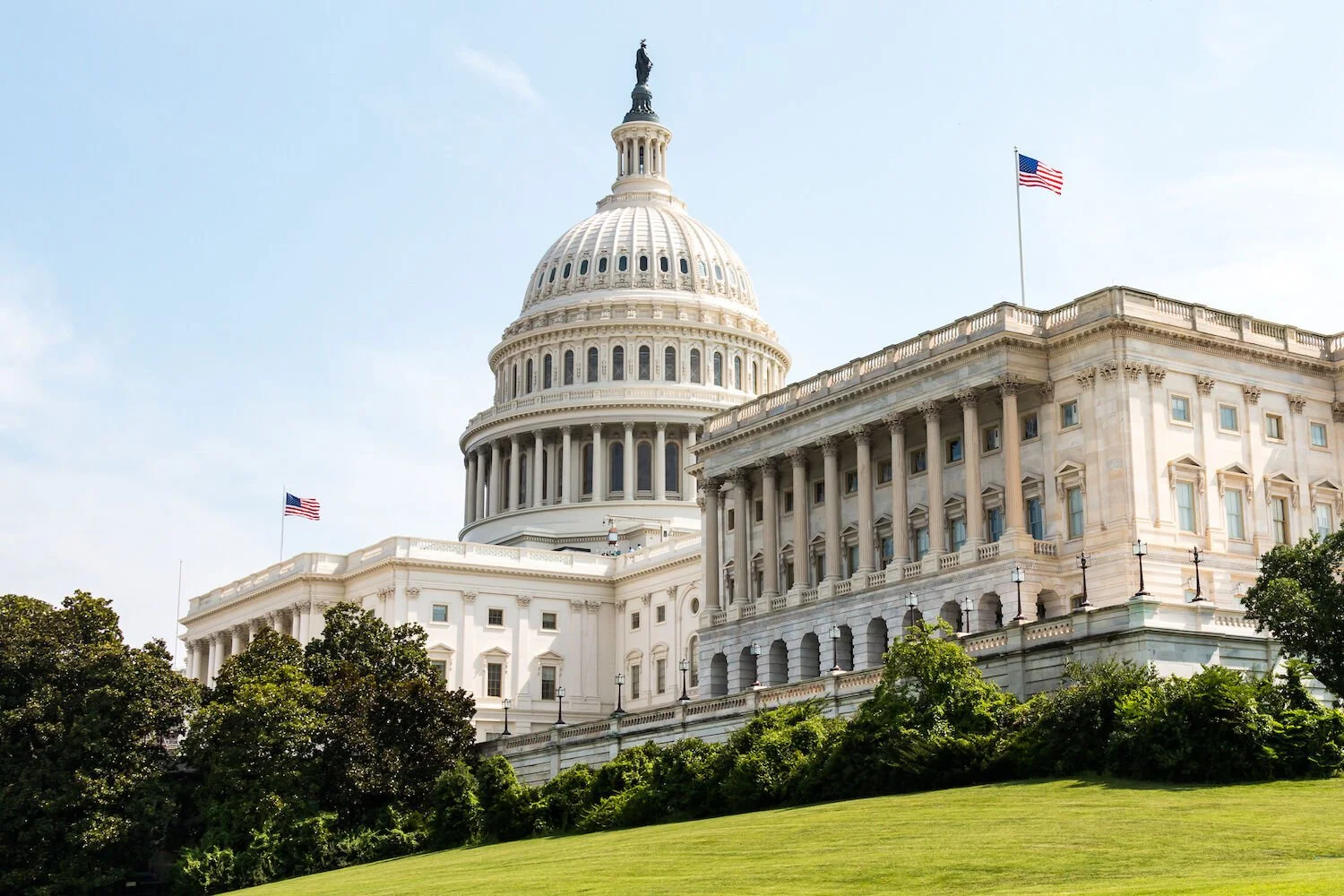
A House Bill Would Freeze the Joint Employer Standard. The Reason Is That It Has Moved Six Times in Ten Years.
The short answer
The American Franchise Act, H.R. 5267, was reported to the House on September 8, 2026. It would write the narrow joint employer standard into the National Labor Relations Act and the Fair Labor Standards Act, so that a franchisor is a joint employer of its franchisee's employees only where it possesses and exercises substantial direct and immediate control over specified terms of employment. The case for it is not really about the standard. It is about the fact that the standard keeps changing while franchise agreements run ten to twenty years.
Why joint employer status matters in a franchise system
Two consequences, and they are large.
Wage and hour exposure. Joint employers are jointly and severally liable for unpaid minimum wages and overtime under the FLSA, plus liquidated damages and attorney's fees. For a franchisor, a joint employer finding turns one franchisee's payroll practices into system-wide exposure and makes the franchisor the deep-pocket defendant in a collective action spanning hundreds of locations.
Labor relations. A joint employer must bargain over the terms it controls, can be named in unfair labor practice charges, and loses neutral-employer protection against secondary activity. Under a broad standard, a union can seek a bargaining unit spanning multiple franchisees with the franchisor at the table.
The history, which is the actual argument for the bill
2015. In Browning-Ferris Industries, 362 NLRB No. 186, the Board held that indirect control and reserved but unexercised authority count toward joint employer status.
2017 and 2018. The Board overruled Browning-Ferris in Hy-Brand, then vacated that decision months later over a member's conflict, reviving Browning-Ferris.
December 2018. In Browning-Ferris Industries v. NLRB, 911 F.3d 1195, the D.C. Circuit upheld the Board's authority to consider indirect and reserved control as consistent with common law agency, but vacated in part and remanded.
February 2020. The Board issued a final rule at 85 Fed. Reg. 11184, codified at 29 C.F.R. 103.40, requiring possession and exercise of substantial direct and immediate control over one or more of eight essential terms.
October 2023. The Board issued a new final rule at 88 Fed. Reg. 73946 returning to a common law approach in which authority to control counts whether or not exercised and whether exercised directly or indirectly.
March 2024. In Chamber of Commerce v. NLRB, No. 6:23-cv-00553 (E.D. Tex.), the court vacated the 2023 rule in its entirety, including its rescission of the 2020 rule.
February 2026. The Board published a withdrawal at 91 Fed. Reg. 9707 conforming the regulatory text to the vacatur and restoring the 2020 rule language, describing the action as ministerial.
So the 2020 rule governs today. It never actually lapsed, because the court vacated the rescission along with the replacement.
What the bill would do
H.R. 5267 was introduced September 10, 2025 by Representative Kevin Hern, with Representative Don Davis as lead Democratic cosponsor and thirteen original cosponsors. It was referred to the Committee on Education and Workforce and reported to the House on September 8, 2026 as House Report 119-802. A Senate companion, S. 3525, was introduced December 17, 2025 by Senator Roger Marshall.
The bill adds a new section to the NLRA, with a parallel FLSA provision. A franchisor is a joint employer only if it possesses and exercises substantial direct and immediate control over one or more essential terms and conditions of employment. Those terms are an exhaustive list of eight: wages, benefits, hours of work, hiring, discharge, discipline, supervision and direction. Control must have a regular or continuous consequential effect; sporadic, isolated or de minimis involvement does not count. Franchise terms are defined by cross-reference to 16 C.F.R. 436.1, the FTC Franchise Rule. It applies prospectively only.
It also lists conduct that does not constitute direct and immediate control, including establishing operating hours, setting minimum staffing levels to meet service standards, bringing employee misconduct to the franchisee's attention while leaving the decision to the franchisee, setting brand standards, offering training materials, and offering optional scheduling and task-assignment tools.
The language is lifted nearly verbatim from the 2020 Board rule. The bill's contribution is not a new standard. It is putting the existing one in statute, beyond the reach of Board rulemaking and, because it also amends the FLSA, beyond Department of Labor rulemaking.
Our take: the volatility is the injury, and the FLSA side is worse
The strongest argument for codification has nothing to do with whether the narrow standard is correct. It is that a franchisor calibrating its system to the 2020 rule was exposed under the 2023 rule, and a franchisor calibrated to the 2023 rule is now back under the 2020 rule. Franchise agreements run ten to twenty years. Regulatory standards have changed or attempted to change roughly six times since 2015.
The FLSA side is the underappreciated half. The Department of Labor's 2020 joint employer rule had its vertical joint employment provisions vacated in New York v. Scalia in September 2020, and the Department rescinded the rule entirely effective September 28, 2021, removing and reserving 29 C.F.R. part 791. There has been no operative FLSA joint employer regulation for about five years. FLSA joint employment is governed by case law, which means the economic reality test as each circuit applies it. In the Eleventh Circuit that is the Aimable, Antenor, Layton line. A Department NPRM published April 23, 2026 at 91 Fed. Reg. 21878 proposes to restore part 791, and comments closed June 22, 2026, but no final rule has issued.
So a multi-state franchisor today faces one standard under the NLRA, set by a rule a future Board can rescind, and a different and circuit-dependent standard under the FLSA, set by nothing at all.
The honest limits of the bill. It has been reported out of committee, not passed. No floor vote has occurred, and the Senate companion has had no action. Bills reported to the House frequently go no further. And the narrow standard it would codify has never been tested on the merits in a court of appeals; the D.C. Circuit's 2018 reasoning that the common law requires consideration of indirect and reserved control sits in real tension with it.
What does not change either way. The practical guidance for a franchisor is the same under every version of the standard, because every version looks at what you actually do. Control the brand and the product, not the people. Do not set wages or benefits, participate in hiring or firing decisions, discipline employees, schedule individuals, or supervise directly. Keep handbooks, compliance materials and scheduling software optional rather than mandated. Route personnel communications through the franchisee and never to the franchisee's employees. Shared HR and payroll services are the single most common fact pattern that converts advisory support into control.
What it means practically
Franchisors should not restructure a system around a bill that has not passed.
Franchisees should understand that the bill is franchisor-protective. It reduces the likelihood that a franchisor is on the hook for a franchisee's wage and hour violations, which means the franchisee's own exposure is undiluted.
Both sides should note that the bill would make franchisor-imposed compliance and safety standards affirmatively non-probative of control, which addresses a genuine problem: under a broad standard, a franchisor that polices legal compliance across its system generates evidence against itself.
When to call a lawyer
Before a franchisor rolls out any program touching franchisee employees, including shared HR services, mandated scheduling software, or system-wide employment policies. That is where joint employer facts are created.
Why this is not a do-it-yourself problem
Joint employer status is not decided by what the franchise agreement says. Every version of the standard, narrow and broad, looks at conduct, and under the broader versions even unexercised contractual authority counts. That means the exposure is built by operational decisions made by people who are not lawyers: the field consultant who tells a franchisee to fire someone, the corporate program that puts franchisee employees on the franchisor's scheduling system, the compliance initiative that looks like supervision. A disclaimer in the agreement does not fix any of it, and the standard governing it may be different by the time anyone sues.
Talk to us
HDD Law Firm represents franchisees and franchisors in franchise and employment disputes in the Florida state courts, the Southern, Middle and Northern Districts of Florida, and the Eleventh Circuit. If you are evaluating a program that touches franchisee employees, contact us to discuss your matter.
Sources
● House bill seeks to lock in narrow joint employer standard for franchises, QSR Magazine
● H.R. 5267, American Franchise Act, 119th Congress (congress.gov)
● H.R. 5267, reported version, full text (GovInfo)
● S. 3525, American Franchise Act (congress.gov)
● Joint Employer Status Under the National Labor Relations Act, 85 Fed. Reg. 11184 (February 26, 2020)
● Standard for Determining Joint Employer Status, 88 Fed. Reg. 73946 (October 27, 2023)
● Browning-Ferris Industries v. NLRB, 911 F.3d 1195 (D.C. Cir. 2018) (CourtListener)
● Chamber of Commerce v. NLRB, No. 6:23-cv-00553 (E.D. Tex.), docket (CourtListener)
● Rescission of Joint Employer Status Under the FLSA Rule, 86 Fed. Reg. 40939 (July 30, 2021)
● Joint Employer Status Under the FLSA, FMLA and MSPA, NPRM, 91 Fed. Reg. 21878 (April 23, 2026)
● Antenor v. D & S Farms, 88 F.3d 925 (11th Cir. 1996) (CourtListener)
● Layton v. DHL Express (USA), Inc., 686 F.3d 1172 (11th Cir. 2012) (CourtListener)
● Arrington v. Burger King Worldwide, Inc., 47 F.4th 1247 (11th Cir. 2022)
● CRS Report R47943, Joint Employment and the National Labor Relations Act
Disclaimer
This post discusses publicly reported legal developments for general informational purposes. It is not legal advice, it does not create an attorney client relationship, and it does not reflect the firm’s position in any pending matter. Outcomes depend on the specific facts and the governing law of the relevant jurisdiction.

A $250,000 Deposit, a $2.5 Million Escrow, and Why a Sale Order Could Not Settle the Difference
A buyer who walks away from a court-approved sale of restaurants does not automatically forfeit its deposit, and the seller does not automatically keep it. On September 11, 2026, in the Chapter 11 case of one of Popeyes' largest domestic franchisees, Judge Robert A. Mark declined to resolve a $2.5 million escrow dispute on a motion in the main bankruptcy case. He denied the buyer's motion to enforce the sale order and compel turnover, and directed that the fight proceed as a separate adversary proceeding.
THE SHORT ANSWER
A buyer who walks away from a court-approved sale of restaurants does not automatically forfeit its deposit, and the seller does not automatically keep it. On September 11, 2026, in the Chapter 11 case of one of Popeyes' largest domestic franchisees, Judge Robert A. Mark declined to resolve a $2.5 million escrow dispute on a motion in the main bankruptcy case. He denied the buyer's motion to enforce the sale order and compel turnover, and directed that the fight proceed as a separate adversary proceeding.
The underlying disagreement is one every buyer and seller of a distressed franchise portfolio should read closely. The asset purchase agreement defined the deposit as $250,000. The escrow account holds $2.5 million, the entire purchase price. Whether the seller may keep all of it turns on whether an unwritten agreement, reached while the parties negotiated a two-week closing extension, enlarged the contract's defined term.
That is a Florida contract question. A section 363 sale order did not answer it, and the court would not treat it as though it had.
WHAT HAPPENED
Sailormen, Inc., a Miami-based operator of Popeyes Louisiana Kitchen restaurants, filed Chapter 11 in the Southern District of Florida on January 15, 2026. Case No. 26-10451-RAM. We covered the filing and the auction that followed in an earlier post on two Florida restaurant franchisee bankruptcies.
The June auction produced five buyers for 97 of the debtor's 136 restaurants, and the court entered a separate sale order for each buyer on June 23, 2026. The Orlando package, 23 restaurants at $2,500,000, went to RFI Ventures, LLC under the sale order at ECF No. 718.
What happened next is drawn from the parties' own filings.
The APA was executed the same day as the sale order. Section 2.4(b) defined the "Deposit" as $250,000, payable on execution into a non-interest-bearing escrow. Section 7.2 provided that on termination for the purchaser's breach, failure to close, or failure of a condition within the purchaser's control, "the Deposit shall be retained by Seller as liquidated damages and not as a penalty." Section 2.1(iii) sold the assets "AS IS, WHERE IS, and WITH ALL FAULTS." Section 8.5 made the agreement subject to Florida law.
The original closing date was June 30, 2026. As it approached, the buyer sought more time. The seller agreed to extend, and the parties executed a First Amendment on June 30 that moved the closing date to July 12, 2026 and deleted the defined term "Outside Date." By then the escrow held the full $2,500,000 purchase price.
The buyer did not close on July 12. It delivered a letter purporting to terminate under Section 7.1(c), citing an inoperable HVAC system at a Colonial Drive store, an equipment repossession matter, and alleged equipment and water-intrusion conditions at certain stores.
The estate did not return the money. It sold the same 23 Orlando restaurants again, filing an expedited private sale motion on July 17, 2026 (ECF No. 796) and obtaining an order approving that sale on July 22, 2026 (ECF No. 804). Trade press reported the replacement buyer as SBH Foods PLK, which already held five Savannah restaurants from the June auction, at roughly $2.7 million.
On August 10, 2026, the buyer moved to enforce the sale order and compel turnover of the $2,500,000 (ECF No. 858). On September 9, the debtor filed an adversary complaint against RFI Ventures, LLC and RFIV Orlando Foods, LLC (ECF No. 925, Adv. Pro. No. 26-01315-RAM). Summonses issued September 10, with answers due October 13, 2026.
THE TWO ARGUMENTS
Both sides agree on the documents and the dates. They disagree about what the word "Deposit" means. Neither position has been adjudicated, and what follows is each party's contention, not a finding.
The estate's position, as alleged in its complaint, is that the buyer "manufactured post-hoc pretexts to walk away from the deal." It alleges that the seller had no obligation to grant an extension, that it conditioned the extension on the buyer placing the entire purchase price into escrow as a deposit at risk, that the buyer agreed and wired the funds, and that the buyer's own wire confirmation described the money as "DEPOSIT." It alleges the parties orally amended the agreement and that the First Amendment ratified that amendment, leaving Section 7.2's liquidated damages clause operative as to the enlarged deposit.
On the termination itself, the estate alleges the buyer failed to follow Section 7.1(c)'s mandatory notice and cure procedure, which permits termination only if an alleged default "is not cured on or before the fifth (5th) business day after the date written notice is given." It alleges the buyer terminated on the closing date itself without affording any cure period, that the "as is" and anti-reliance provisions allocated physical conditions to the buyer, and that the equipment repossession had been authorized by a publicly docketed order entered before the buyer accepted the extension.
The buyer's position, as stated in its motion, is that the case "reduces to a single question of contract text, and the answer is not close." It argues that Section 2.4(b) defines the Deposit as $250,000 and nothing more, and that Section 7.2 permits the seller to retain exactly that. It argues the estate's theory rests on "an alleged oral understanding that appears in no writing, in no amendment, on no docket, and in no order of this Court."
Its strongest point is structural, and it uses the court's own sale order. Paragraph 12 of the sale order permits the purchase agreement to "be modified, amended, or supplemented by the parties thereto in a writing signed by the parties." Section 8.6 of the APA says the agreement "may be amended only by a writing signed by the Parties." The only signed amendment, the buyer argues, did two narrow things and expressly ratified everything else. On that reading, the sale order itself forbids giving effect to the unwritten arrangement the estate relies on.
WHAT THE COURT ACTUALLY DECIDED
Very little, and that is the point.
The September 11 order is captioned "Order Denying Motion of RFI Ventures, LLC and RFIV Orlando Foods, LLC to Enforce Sale Order and Compel Turnover of $2,500,000 in Escrowed Funds and Directing Commencement of Adversary Proceeding."
It denied the buyer's motion. It did not hold that the estate may keep the money. It did not rule on whether an oral modification occurred, whether the termination was proper, or whether the escrow is property of the estate. It decided the vehicle, not the merits.
That distinction matters more than it may appear. The buyer framed its request as enforcement of an order the court had already entered, which is the kind of relief a bankruptcy court can grant by motion. The court treated the dispute instead as what it substantively is: a contested claim to property, and a request for a declaration of rights, which Bankruptcy Rule 7001 channels into an adversary proceeding with a complaint, an answer, discovery, and the ordinary apparatus of litigation.
For anyone holding escrowed funds after a failed closing, the practical translation is that a sale order is not a self-executing forfeiture mechanism. Getting to an answer takes months, not a hearing.
WHAT THIS MEANS IF YOU ARE BUYING OR SELLING A DISTRESSED FRANCHISE PORTFOLIO
The lessons here are drafting lessons, and they are cheap to apply in advance and expensive to litigate afterward.
Amend in a signed writing, every time. Whatever the eventual outcome, the estate is in this fight because the enlargement of the deposit was not reduced to a signed amendment saying so. A wire memo reading "DEPOSIT" is evidence, but it is not a contract term. When a sale order itself requires signed writings for amendments, an oral side arrangement is not merely weaker proof, it runs against the order governing the sale.
Say what the escrowed money is. There is a real difference between a deposit at risk, a prepayment of the purchase price held for convenience, and liquidated damages. If a seller demands the full price in escrow as the price of an extension, the amendment should state in terms that the entire sum constitutes the Deposit for purposes of the liquidated damages clause. One sentence would have removed the question.
Liquidated damages clauses are read against a defined term. Section 7.2 did not say "the escrowed funds." It said "the Deposit." Defined terms are where these disputes live. Check that every remedy provision points at the amount you actually intend to put at risk.
Follow the notice and cure provision even when you are sure you are right. The estate's first argument is not about HVAC units or water intrusion. It is that the buyer terminated without giving the five business days the contract required. A party with a good substantive complaint can lose it by skipping a procedural step that takes a week.
Diligence the docket before you accept an extension. The estate alleges the equipment repossession the buyer later cited had already been authorized by a publicly docketed order entered days earlier. In a bankruptcy sale, the docket is running while you negotiate, and what it shows on the day you sign is chargeable to you.
"As is, where is" means what it says. In a distressed sale, physical condition is ordinarily the buyer's risk. If specific conditions matter, they belong in a closing condition or a specific representation, not in a later termination letter.
Price the possibility of not closing. The Orlando package was small relative to its unit count. Walking away still put the entire purchase price in dispute, funded litigation on both sides, and left the buyer with neither the restaurants nor the money while the case proceeds.
WHAT IS STILL OPEN
Answers were due October 13, 2026. As of this writing there has been no ruling on any of the four counts, which are breach of contract, declaratory judgment, turnover of estate property under 11 U.S.C. section 542, and breach of the implied covenant of good faith and fair dealing under Florida law. No court has found that the buyer breached, that the termination was pretextual, or that the escrow belongs to the estate. Nor has any court found the opposite.
We will follow the adversary proceeding. The contract questions in it are the ordinary questions in any failed closing, which is precisely why the answer will be worth reading.
SOURCES
● Adversary Complaint, Sailormen, Inc. v. RFI Ventures, LLC, Adv. Pro. No. 26-01315-RAM (Bankr. S.D. Fla. Sept. 9, 2026), filed at ECF No. 925 in Case No. 26-10451-RAM
● Order Denying Motion to Enforce Sale Order and Compel Turnover and Directing Commencement of Adversary Proceeding, ECF No. 929 (Sept. 11, 2026)
● Order Authorizing and Approving the Sale, RFI Ventures, ECF No. 718 (June 23, 2026)
● Expedited Motion to Sell the Orlando Region, ECF No. 796 (July 17, 2026), and Order Approving Sale of the Orlando Region, ECF No. 804 (July 22, 2026)
● Sailormen, Inc. case docket, Stretto (court-appointed claims and noticing agent)
● Nation's Restaurant News, Bankrupt Popeyes franchisee is selling most of its restaurants
● 11 U.S.C. sections 363, 541, 542; Fed. R. Bankr. P. 7001
Disclaimer
This post discusses publicly reported legal developments for general informational purposes. It is not legal advice, it does not create an attorney client relationship, and it does not reflect the firm's position in any pending matter. Outcomes depend on the specific facts and the governing law of the relevant jurisdiction.

AI Prompts in Discovery: What Florida Businesses and Litigants Should Do Now
THE SHORT ANSWER
AI prompts, outputs, account settings, and related records can become relevant in litigation. That does not make every AI interaction discoverable. The ordinary rules still control: relevance, proportionality, possession or control, preservation, attorney-client privilege, work product, expert discovery, and any governing protective order.
The reported decisions are early and fact-specific. They do not establish a single rule that all AI material is protected or that all of it must be produced. They do show that the result can depend on choices made before a discovery request arrives: who used the tool, at whose direction, for what purpose, what information was entered, what the provider could do with it, whether the material was preserved, and whether anyone later relied on it in a filing or expert opinion.
As of September 11, 2026, our research identified no reported federal circuit or Florida appellate decision squarely deciding the privilege or work-product status of generative-AI prompts and outputs. Businesses should not mistake the absence of appellate authority for the absence of risk.
START WITH FOUR DIFFERENT QUESTIONS
Disputes over AI records often become confused because several legal questions are treated as one. They should be separated.
Is the material within the permissible scope of discovery? A stored prompt, output, chat history, export, or related record may be electronically stored information. A requesting party must still connect it to a claim or defense and satisfy the governing proportionality requirements. The responding party must also determine whether the material is within its possession, custody, or control. The fact that someone used AI does not automatically make every interaction relevant or producible.
Does attorney-client privilege apply? Privilege ordinarily protects confidential communications between lawyer and client for the purpose of requesting or providing legal advice. An AI provider is not the client's lawyer. A separate issue arises when a user puts privileged information into a third-party system. The provider's terms, retention practices, training practices, access rights, and contractual confidentiality obligations can affect whether confidentiality was reasonably preserved. Product labels such as “enterprise” or “closed” are useful starting points, not legal conclusions.
Is the material work product? In federal civil litigation, Rule 26(b)(3) can protect documents and tangible things prepared in anticipation of litigation by or for a party or its representative. Materials revealing counsel's mental impressions receive especially strong protection. Work-product waiver is not identical to attorney-client-privilege waiver; disclosure must ordinarily be assessed by asking whether it was made to an adversary or substantially increased the likelihood that an adversary would receive the material.
Did a testifying expert use the material? Expert discovery has its own rules. Draft reports and many attorney-expert communications receive protection, while facts or data considered by the expert and the basis and methodology of the opinion may be discoverable. An AI prompt used to filter evidence, select documents, or perform analysis can generate a dispute over which side of that line it occupies.
WHAT THE REPORTED DECISIONS ACTUALLY SHOW
A represented client using a public chatbot independently
In United States v. Heppner, No. 25 Cr. 503 (JSR), 2026 WL 436479 (S.D.N.Y. Feb. 17, 2026), a represented criminal defendant independently used the consumer version of Claude to analyze the investigation and possible defenses. Counsel did not direct the searches. The court held that the resulting documents were protected by neither attorney-client privilege nor work product.
The court reasoned that Claude was not an attorney, the interactions were not confidential attorney-client communications, and giving the resulting documents to counsel later did not create privilege retroactively. The work-product claim also failed because the defendant acted independently rather than at counsel's direction and the materials did not reflect counsel's strategy. The court additionally considered the consumer platform's data-use and disclosure terms.
Heppner should not be read as deciding the status of lawyer-directed work performed through a system with materially different confidentiality protections. The opinion expressly arose from a public consumer tool and a client acting apart from counsel.
Pro se litigants preparing their own cases
Two federal civil decisions reached more protective results for self-represented litigants.
In Warner v. Gilbarco, Inc., No. 2:24-cv-12333-GAD-APP, 2026 WL 373043 (E.D. Mich. Feb. 10, 2026), the defendants sought broad discovery concerning a pro se plaintiff's use of third-party AI tools. The court denied the request as untimely and also found relevance and proportionality problems. Alternatively, it held that litigation-preparation materials could receive work-product protection and that use of ChatGPT did not automatically waive that protection because work-product waiver generally requires disclosure to an adversary or conduct likely to place the material in an adversary's hands.
In Morgan v. V2X, Inc., No. 1:25-cv-01991-SKC-MDB (D. Colo. Mar. 30, 2026), the court concluded that Rule 26(b)(3) can protect a pro se party's AI-assisted litigation preparation. But the result was not complete protection. The plaintiff had to identify the AI tool used with confidential discovery because he failed to show that the tool's identity revealed protected strategy. The court also amended the protective order to restrict the use of confidential material in AI systems unless specified contractual security, non-training, non-disclosure, and deletion protections were present.
These decisions do not establish that attorney supervision is unnecessary in a represented party's case. They concern the distinct position of a pro se litigant, who is both the party and the advocate. They also show that an underlying analysis may receive protection even when the tool's identity, security practices, or handling of confidential discovery remains discoverable.
AI work performed by a nonlawyer third party
In Shealy v. Seaside Investments, LLC, No. 2684CV00799-BLS2 (Mass. Super. Ct. June 16, 2026), a represented party sent dispute-related documents to his romantic partner, who put them into ChatGPT and returned generated drafts. Counsel did not direct that work. The Massachusetts trial court concluded that neither the partner's AI queries nor the resulting output was protected work product because the partner was not the party's representative within the meaning of the applicable rule and did not act at counsel's direction.
The important fact was not simply that ChatGPT was used. The person conducting the work was neither counsel nor a qualifying representative, while the party was represented by lawyers who had no role in directing the exercise.
Lawyer-created prompts used to investigate a claim
In Tremblay v. OpenAI, Inc., No. 23-cv-03223-AMO, 2024 WL 3748003 (N.D. Cal. Aug. 8, 2024), plaintiffs' counsel tested ChatGPT while investigating copyright claims. The plaintiffs relied on favorable prompt-output pairs in their complaint but withheld other testing that did not support their allegations.
The district court treated the undisclosed, attorney-crafted prompts as opinion work product because they reflected counsel's mental impressions about how to test the system. It declined to compel the withheld negative testing. Materials affirmatively used in the complaint were a different matter. The case supports a careful distinction between private attorney-directed investigation and material selected for affirmative public reliance. It does not support a rule that every disclosure of AI output waives all related work product.
AI prompts used in a testifying expert's document review
In Conservation Law Foundation, Inc. v. Shell Oil Co., No. 3:21-cv-00933 (VDO), ECF No. 970 (D. Conn. May 18, 2026), a magistrate judge ordered revised discovery responses concerning prompts or queries used by a testifying expert and her team to narrow a document production. The magistrate judge treated that process as part of the expert's methodology and concluded that the parties' agreement protecting expert notes, drafts, and communications did not clearly protect the prompts.
That is not the end of the procedural history. On June 3, 2026, the district court stayed the production order pending resolution of the plaintiff's Rule 72(a) objection. The order therefore remains a significant warning about expert workflows, but it should not be presented as settled or controlling law. It is a stayed magistrate-judge discovery order under review.
FLORIDA'S CURRENT RULES
Florida's state-court requirements changed during 2026. Any discussion that stops with the early circuit administrative orders is now incomplete.
Florida state courts
In May 2026, the Florida Supreme Court amended Florida Rule of General Practice and Judicial Administration 2.515(d)(2). Effective June 15, 2026, a signer of a document filed in a Florida court represents, among other things, that the legal authorities identified in the filing exist and are accurately cited. The rule authorizes sanctions after notice and an opportunity to be heard, including striking the document, costs, attorneys' fees, contempt, or dismissal.
The statewide rule does not require disclosure that generative AI was used. In Administrative Order AOSC26-12, the Florida Supreme Court explained that Rule 2.515 replaced the varied circuit AI-disclosure and certification requirements. Effective June 15, state courts may not impose those separate requirements through local administrative orders, court policies, or judicial practices.
The earlier Miami-Dade and Broward circuit orders are therefore important history, but they do not describe the present statewide filing requirement.
Individual federal judges
Florida's federal courts are separate systems. Some individual federal judges have adopted their own AI-related filing requirements. For example, Judge Wendy Berger's April 2, 2026 standing order requires parties appearing before her to certify whether generative AI was used in preparing a filing and, if it was, that a human personally reviewed the language for accuracy and verified the citations.
That is an individual judge's order, not a district-wide Middle District of Florida rule. Counsel should check the assigned judge's current orders and practices in every case rather than assume one judge's requirement applies throughout the district.
Florida lawyers' ethical duties
Florida Bar Ethics Opinion 24-1 is an advisory, nonbinding opinion, but it provides important guidance. A Florida lawyer using generative AI must protect client confidentiality, understand relevant data-retention and data-sharing practices, supervise the work, verify its accuracy, charge reasonable fees, and comply with advertising rules.
The opinion recommends obtaining informed client consent before using a third-party generative-AI system when the use would disclose confidential information. The precise duty depends on Rule 4-1.6, any applicable exception, the nature of the system, and the information involved. An in-house or otherwise isolated system may mitigate some confidentiality concerns, but the lawyer remains responsible for understanding how the system handles client information.
A PRACTICAL CONTROL PLAN
The emerging cases do not justify preserving or producing every AI interaction in every dispute. They do justify adding AI to the existing process for identifying, preserving, protecting, and reviewing potentially relevant information.
1. Map actual use before litigation
Identify which employees, lawyers, consultants, and experts use AI; which products and account types they use; what kinds of information they enter; whether chat histories or logs are retained; and whether administrators or providers can retrieve them. Do not assume that a product's marketing label answers questions about training, human review, retention, deletion, or disclosure.
2. Put legal work under a defined workflow
When AI will be used for litigation strategy or legal analysis, counsel should define the purpose, authorized users, approved systems, permitted information, and review requirements. Direction by counsel can strengthen a work-product argument, but it does not guarantee protection. The content, purpose, confidentiality controls, and later use still matter.
3. Preserve relevant material proportionately
When litigation is reasonably anticipated, determine whether relevant AI prompts, outputs, logs, exports, or settings exist and fall within the organization's possession, custody, or control. A legal hold should address AI expressly when the facts make AI activity a likely source of relevant evidence. The preservation instruction should be tailored to the claims and custodians rather than collecting unrelated AI histories indiscriminately.
4. Address confidential discovery in protective orders
Protective orders and ESI protocols should state whether confidential discovery may be put into an AI system and, if so, under what safeguards. Relevant terms may include isolation of customer data, no training on submitted material, limits on provider and subcontractor access, encryption, deletion rights, breach notice, audit documentation, and restrictions on onward disclosure.
5. Establish expert rules before substantive work begins
An expert engagement should address whether AI may be used, what may be entered, what must be preserved, how outputs will be validated, and how the workflow will be described if challenged. Counsel should consider the expert-discovery rules and the pending posture of Conservation Law Foundation rather than promise that all prompts will be protected or assume that all must be produced.
6. Make discovery requests specific
A request for every AI interaction may be irrelevant, disproportionate, and vulnerable to a work-product objection. When AI use is genuinely connected to a claim, defense, filing, investigation, or expert opinion, requests should identify the relevant custodians, subjects, time period, systems, and categories of records. The same discipline should govern objections and privilege logs.
7. Treat affirmative reliance as a separate decision
Before quoting or relying on AI output in a pleading, report, declaration, or presentation, consider what related prompts, settings, and testing may become discoverable. Selective public reliance can create disclosure and fairness arguments that would not exist if the material remained part of a private litigation-preparation process.
OUR TAKE
AI does not require courts to abandon ordinary discovery doctrine. It creates new records, new custodians, and new third-party systems to which familiar doctrine must be applied. The reported cases disagree in part because their facts are different: a represented client acting independently, a pro se litigant preparing a civil case, a romantic partner generating drafts, a lawyer testing a claim, and an expert filtering evidence are not equivalent situations.
The sound response is not to assume that all AI use is discoverable or that an enterprise account makes it privileged. It is to create a defensible record of purpose, direction, confidentiality, preservation, and human review. Organizations that can explain those choices will be better positioned to protect legitimate work product, comply with discovery obligations, and challenge requests that go too far.
WHEN TO CALL US
Counsel should be involved before confidential business information, client information, or protected discovery is introduced into a new AI workflow. Legal review is also appropriate when a litigation hold may need to reach AI systems, an expert proposes to use AI, a protective order is silent about AI, or an opposing party serves AI-specific document requests or deposition topics.
Hirzel Dreyfuss & Dempsey represents clients in commercial litigation and discovery disputes in Florida state and federal courts. More information is available on our commercial litigation page.
SOURCES
United States v. Heppner, No. 25 Cr. 503 (JSR), 2026 WL 436479 (S.D.N.Y. Feb. 17, 2026); Washington Legal Foundation case discussion
Warner v. Gilbarco, Inc., No. 2:24-cv-12333-GAD-APP, 2026 WL 373043 (E.D. Mich. Feb. 10, 2026); copy of the court's order
Morgan v. V2X, Inc., No. 1:25-cv-01991-SKC-MDB, Document 65 (D. Colo. Mar. 30, 2026)
Shealy v. Seaside Investments, LLC, No. 2684CV00799-BLS2 (Mass. Super. Ct. June 16, 2026); Nixon Peabody case discussion
Tremblay v. OpenAI, Inc., No. 23-cv-03223-AMO, 2024 WL 3748003 (N.D. Cal. Aug. 8, 2024); Akin case summary
Conservation Law Foundation, Inc. v. Shell Oil Co., No. 3:21-cv-00933 (VDO), ECF No. 970 (D. Conn. May 18, 2026); Arnold & Porter report and June 3 stay update
Florida Bar Ethics Opinion 24-1 (Jan. 19, 2024)
Standing Order of Judge Wendy Berger on Generative AI (M.D. Fla. Apr. 2, 2026)
Gregory D. Speier, Don't Wait for Appellate Courts to Set Your AI Discovery Tactics, Bloomberg Law (Sept. 11, 2026)
DISCLAIMER
This post is provided for general informational purposes only and does not constitute legal advice or create an attorney-client relationship. The decisions discussed above are trial-level rulings and do not bind Florida state courts, the Eleventh Circuit, or other trial courts. The Conservation Law Foundation production order was stayed pending district-court review. Whether particular AI records are relevant, preserved, discoverable, privileged, or protected work product depends on the governing law and the specific facts, including who created the material, for what purpose, under whose direction, in which system, and how it was later used.

Two Franchisees, Two Ways to Close a Restaurant, and the Decisions That Separate Them
The short answer
One multi-brand franchisee closes underperforming units on its own schedule, rebuilds on land it owns, and grows revenue by more than a third. Another files Chapter 11 and puts forty-nine of its sixty-five restaurants up for sale through a liquidation firm. Both are closing restaurants. Only one of them still controls the outcome, and the difference traces back to decisions about real estate, leases and defaults made long before either closure.
The operator that closed by choice
Franchise Times reported on August 28, 2026 on a Kansas-based operator that runs fifty-two Burger King and forty Denny's restaurants across two entities, with revenue up 34.3 percent since 2023 to $135 million.
The described strategy is unsentimental. The chief executive put it this way: "We're growing by adding locations and we're growing by getting rid of losers." The chief financial officer described closing or declining to renew locations that are not performing while opening replacements that do better. In 2024 the company tore down and rebuilt an aging Burger King on a site it had acquired, and sales improved more than 25 percent. This year it closed a location when the lease expired and is rebuilding on separate space it owns.
The financial officer identified the structural reason this works: owning the real estate means "you're not getting hit with increased rents on the properties you own like you do with the other ones." The operator owns much of the real estate under its more than ninety stores.
The operator that ran out of choices
On April 2, 2026, a franchisee operating sixty-five Carl's Jr. restaurants in California, together with five affiliates, filed Chapter 11 in the United States Bankruptcy Court for the Central District of California. Forty-nine of the sixty-five have been put up for sale, marketed by a firm that specializes in liquidations. Reporting attributes the distress in part to California's $20 fast food minimum wage, per a statement by the company's chief executive in a court filing.
The detail that matters most is buried in the filing. The company is in default under its franchise agreements at a number of locations for failure to timely pay rent, royalties and other required charges. Those defaults could result in termination of the franchise agreements, which would end the ability to operate and generate revenue at all.
Reporting also quotes a bankruptcy analysis for the proposition that even where a debtor is not assigning a franchise agreement, assumption without franchisor consent is barred in the Ninth Circuit, which gives franchisors substantial leverage over whether a distressed franchisee continues under existing agreements.
Our take: the franchise agreement is the asset, and it is the one you can lose fastest
Read the two stories together and the same variable appears in both.
Real estate ownership is the difference between a decision and an emergency. The healthy operator closes a location when a lease expires and rebuilds on land it owns. It is not negotiating with a landlord in distress, and its occupancy cost does not reset at renewal. The distressed operator is in default on rent, which is what put its franchise agreements at risk. Two operators facing the same cost environment ended in different places largely because one controls its occupancy cost and the other does not.
A franchise default is faster and more dangerous than a lease default. A landlord that is not paid must generally evict, which takes time and produces a claim. A franchisor that is not paid can terminate, and termination ends the business rather than the tenancy. Once bankruptcy is filed, the franchisee's ability to keep the agreement is constrained in ways an ordinary contract is not. The Ninth Circuit position described in the reporting means the franchisor's consent may be required even to keep an agreement the franchisee is not trying to sell.
Closing units is not itself a distress signal, and closing them late is. The healthiest operator in these two stories closed more locations by choice than many struggling ones close under pressure. The failure mode is not the closure, it is subsidizing an underperforming location out of the cash flow of the good ones until there is no cushion left. The operating discipline and the balance sheet are the same subject.
We would add a candid caveat about the minimum wage explanation. A wage increase applies to every operator in the state, and many of them did not file. It is a real cost pressure and it is rarely the whole story. The default on rent and royalties is the more proximate cause of the loss of control, and it is the part a franchisee can actually manage.
What it means practically
If you are a franchisee: know which of your locations lose money and what each one costs to exit. Model lease expirations against unit economics so that closures happen at renewal rather than in default. Understand that missing rent and missing royalties are not the same kind of problem, because only one of them can terminate the business. If a franchise agreement default notice arrives, the cure period is the last point at which you control the outcome.
If you are a franchisor: the reporting shows both sides of the leverage. Consent rights are real and enforceable, and they are worth exercising deliberately rather than reflexively, because a terminated agreement produces a dark location and a rejection damages claim rather than an operating royalty stream.
If you are a landlord to a franchisee: the franchisor's consent rights can determine whether your tenant survives, and you may have no seat at that table.
When to call a lawyer
Before signing or renewing a lease at a marginal location, on the first missed royalty payment, and immediately on receiving a default or termination notice under a franchise agreement.
Sources
Disclaimer
This post discusses publicly reported legal developments for general informational purposes. It is not legal advice, it does not create an attorney client relationship, and it does not reflect the firm's position in any pending matter. Outcomes depend on the specific facts and the governing law of the relevant jurisdiction.

A Title III Trial in Miami Shows What the Supreme Court's Two Rulings Actually Unlocked
The short answer
A Helms-Burton Title III case went to trial in Miami federal court in late August 2026 against a travel booking company, over hotel reservations on Cuban land confiscated from the plaintiff's family in 1960. It is the second such trial against that defendant in eighteen months. This is what the Supreme Court's May and June decisions look like on the ground.
What happened
The New York Times reported that Mario Echevarria, now ninety-one, is seeking damages against Expedia Group for failing to obtain his permission when reserving rooms in hotels built on Cayo Coco, a cay off Cuba's north coast where his father ran a cattle and charcoal business before the property was confiscated in 1960. Asked at trial who had authorized the bookings, he testified that authorization came from "the dictatorship."
Expedia's position, as reported, is that the company believed it was acting lawfully. It entered Cuba in 2017, after the Obama administration issued rules permitting American hotel chains to operate there. The Times describes the case as one of a surge of claims by Cuban families over assets confiscated since 1959, and reports that dozens of such suits have been filed since the right to sue was restored in 2019.
Our take: the defendants are ordinary companies, and the defense is reliance
Two things about this case deserve attention from anyone assessing exposure.
The defendant profile. The public conversation about Helms-Burton tends to focus on the Cuban government and its state enterprises. The litigation does not. The defendants are American companies that made commercial decisions during a period of federal encouragement: cruise lines that docked in Havana, hotel operators, and now a travel booking platform that never touched Cuban soil at all. The alleged trafficking is the reservation, not the occupation.
The defense is reliance, and its strength is now the central question. Every one of these defendants entered Cuba under authorizations issued by the United States government during the 2016 to 2019 opening. Title III excludes uses of property "incident to lawful travel to Cuba," and the Supreme Court's May remand in the cruise line case put that exclusion squarely before the lower courts. How it is construed will do more to determine outcomes across this docket than either of the two decisions the Court has already issued.
The candid point is that reliance on a federal authorization is not obviously a defense to a private statutory claim. The authorization permitted the transaction under the sanctions regime. It did not purport to extinguish a private right of action Congress created in 1996 and left dormant. Defendants will argue the two cannot be squared. Plaintiffs will argue Congress wrote a specific exclusion and courts should not enlarge it. That is a genuinely open question, and a defendant who assumes the answer is favorable is making an expensive assumption.
Note also what a second trial against the same defendant in eighteen months tells you. These claims are not consolidating into a single global resolution. They are being tried family by family, property by property, which means the cost of defense is a function of the number of claimants rather than the number of properties.
What it means practically
If your company had commercial contact with Cuban property during or after the 2016 opening, the questions to answer now, before a demand letter arrives, are what property was involved, whether a certified claim exists against it, what federal authorization you relied on, and whether you can document that reliance contemporaneously. Certification matters because it drives treble damages, and documentation matters because the reliance defense is only as good as the record supporting it.
When to call a lawyer
Before responding to a Title III demand. These claims can carry enhanced damages, but not automatically. Under 22 U.S.C. 6082(a)(3), the enhanced measure applies where the claimant holds a claim certified by the Foreign Claims Settlement Commission, or where the claimant gave the statutory written notice at least 30 days before suit and the defendant continued trafficking after that period. Even then the statute trebles the value of the claim and adds the interest component rather than trebling the whole figure. Which route applies changes the exposure substantially, so establish it before pricing the demand.
Sources
Disclaimer
This post discusses publicly reported legal developments for general informational purposes. It is not legal advice, it does not create an attorney client relationship, and it does not reflect the firm's position in any pending matter. Outcomes depend on the specific facts and the governing law of the relevant jurisdiction.
UPDATE, September 10, 2026. This post was published while the trial described below was underway. The jury returned a verdict for Expedia on August 31, 2026. According to reporting on the verdict, the jury found that the claimants had not proved ownership of the confiscated land, and therefore never reached the defense that the bookings were incident to lawful travel authorized by the federal government. The significance of the outcome is that the case turned on proof of title rather than on whether booking hotel rooms constitutes trafficking. A claim certified by the Foreign Claims Settlement Commission is conclusive proof of ownership and amount by statute; an uncertified claimant must prove ownership of Cuban property as it stood in 1960. That evidentiary burden, rather than the merits of the trafficking theory, is what decided this case. The analysis below remains accurate as to the law; the reliance defense discussed in it is still undecided and is pending on remand in the cruise line litigation.

The Question the Supreme Court Did Not Answer Is the One That Decides the Cruise Line Cases
The short answer
When the Supreme Court decided the Havana Docks case in May, it resolved what counts as confiscated property and left three defenses undecided. The most important is whether use of confiscated property incident to lawful travel to Cuba is excluded from liability. That question is now before the Eleventh Circuit on remand, and it, not the Supreme Court's holding, will determine whether roughly $439 million in judgments is ever collected.
Why it comes up
Between 2016 and 2019, American companies entered Cuba under federal authorizations issued during a deliberate opening of relations. Cruise lines docked in Havana. Hotel and booking platforms sold rooms. Those authorizations are the entire factual predicate for the largest Title III cases now pending, and Congress wrote an exclusion into the statute for uses of property incident to lawful travel to Cuba.
What the Supreme Court did and did not decide
The Court held, 8 to 1, that Title III reaches the confiscated property itself and not merely the claimant's interest in it, so the expiration of Havana Docks' 1905 concession in 2004 did not defeat liability. Justice Thomas wrote for the Court. Justice Sotomayor concurred, joined by Justice Kavanaugh, flagging the arithmetic of a certified loss of roughly $9 million producing recoveries measured in the hundreds of millions. Justice Kagan dissented alone.
Justice Thomas expressly reserved the lawful travel question, noting that the cruise lines had argued their use of the docks fell within the exception for uses of property incident to lawful travel, and that the district court had rejected that argument based on the general ban against travel to Cuba for tourist activities. The judgment was vacated and the case remanded to the Eleventh Circuit. The Court's judgment issued June 22, 2026, and the record was returned to the Southern District of Florida on August 5, 2026.
Our take: this is the heart of the case now
Nearly everything else in the cruise line litigation has been decided against the defendants. The principal unresolved question is one of statutory construction that has never been resolved by an appellate court, and the stakes could not be more lopsided: if the exclusion applies, the judgments disappear entirely.
The competing readings are both serious.
The claimants' reading is that Congress wrote a narrow exclusion for travel, that a cruise line's commercial use of a pier is not travel by the cruise line, and that reading the exclusion broadly would let any company launder trafficking through a licensed travel program.
The defendants' reading is that the United States government affirmatively authorized precisely this conduct, that the exclusion exists to protect people and companies operating under those authorizations, and that imposing treble damages for doing what federal regulators permitted is not a result Congress intended.
Our own view is that the defendants have the better of the equities and the harder textual argument. The exclusion is written in terms of uses of property incident to lawful travel, and a cruise line docking to disembark authorized travelers is a plausible fit. But the district court has already rejected it once, and the Eleventh Circuit has not been notably receptive to Title III defendants this year.
Two other defenses also survive for the remand: whether the concession was nonexclusive and limited to cargo services, and other defenses not reached below.
What it means practically
If your company operated in Cuba during the 2016 to 2019 opening, preserve now, in an organized form, every federal authorization you relied on, every legal opinion you obtained, and the contemporaneous record showing what you understood the authorization to permit. That record is the reliance defense, and it is worth nothing if it cannot be produced.
When to call a lawyer
Before responding to a Title III demand, and before assuming that a federal authorization resolves the question. It has not been resolved.
Sources
● Havana Docks Corp. v. Royal Caribbean Cruises, Ltd., No. 24-983, Supreme Court docket
● Havana Docks Corp. v. Royal Caribbean Cruises, Ltd., opinion via Justia
Disclaimer
This post discusses publicly reported legal developments for general informational purposes. It is not legal advice, it does not create an attorney client relationship, and it does not reflect the firm's position in any pending matter. Outcomes depend on the specific facts and the governing law of the relevant jurisdiction.

Two Florida Restaurant Franchisees, Two Chapter 11 Filings, One Pattern Worth Understanding
The short answer
Two large Florida restaurant franchisees filed Chapter 11 in the Southern District of Florida within seven months of each other. Sailormen Inc., a Miami based Popeyes franchisee with 136 locations, filed January 15, 2026. Quality Fresca I, a Palm Beach based Moe's Southwest Grill franchisee, filed August 4, 2026. Neither case is unusual on its facts. Both illustrate how quickly a franchisee's Chapter 11 converts from a reorganization into a sale, and what that means for the landlords, vendors and franchisors left behind.
Why it comes up
Franchisee bankruptcies rarely stay reorganizations. A franchise agreement is an executory contract, and a franchisee's ability to assume its own franchise agreement is constrained in ways that a typical debtor's contract rights are not. That structural fact pushes distressed franchisees toward a sale of the going concern rather than a stand alone plan, and it pushes creditors toward a compressed timeline.
What happened
Sailormen. Court filings reported by Franchise Times put liabilities at $342 million against $232 million in assets, with BMO Bank owed $112 million in unpaid principal plus $17 million in interest and fees. Sailormen attributed its position in part to a failed 2023 sale of sixteen Georgia restaurants. By June, an auction had produced buyers for 97 of the 136 locations, and 52 had drawn no bidder. Nation's Restaurant News reported the results: Pulse Restaurant Group took 50 locations for $2.69 million, RFI Ventures 23 for $2.5 million, Popeyes corporate 16 Miami area locations for $9.6 million, 61 Biscuits three West Palm Beach locations for $1.11 million, and SBH Foods five in Savannah for $650,000. The USA Today Network reported that a June 27 order extended the list of locations to be vacated to 22, with a June 30 deadline, and quoted the debtor's filing that the unsold stores "now constitute a burden on the Debtor's estate."
Quality Fresca. The Real Deal reported the petition listed liabilities between $10 million and $50 million, assets between $1 million and $10 million, and 200 to 999 creditors. Approximately $16 million is owed to secured lender GR Loanco 1, which holds liens on all assets. Revenue was $58.9 million last year and $26.4 million through mid June. Among the first day motions was a request to reject the leases at sixteen closing locations retroactive to the filing date, affecting centers owned by Brixmor, Regency Centers, Publix and Benderson. Fast Company published the full closing list, fourteen in Florida plus one each in Virginia and Georgia.
Our take: the auction is the case
Read the two dockets together and the same shape appears. A first day motion rejects the leases at the locations nobody will buy. An auction runs on a short timeline. The going concern locations transfer. The unsold locations become rejection damages claims, and the landlords who held those leases move from collecting rent to standing in line as general unsecured creditors.
Two observations that follow, neither of which is obvious from the headlines.
First, the franchisor is a bidder, not a bystander. Popeyes corporate paid $9.6 million for sixteen Miami area locations, which is more than three of the four other buyers paid combined for far more units. A franchisor that wants to protect a market will buy into it, and that changes the auction dynamics for everyone else.
Second, insider affiliated purchasers are common and are not automatically improper. Nation's Restaurant News reported that Pulse Restaurant Group, which acquired 50 locations, was established by Sailormen's chief executive. That structure invites scrutiny under the Bankruptcy Code's provisions governing sales to insiders, and creditors who intend to object need to be organized before the bid procedures order, not after the auction.
What it means practically
● If you are a landlord, the window to protect yourself is the first day motions, not the claims bar date. Rejection is frequently sought retroactive to the petition date, which affects the administrative rent you can recover.
● If you are a vendor, examine payments received in the ninety days before filing. Preference exposure in these cases is real and it arrives long after the case appears to be over.
● If you are a franchisee considering a filing, understand before you file that your franchise agreement may not be yours to keep.
● If you are a franchisor, decide early whether you intend to consent to an assumption and assignment, because that decision drives the entire sale process.
When to call a lawyer
The moment a franchisee in your system stops paying, or the moment you receive a bankruptcy notice naming a tenant, customer or franchisee. Nearly every meaningful right in these cases is exercised in the first thirty days.
Sources
● Franchise Times, 136-unit Popeyes franchisee files for bankruptcy (January 16, 2026)
● The Real Deal, Moe's Southwest Grill franchisee bankruptcy to close stores (August 6, 2026)
● Fast Company, Moe's Southwest Grill closing locations, full list (August 10, 2026)
Disclaimer
This post discusses publicly reported legal developments for general informational purposes. It is not legal advice, it does not create an attorney client relationship, and it does not reflect the firm's position in any pending matter. Outcomes depend on the specific facts and the governing law of the relevant jurisdiction.

Bidding on a Competitor's Trademark Is Not Infringement. What You Put in the Ad Still Is.
The short answer
On August 4, 2026, the Eleventh Circuit held that buying a competitor's trademark as a search keyword cannot by itself support an infringement claim, because consumers never see the purchase. It affirmed a disgorgement award of more than $12.1 million on the visible uses, reversed a false advertising verdict that had never been pleaded, and vacated the actual damages award. All three holdings are useful, and the reason for each is worth understanding.
Why it comes up
Competitive keyword advertising is standard practice and it generates a steady stream of demand letters. Businesses receive them, panic, and either stop a lawful practice or keep doing something genuinely unlawful because the letter did not distinguish between the two.
What the court held
The case arose from a dispute over the mark "Battery Tender," tried in the Middle District of Florida.
On keyword bidding. Purchasing a competitor's mark as an invisible ad keyword is not infringement standing alone. The consumer never sees the purchase, only the resulting advertisement. Visible use of the mark in the resulting listings and advertisements was infringing.
On genericness. The mark was not generic. Registration created a presumption of validity, and the record showed descriptiveness plus secondary meaning.
On disgorgement. The court affirmed $12,135,943.70 on a finding of willfulness, resting heavily on the defendant's internal communications acknowledging that it could not use the mark in its messaging.
On false advertising. The verdict was reversed because the theory was never pleaded and the defendant never consented to try it.
On actual damages. The award of roughly $1.3 million was vacated because the lump sum could not be separated from theories that had now failed.
Our take: the money came from the emails
The disgorgement figure is the part that will get attention, and the reason for it is the part worth acting on. Willfulness was established by the defendant's own internal communications. The company knew it could not use the mark and used it anyway, and it wrote that down.
That is how nearly every large trademark award happens. Liability is usually a close question. Willfulness usually turns on a document. It is not a precondition to disgorging the infringer's profits: in Romag Fasteners, Inc. v. Fossil, Inc., 590 U.S. 212 (2020), the Supreme Court held that a plaintiff need not show willful infringement to obtain a profits award under 15 U.S.C. 1117(a) for a section 1125(a) violation. The defendant's mental state remains a highly important equitable consideration, and in practice it is decided by what is in the emails. Any business running a competitive advertising program should assume that its internal discussion of a competitor's mark will be read to a jury.
Two other lessons are less dramatic and more likely to matter to an ordinary case.
Plead your theories separately. A false advertising claim under a different subsection of the statute is a different claim from infringement. Trying it by implication and winning is not the same as pleading it, and the Eleventh Circuit will not save it.
Do not put your damages theories in one bucket. A single lump sum that depends on four theories dies if one of them fails. Ask for separate findings.
What it means practically
For a brand owner: keyword bidding by a competitor is not, by itself, a case in this circuit. Look at what the resulting ad says. That is where the exposure is.
For an advertiser: your keyword program is probably defensible. Your ad copy and your marketplace listings may not be, and your internal emails about the competitor are the highest-risk documents in the file.
When to call a lawyer
On receipt of a keyword advertising demand letter, before changing a lawful program or continuing an unlawful one, and before any internal discussion of a competitor's brand is committed to writing.
Sources
● Deltona Transformer Corp. v. The NOCO Co., No. 24-13590 (11th Cir. Aug. 4, 2026), via Justia
Disclaimer
This post discusses publicly reported legal developments for general informational purposes. It is not legal advice, it does not create an attorney client relationship, and it does not reflect the firm's position in any pending matter. Outcomes depend on the specific facts and the governing law of the relevant jurisdiction.

You Can Now Sue the Cuban Government. Collecting Is a Different Problem.
The short answer
In June the Supreme Court held that the Helms-Burton Act itself strips Cuban state entities of sovereign immunity, so a claimant need not also satisfy an exception under the Foreign Sovereign Immunities Act. Claimants have already begun using it, including the holder of the largest certified claim against Cuba. But immunity from suit and immunity from execution are different doctrines, and the second one was not disturbed.
What the Court held
In Exxon Mobil Corp. v. Corporación Cimex, S.A., decided June 23, 2026, the Court held 6 to 3, in an opinion by Justice Kavanaugh, that the Act abrogates the sovereign immunity of Cuban agencies and instrumentalities directly. Stacking a Foreign Sovereign Immunities Act requirement on top, the majority reasoned, "would thwart Congress's design," because the embargo would make those exceptions nearly impossible to satisfy, and "Congress does not ordinarily enact self-defeating statutes." Justice Kagan dissented, joined by Justices Sotomayor and Jackson, on the ground that abrogating sovereign immunity requires unmistakable clarity that the statute's text does not supply.
Standard Oil's Cuban assets, later Exxon's, included a refinery, product terminals and 117 service stations, all seized in 1960. An American commission certified the loss at nearly $72 million in 1969.
What has happened since
The case is active again before Judge Amit Mehta in the District of Columbia. The court of appeals recalled its earlier mandate in July and issued a new one on August 28, 2026. Judge Mehta ordered a joint status report and held a status conference on September 9, 2026.
Separately, the holder of the largest certified claim against Cuba filed suit in Washington in late July 2026, seeking roughly $267.6 million plus sixty years of interest at six percent, over the confiscated electric utility.
Our take: the judgment is the easy part
Commentators have identified two obstacles that the decision did not address, and both are serious.
Personal jurisdiction. The Foreign Sovereign Immunities Act contains a mechanism by which proper service establishes personal jurisdiction. If Helms-Burton abrogates immunity without routing through that statute, it is not obvious what supplies personal jurisdiction over a Cuban entity, or how service is accomplished. No court has answered this.
Execution. Sovereign immunity from execution is governed by a separate framework, and the decision did not touch it. Property of a Cuban instrumentality remains largely protected from attachment. A claimant may obtain a judgment and find nothing to levy against.
There is a serious argument that a judgment has value even when it cannot be collected. It is a public adjudication that the confiscation was wrongful, it can be leveraged in any future normalization negotiation, and for families who lost everything it is a record. That is a real reason to litigate. It is not the same as a recovery, and any lawyer who describes it as one is doing the client a disservice.
Layered on top is a sanctions problem. Treasury designated the Cuban state oil company in June 2026, and it is a party in this very case. A blocked counterparty complicates any settlement, because the mechanics of paying or receiving value from a designated entity require their own authorization.
What it means practically
If you hold a certified claim, this decision materially changed what is possible, and the timing question is now live given the two-year limitations period discussed in our post on the threshold questions in every Helms-Burton case. If you are a foreign company operating in Cuba's energy, mining, financial services or security sectors, you should expect to be named alongside Cuban state entities, and you should assume the sanctions and litigation analyses will run together.
When to call a lawyer
Before filing, so the collection analysis is done first rather than last.
Sources
● Exxon Mobil Corp. v. Corporación Cimex, S.A., No. 24-699, Supreme Court slip opinion
● Transnational Litigation Blog, Cimex (June 30, 2026)
● U.S.-Cuba Trade and Economic Council, reporting on the Cuban Electric filing (July 31, 2026)
Disclaimer
This post discusses publicly reported legal developments for general informational purposes. It is not legal advice, it does not create an attorney client relationship, and it does not reflect the firm's position in any pending matter. Outcomes depend on the specific facts and the governing law of the relevant jurisdiction.

Cuba Exposure Is Now Two Problems at Once, and They Do Not Have the Same Answer
The short answer
In the space of six months the United States built an entirely new Cuba sanctions program on top of the decades-old embargo, designated the state military conglomerate, the state oil company and a publicly traded foreign hotel investor, and authorized tariffs against any country that sells oil to Cuba. For a company with Cuba exposure, the sanctions analysis and the Helms-Burton analysis now have to be run together, and a transaction can be lawful under one and catastrophic under the other.
What changed, in order
January 29, 2026. Executive Order 14380 declared a national emergency and authorized additional duties on imports from any country that directly or indirectly supplies oil to Cuba. Commerce identifies the countries, State recommends the rate.
May 1, 2026. Executive Order 14404 created a new Cuba sanctions program under the International Emergency Economic Powers Act, separate from and additional to the Cuban Assets Control Regulations, authorizing blocking sanctions on foreign persons operating in identified sectors of the Cuban economy including energy, defense, metals and mining, financial services and security.
May 7, 2026. Treasury designated the Cuban military conglomerate GAESA under the new order, tagged the Sherritt joint venture Moa Nickel, and issued Cuba General License 1 so that transactions already authorized or exempt under the older regulations do not become prohibited by the new order. Six guidance items confirmed that the two authorities function in parallel and that being blocked under one does not automatically block a person under the other.
June 11, 2026. Treasury designated the state oil and gas company.
July 23, 2026. Eleven further designations, including a Guernsey-domiciled, publicly traded Cuba hotel and real estate investor, with general licenses authorizing wind-down and securities transactions in that company.
Our take: the two analyses point in opposite directions
Here is the trap, and it is not hypothetical.
The traditional embargo regime is built around authorizations. A company asks whether a transaction is licensed, and if it is, it proceeds. That instinct is correct as far as sanctions go, and it is exactly backwards for Helms-Burton. A federal authorization to do business in Cuba is not an authorization to traffic in confiscated property. Whether it is even a defense is the open question on the Havana Docks remand. Meanwhile the designations are landing on precisely the entities that hold confiscated property, because the Cuban state took that property and put it into these enterprises.
So a company evaluating a Cuban hotel, port, refinery or telecom asset now has to answer two questions that do not have the same answer:
● Is the counterparty blocked, or owned or controlled by a blocked person, and is the transaction authorized?
● Was this property confiscated from a United States national, and does using it constitute trafficking?
A yes to the first question does not resolve the second. The designation of the hotel investor is the clearest illustration: a foreign investor in Cuban hotel real estate is now simultaneously an SDN counterparty and a plausible Title III defendant, and the two exposures have different triggers, different defenses and different remedies.
The doctrinal shift underneath is that sector participation alone now justifies blocking sanctions, which creates a template for future designations across transportation, finance, telecommunications, logistics and mining.
What it means practically
Any company with Cuba contact should be running a combined screen: who owns the counterparty, whether the property has a certified claim against it, what authorization the activity rests on, and whether that authorization is documented contemporaneously. Companies that have run only the sanctions screen have answered half the question.
When to call a lawyer
Before any transaction touching Cuban property or Cuban counterparties, and on receipt of a demand letter, because the two analyses need to be run together and neither one alone is a defense to the other.
Sources
● Executive Order 14380, Federal Register (February 3, 2026)
● OFAC recent actions, May 7, 2026
● OFAC frequently asked questions added May 7, 2026
● OFAC recent actions, July 23, 2026
Disclaimer
This post discusses publicly reported legal developments for general informational purposes. It is not legal advice, it does not create an attorney client relationship, and it does not reflect the firm's position in any pending matter. Outcomes depend on the specific facts and the governing law of the relevant jurisdiction.